
Le Mans Cathedral
Le Mans Cathedral, officially Cathédrale St-Julien du Mans, is a significant Catholic church in Le Mans, France, dedicated to Saint Julian of Le Mans. Its construction spanned from the 6th to the 15th century, resulting in a blend of Romanesque and Gothic architectural styles, and it is particularly renowned for its exceptional stained glass and unique flying buttresses.
Key Facts
- ›Construction began in the 6th century and concluded in 1430, with significant rebuilding phases.
- ›It features a Romanesque nave and a High Gothic choir, showcasing a blend of architectural styles.
- ›Notable architectural elements include spectacular bifurcating flying buttresses at the eastern end.
- ›The cathedral houses a rich collection of stained glass, including some of the oldest extant windows in France.
- ›It holds historical significance for the Plantagenet dynasty, with burials and significant events occurring there.
- ›The cathedral is dedicated to Saint Julian of Le Mans, the city's first bishop.
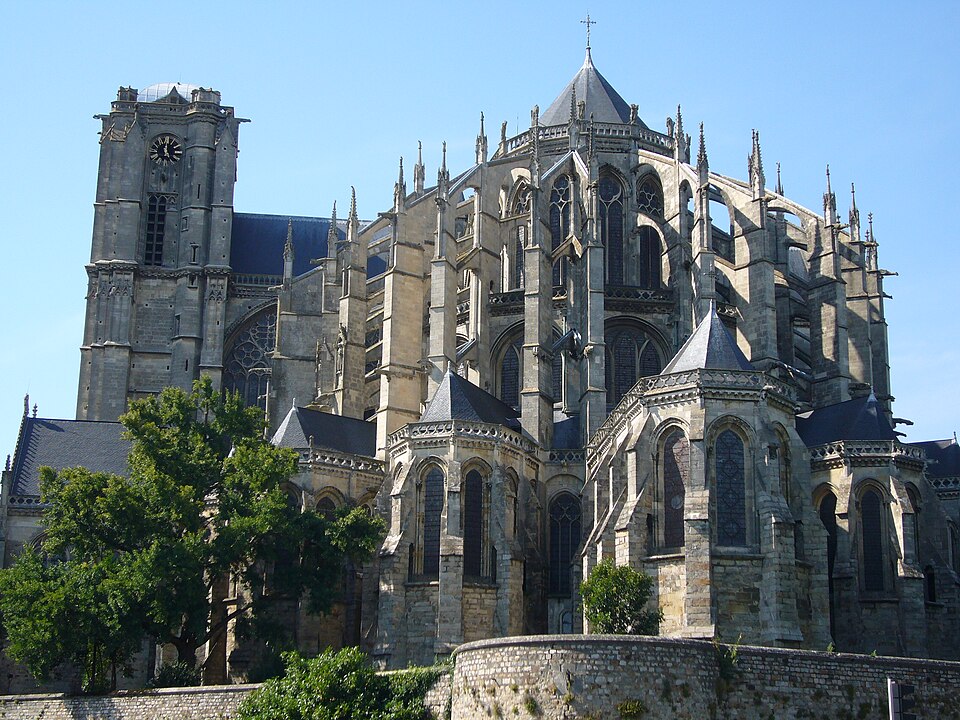
- Bifurcating Flying Buttresses
- Extensive Collection of Stained Glass Windows
- Romanesque Nave
- High Gothic Choir
- Capitals Carved With Acanthus Leaves, Vegetation, Animals, and Human Figures
- Pierre St Julien
Geoffroy of Anjou
About Le Mans Cathedral
Le Mans Cathedral, officially known as Cathédrale St-Julien du Mans, stands as a significant religious edifice in Le Mans, France. It is dedicated to Saint Julian of Le Mans, the first bishop of the city and the individual credited with establishing Christianity in the region around the 4th century. The cathedral's construction is a testament to centuries of architectural evolution, with its foundations laid in the 6th century and its completion marked in 1430, embodying a rich interplay of Romanesque and Gothic styles.
Architectural Synthesis
The cathedral is particularly noteworthy for its architectural fusion. Its nave adheres to a classic Romanesque basilica form, characterized by round-arched arcades and single aisles flanking a central vessel illuminated by clerestory windows. This Romanesque core was largely rebuilt after a fire in 1134, incorporating stone vaults and requiring the addition of flying buttresses. In contrast, the choir and its eastern end represent the High Gothic period, featuring a double ambulatory and elongated radiating chapels. A defining feature of the choir's exterior is its spectacular and unique bifurcating flying buttresses, which split into two to support the structure, lending an unusually graceful and delicate appearance.
Historical Connections and Artistic Treasures
Le Mans Cathedral holds deep historical ties to the Plantagenet dynasty. Significant events, including the marriage of Geoffrey of Anjou and Empress Matilda in 1128, the baptism of their son Henry II in 1133, and the burial of Geoffrey himself in 1151, took place within its precincts. These connections were further solidified by financial contributions from Henry II towards the cathedral's refurbishment.
The cathedral is also a repository of remarkable artistic treasures, most notably its extensive collection of stained glass. The nave retains approximately 20 stained glass windows dating from the mid-12th century, some of which are among the oldest surviving in France. The 13th-century glazing in the choir remains largely intact, displaying a diverse array of scenes from both the Old and New Testaments, as well as the lives of saints and miracles of the Virgin. Among its more unusual artistic elements is a renowned depiction of Jesus with female characteristics found within the stained glass mosaics. Additionally, the western facade features the prehistoric menhir known as the Pierre St Julien, a 4.5-meter-high stone moved to its current location in 1778.
Source: Wikipedia ↗
Frequently Asked Questions
What is the history of construction for Le Mans Cathedral?
The construction of Le Mans Cathedral spanned a considerable period, from the 6th century to the 15th century, culminating in 1430. It involved multiple rebuilding phases, including a significant Romanesque nave constructed after a fire in 1134, and a greatly enlarged Gothic choir begun in 1217.
What are the main architectural styles found at Le Mans Cathedral?
Le Mans Cathedral is characterized by a combination of architectural styles. It features a Romanesque nave with round-arched arcades and single aisles, contrasted with a High Gothic choir. The eastern end is particularly notable for its French Gothic elements and unique flying buttresses.
What is particularly special about the stained glass at Le Mans Cathedral?
The cathedral boasts a rich collection of stained glass, with around 20 windows from the mid-12th century in the nave, some of which are among the oldest extant in France. The 13th-century glazing in the choir is largely intact and presents a diverse range of biblical scenes and lives of saints.
Are there any notable burials at Le Mans Cathedral?
Yes, Geoffrey Plantagenet, Count of Anjou, is buried at Le Mans Cathedral. The cathedral also holds historical significance for the Plantagenet dynasty, with events like the baptism of Henry II taking place within its walls.
What is unique about the flying buttresses of Le Mans Cathedral?
The flying buttresses at the eastern end of Le Mans Cathedral are particularly spectacular due to their unique bifurcating design. Each buttress splits into two, creating a 'Y' shape when viewed from above, lending a graceful and delicate appearance to the building's exterior.
Who is Le Mans Cathedral dedicated to?
Le Mans Cathedral is dedicated to Saint Julian of Le Mans, who is recognized as the city's first bishop. He is credited with establishing Christianity in the region around the early 4th century, and his relics are housed within the cathedral.
Related Cathedrals

Canterbury Cathedral
Canterbury Cathedral is the seat of the Archbishop of Canterbury, the spiritual leader of the Church of England and the Anglican Communion. Founded in 597 on the site of earlier Christian structures, it has undergone numerous rebuildings and extensions, most notably after fires and to accommodate pilgrims. It is a UNESCO World Heritage Site and remains an active place of worship.

Bangor Cathedral
Bangor Cathedral, the cathedral church of Bangor, Gwynedd, Wales, is dedicated to its founder, Saint Deiniol. The site has been a place of Christian worship since the sixth century, with the present building undergoing extensive reconstruction and restoration over centuries, notably in the 19th century under George Gilbert Scott. It holds significant historical and architectural importance within Wales.

Angers Cathedral
Angers Cathedral, officially Cathédrale Saint-Maurice d'Angers, is a Catholic cathedral in Angers, France, serving as the seat of the Bishops of Angers. Renowned for its blend of Romanesque and Gothic architectural styles, it also features significant Baroque elements and an exceptional collection of stained-glass windows, some dating back to the late 12th century.