
Peel Cathedral
Sodor and Man·Church of England·Isle of Man
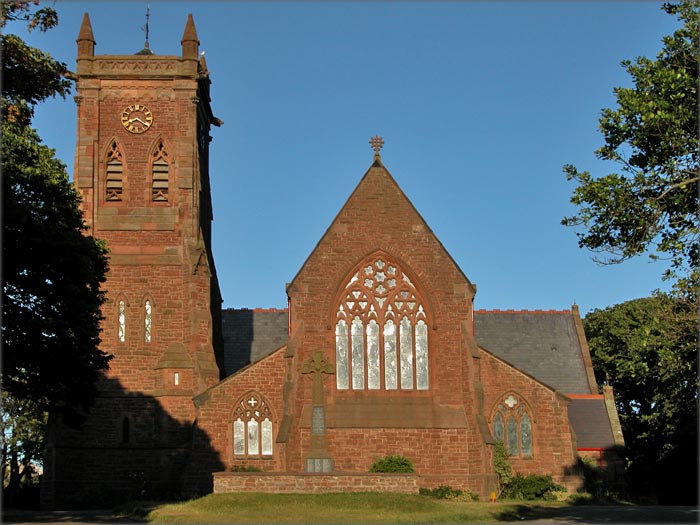
Peel Cathedral, officially known as the Cathedral Church of Saint German or Cathedral Isle of Man, is the cathedral church of the Church of England Diocese of Sodor and Man. Located in Peel, Isle of Man, it was built between 1879 and 1884 and officially designated as a cathedral by Act of Tynwald in 1980. The cathedral serves as the mother church of the diocese, which encompasses the entire Isle of Man.
Key Facts
- ›The current cathedral was constructed between 1879 and 1884, replacing St Peter's Church.
- ›It was officially made the cathedral for the Diocese of Sodor and Man in 1980.
- ›Its patron saint is St German of Man, a Celtic missionary who lived from approximately 410 to 474 AD.
- ›The original cathedral of St German was located within Peel Castle, dating back to the 12th century.
- ›The cathedral was rebranded as 'Cathedral Isle of Man' in 2015.
- ›Local residents' names and signatures were inscribed on terracotta tiles as part of a time capsule in 2024.
- Names and Signatures of Local Residents Inscribed On Terracotta Tiles As Part of A 2024 Time Capsule.
- Reordered Seating For Adaptable Use and Underfloor Heating .
- Brindley & Foster Two-Manual Organ In the Chancel.
19th Century
About Peel Cathedral
Peel Cathedral, officially known as the Cathedral Church of Saint German or Cathedral Isle of Man, stands as the principal church of the Church of England Diocese of Sodor and Man. Located in Peel on the Isle of Man, the current structure was erected between 1879 and 1884. Its designation as a cathedral was formalized by an Act of Tynwald in 1980, marking a significant point in its history.
History and Significance
The cathedral is dedicated to its patron saint, St German of Man, a revered Celtic missionary active in the 5th century. The history of a cathedral dedicated to St German on the Isle of Man is extensive, with an original structure built within the walls of Peel Castle during the 12th century. This early cathedral followed the Sarum Rite and was later occupied as a fortress by the Lords of Man. The original building eventually fell into ruin in the 18th century.
The decision to build the present cathedral arose after the ruins of the former site were deemed unsuitable for rebuilding. The new church, constructed in the late 19th century, was intended to serve as the diocesan cathedral, though this was not immediately realized. Following the sale of Bishopscourt in 1979, which had served as a pro-cathedral, the need for a designated cathedral became urgent. After public consultation, the Kirk German Parish Church was officially consecrated as the cathedral on All Saints' Day in 1980.
Modern Role and Features
Peel Cathedral functions as the mother church for the Diocese of Sodor and Man. The cathedral has a dean and chapter, with the arrangement for the vicar of the parish to serve as dean ex officio established in 2011, reflecting a historical precedent. In recent years, the cathedral has undergone redevelopment, including the installation of adaptable seating and underfloor heating, completed in 2024. Notable events include visits from Anne, Princess Royal, for thanksgiving services, and the cathedral's participation in social solidarity by displaying a rainbow flag during a vigil for victims of the Orlando shooting in 2016. Beneath the flagstones, a time capsule containing the names and signatures of hundreds of local residents was buried in 2024 during the building's redevelopment.
Source: Wikipedia ↗
Frequently Asked Questions
What is the history of Peel Cathedral?
The current building was constructed between 1879 and 1884. An earlier cathedral dedicated to St German existed within Peel Castle from the 12th century but fell into ruin. The present structure was officially designated as the cathedral in 1980.
Who is the patron saint of Peel Cathedral?
The patron saint is St German of Man, a Celtic missionary and holy man who was active from about 410 to 474 AD. His feast day is celebrated annually on July 13th.
What is the Diocese of Sodor and Man?
The Diocese of Sodor and Man is the ecclesiastical province of the Church of England to which Peel Cathedral belongs. It currently comprises the entirety of the Isle of Man.
What notable events have occurred at Peel Cathedral?
In 2016, the cathedral displayed a rainbow flag during a vigil for victims of the Orlando nightclub shooting to show solidarity with the LGBT community. In 2015 and 2024, Anne, Princess Royal, attended thanksgiving services related to the cathedral's development and reordering.
What architectural styles are present in Peel Cathedral?
The text mentions the original cathedral was built of green slate and red sandstone, and the present building was constructed between 1879-1884. Specific architectural styles are not detailed.
Related Cathedrals

Bath Abbey
Bath Abbey, officially the Abbey Church of Saint Peter and Saint Paul, is a significant parish church and former Benedictine monastery in Bath, Somerset, England. Originally founded in the 7th century, it has undergone numerous rebuildings and restorations, most notably in the 12th and 16th centuries, with major renovations by Sir George Gilbert Scott in the 1860s. It stands as a prime example of Perpendicular Gothic architecture and once served as a cathedral for the Diocese of Bath and Wells before its consolidation at Wells.

Birmingham Cathedral
The Birmingham Cathedral, officially the Cathedral Church of Saint Philip, is the principal Anglican cathedral in Birmingham, England. Originally built as a Baroque parish church designed by Thomas Archer and consecrated in 1715, it was elevated to cathedral status in 1905, becoming the seat of the Bishop of Birmingham. It is recognized as a Grade I listed building and is a significant example of English Baroque architecture.

Bishop's Tawton
Bishop's Tawton is a village and civil parish in North Devon, England, situated in the valley of the River Taw. Its historical significance is linked to a potential early bishopric in the 10th century, though this is conjectural, with the extant Church of St John the Baptist featuring a 14th-century spire and Norman font.