
Bishop's Tawton
Bishop's Tawton is a village and civil parish in North Devon, England, situated in the valley of the River Taw. Its historical significance is linked to a potential early bishopric in the 10th century, though this is conjectural, with the extant Church of St John the Baptist featuring a 14th-century spire and Norman font.
Key Facts
- ›The village was potentially the seat of the first bishop for Devon in 905 AD.
- ›By 909 AD, the bishop's see had moved to Crediton, and later to Exeter in 1050.
- ›The Church of St John the Baptist has a 14th-century spire and a Norman baptismal font.
- ›Remains of a modest bishop's 'palace' are located at Court Farm, adjacent to the parish church.
- ›The parish was a bishop's peculiar, meaning it was under the direct jurisdiction of the bishop.
- ›The Chichester family held the historic estate of Hall and Pill.
Norman, Medieval
- 14th-Century Spire of St John the Baptist Church
- Norman Baptismal Font
- Mural Monuments To the Chichester Family
- Remains of A Bishop's 'Palace' At Court Farm
10th Century, 14th Century
About Bishop's Tawton
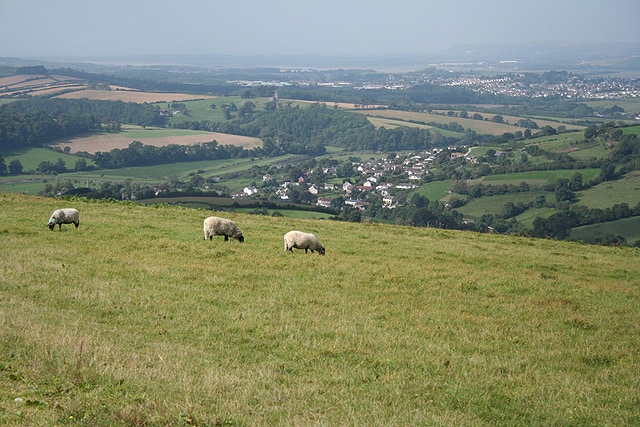
Bishop's Tawton is a village and civil parish located in the North Devon district of Devon, England. Situated in the picturesque valley of the River Taw, approximately three miles south of Barnstaple, the village holds historical significance related to the early organization of the Church in Devon.
Historical Context and Religious Significance
According to records from the 16th and 17th centuries, the see of the first bishop for Devon was established at Tawton (later named Bishop's Tawton) in 905 AD. This was shortly after the Diocese of Sherborne was divided. While the bishop's see was certainly located at Crediton by 909 AD, and subsequently moved to Exeter in 1050, the initial association with Tawton is a notable point in local history. The existence of a 10th-century bishop's church or cathedral in Bishop's Tawton is conjectural, but remains of a modest bishop's 'palace' can be found at Court Farm, adjacent to the current parish church. This residence served bishops for centuries until Tudor times, and the parish itself was a bishop's peculiar, meaning it was under the direct jurisdiction of the bishop.
The Church of St John the Baptist
The extant Church of St John the Baptist is a focal point of the village. Its spire dates from the 14th century. Inside, the church contains a Norman baptismal font, a significant example of early ecclesiastical architecture. Additionally, several mural monuments commemorate members of the influential Chichester family, who were associated with historic estates in the area such as Hall and Pill.
Notable Residents and Monuments
Bishop's Tawton has been home to notable individuals, including Clara Codd, a suffragette and theosophist, born in the village in October 1877. A more recent monument stands on Codden Hill: a pillar dedicated to Caroline Thorpe, wife of the local MP Jeremy Thorpe. She died in a car accident on June 29, 1970, and the monument, designed by Clough Williams-Ellis, was consecrated on December 4, 1971, by the Archbishop of Canterbury and the Bishop of Crediton.
Source: Wikipedia ↗
Frequently Asked Questions
What is the historical significance of Bishop's Tawton?
Bishop's Tawton is historically significant due to records suggesting it was the seat of the first bishop for Devon in 905 AD. While the see later moved, remnants of a bishop's residence exist, and the parish was a bishop's peculiar.
What can be found inside the Church of St John the Baptist?
Inside the Church of St John the Baptist, visitors can see a Norman baptismal font and several mural monuments dedicated to the Chichester family of Hall. The church also features a 14th-century spire.
Was Bishop's Tawton ever a cathedral?
Sources from the 16th and 17th centuries indicate that Bishop's Tawton (then Tawton) was the see for the first bishop of Devon in 905 AD. However, any link between this potential early bishop's church and the current Church of St John the Baptist is speculative, and the see was soon moved.
Are there any notable monuments in Bishop's Tawton?
Yes, a pillar on Codden Hill commemorates Caroline Thorpe, wife of Jeremy Thorpe. This monument was dedicated in 1971 by the Archbishop of Canterbury and the Bishop of Crediton.
Related Cathedrals

Exeter Cathedral
Exeter Cathedral, officially the Cathedral Church of Saint Peter in Exeter, is a significant Anglican cathedral located in Exeter, Devon, England. The present building, completed around 1400, is renowned for its architectural achievements, including the longest uninterrupted medieval stone vaulted ceiling in the world, and houses historical artifacts like the Exeter Book.

Bath Abbey
Bath Abbey, officially the Abbey Church of Saint Peter and Saint Paul, is a significant parish church and former Benedictine monastery in Bath, Somerset, England. Originally founded in the 7th century, it has undergone numerous rebuildings and restorations, most notably in the 12th and 16th centuries, with major renovations by Sir George Gilbert Scott in the 1860s. It stands as a prime example of Perpendicular Gothic architecture and once served as a cathedral for the Diocese of Bath and Wells before its consolidation at Wells.

Blackburn Cathedral
Blackburn Cathedral, officially the Cathedral Church of Saint Mary the Virgin with Saint Paul, is a Church of England cathedral in Blackburn, Lancashire, England. The site has a history of Christian worship spanning over a millennium, with its current form evolving significantly from a Norman parish church to a 19th-century rebuild and a major post-war expansion that transformed it into a modern cathedral.