
Blackburn Cathedral
Blackburn Cathedral, officially the Cathedral Church of Saint Mary the Virgin with Saint Paul, is a Church of England cathedral in Blackburn, Lancashire, England. The site has a history of Christian worship spanning over a millennium, with its current form evolving significantly from a Norman parish church to a 19th-century rebuild and a major post-war expansion that transformed it into a modern cathedral.
Key Facts
- ›The site has been associated with Christian worship for over a thousand years, with evidence of a Norman stone church.
- ›The current building's 19th-century iteration was designed by John Palmer in imitation of the Decorated Gothic style.
- ›Blackburn became a cathedral seat in 1926 with the creation of the Diocese of Blackburn, leading to significant expansion plans.
- ›Post-war expansion, led by architect Laurence King, introduced modern construction materials and a distinctive concrete lantern tower.
- ›The cathedral features extensive artistic work by John Hayward, including sculptures, choir stalls, and the altar.
- ›In 2016, a major project completed the first new ecclesiastical cloister built in the UK since the 16th century.

Gothic Revival, Decorated Gothic, Modern Gothic
- Octagonal Concrete Lantern Tower
- Extensive Artistic Works By John Hayward
- Christ the Worker Sculpture By John Hayward, Alluding To Textile Heritage
- Medieval Misericords From Whalley Abbey
- New Ecclesiastical Cloister
- the Healing of the Nations Sculpture On the Exterior East Wall
19th Century, 20th Century
John Palmer, William Adam Forsyth, Laurence King, Brian Lowe
About Blackburn Cathedral
Blackburn Cathedral, officially known as the Cathedral Church of Saint Mary the Virgin with Saint Paul, stands as a prominent Church of England cathedral in Blackburn, Lancashire, England. The site itself boasts a continuous history of Christian worship stretching back over a thousand years, with archaeological evidence indicating a Norman stone church and historical claims pointing to an even earlier foundation.
History and Architectural Evolution
The earliest extant fabric of the current building dates to the late Georgian era, but the significant transformation began in the 19th century. Between 1820 and 1826, the church was entirely rebuilt by architect John Palmer, a proponent of the Gothic Revival. Palmer's design mimicked the Decorated Gothic style, featuring a prominent west tower, tall windows, and battlements.
The church's status changed dramatically in 1926 when the Diocese of Blackburn was created, and the parish church was designated as its cathedral seat. This elevation spurred a major program of enlargement and enrichment. An extension scheme devised by William Adam Forsyth in 1933 aimed to add a large choir and transept arms, crowned by a central tower. However, wartime shortages and post-war inflation led to the abandonment of Forsyth's complete plan, though the transept arms were largely completed.
Post-War Modernisation and Artistic Flourish
In the post-war era, architect Laurence King was appointed to provide a more economical solution for the cathedral's completion. King replaced Forsyth's intended central tower with an octagonal roof lantern constructed from reinforced concrete and topped with an aluminium flèche. He also shortened the eastward extension and brought the sanctuary forward, creating a more compact and modern liturgical space. This phase of work concluded in 1977 with the cathedral's consecration.
The reinforced concrete lantern tower later required rebuilding between 1998 and 1999 by architect Brian Lowe, who replaced the concrete structure with stone while retaining King's design. The lantern was also reglazed with new stained glass by Linda Walton.
Blackburn Cathedral is particularly noted for its bright and spacious interior, a deliberate design choice by King and artist John Hayward. Hayward, who served as artist-in-residence, created numerous significant works, including the oak cathedra and choir stalls, gilded sculptures of seraphim, the altar, and the iconic 'Christ the Worker' sculpture on the west wall, which alludes to Lancashire's textile heritage through its design resembling a cotton loom. Other notable artistic elements include medieval misericords from Whalley Abbey and stained glass windows, some incorporating fragments of earlier 19th-century glass, including a piece by Edward Burne-Jones.
Contemporary Significance
In the 21st century, developments have included the 2001 commissioning of a large Millennium sculpture, 'The Healing of The Nations,' by Mark Jalland. In 2016, the completion of Cathedral Court marked a significant expansion of the cathedral grounds, including the first new ecclesiastical cloister built in the UK since the 16th century. The cathedral continues to serve as an active place of worship, a centre for diocesan life, and a visitor attraction, hosting numerous events and even serving as a major public vaccination centre during the COVID-19 pandemic.
Source: Wikipedia ↗
Frequently Asked Questions
What is the history of Blackburn Cathedral's site?
The site of Blackburn Cathedral has been a place of Christian worship for over a thousand years. A Norman stone church once stood there, and traditions suggest an even earlier foundation dating back to 596 AD.
When did Blackburn become a cathedral?
Blackburn was elevated to cathedral status in 1926 with the establishment of the Diocese of Blackburn. This marked the beginning of a significant period of enlargement and enrichment for the church.
Who were the main architects involved in Blackburn Cathedral's development?
Key architects include John Palmer, who designed the 19th-century church, William Adam Forsyth, whose initial expansion plans were later modified, and Laurence King, who oversaw the post-war expansion and the construction of the concrete lantern tower.
What are some notable artistic features within Blackburn Cathedral?
The cathedral is renowned for the extensive work of artist John Hayward, including gilded sculptures of seraphim, a large bronze and steel Corona above the altar, and the 'Christ the Worker' sculpture on the west wall. Numerous stained glass windows and misericords from Whalley Abbey also feature.
What is the significance of the lantern tower?
The octagonal lantern tower, originally constructed from reinforced concrete by Laurence King and later rebuilt in stone by Brian Lowe, is a modern architectural feature. It houses the sanctuary and replaced an earlier planned central tower, contributing to the cathedral's distinctive skyline.
Has Blackburn Cathedral undergone recent developments?
Yes, in 2016, a £36 million project called Cathedral Court was completed, featuring the UK's first new ecclesiastical cloister since the 16th century, along with new clergy residences, a library, and administrative offices. The surrounding area was also transformed into a public square.
Related Cathedrals

Bath Abbey
Bath Abbey, officially the Abbey Church of Saint Peter and Saint Paul, is a significant parish church and former Benedictine monastery in Bath, Somerset, England. Originally founded in the 7th century, it has undergone numerous rebuildings and restorations, most notably in the 12th and 16th centuries, with major renovations by Sir George Gilbert Scott in the 1860s. It stands as a prime example of Perpendicular Gothic architecture and once served as a cathedral for the Diocese of Bath and Wells before its consolidation at Wells.
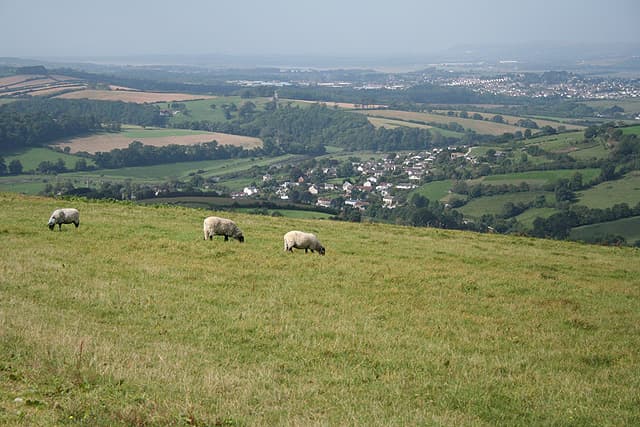
Bishop's Tawton
Bishop's Tawton is a village and civil parish in North Devon, England, situated in the valley of the River Taw. Its historical significance is linked to a potential early bishopric in the 10th century, though this is conjectural, with the extant Church of St John the Baptist featuring a 14th-century spire and Norman font.

Bristol Cathedral
Bristol Cathedral, officially the Cathedral Church of the Holy and Undivided Trinity, is the seat of the Bishop of Bristol and a prominent Church of England cathedral. Originally founded as St Augustine's Abbey in 1140, it transitioned to its cathedral status in 1542 following the Dissolution of the Monasteries. The building is renowned for its architectural evolution, showcasing elements from Norman to Gothic Revival styles, with a particularly unique hall church design in its eastern end.