
Norwich Cathedral
Norwich Cathedral, officially the Cathedral Church of the Holy and Undivided Trinity, is a prominent Church of England cathedral in Norwich, Norfolk, England. Construction began in 1096, resulting in a magnificent example of Norman architecture that has undergone significant additions and modifications over the centuries, including a notable spire and extensive vaulting.
Key Facts
- ›Construction of Norwich Cathedral commenced in 1096 under Bishop Herbert de Losinga, with the nave completed around 1120 and the entire structure by 1145.
- ›The cathedral primarily features Norman architecture, constructed with flint and mortar and faced with Caen limestone.
- ›The current spire, built in 1480, is the second tallest in England at 96 meters (315 ft), replacing earlier wooden structures that were destroyed by storms and lightning.
- ›The cloisters, begun in 1297 and finished in 1430, are the fourth largest in England and feature nearly 400 carved stone ceiling bosses.
- ›Norwich Cathedral houses one of the world's greatest collections of medieval sculptural treasures in its over 1,000 roof bosses, depicting a vast array of subjects.
- ›The cathedral was significantly damaged during riots in 1272 and by Puritan iconoclasm in the 17th century, with extensive restoration efforts undertaken throughout its history.
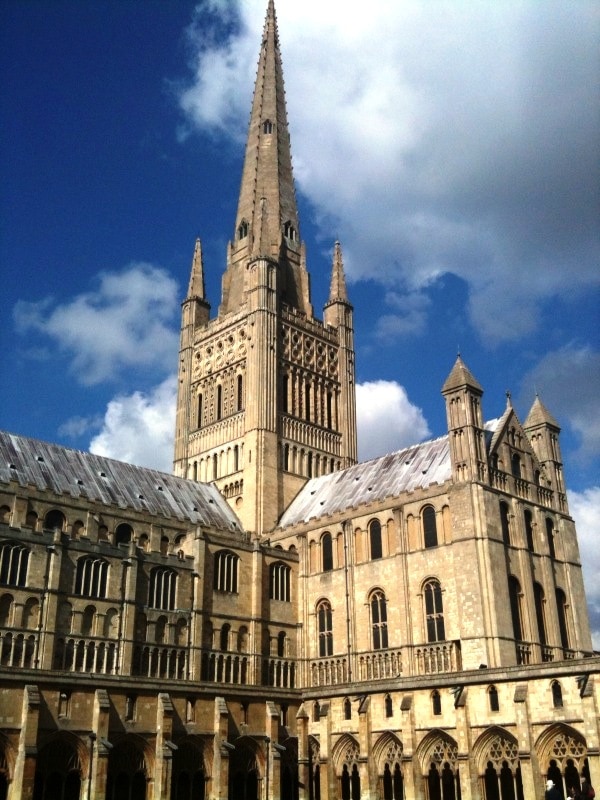
Norman, Gothic, Perpendicular
- Roof Bosses
- Second Tallest Spire In England
- Fourth Largest Cloisters In England
- Norman Tower
- Despenser Retable
- Medieval Graffiti
- Copper Baptismal Font Made From Rowntree's Chocolate Bowls
11th Century, 12th Century, 13th Century, 14th Century, 15th Century, 19th Century, 21st Century
Herbert De Losinga, Anthony Salvin, Charles Nicholson, Hopkins Architects
About Norwich Cathedral
Norwich Cathedral, formally known as the Cathedral Church of the Holy and Undivided Trinity, stands as a principal religious and architectural landmark in Norwich, Norfolk, England. It serves as the seat of the Bishop of Norwich and the mother church for the Diocese of Norwich, hosting daily Church of England services.
History and Construction
The foundation of Norwich Cathedral was laid in 1096 by Herbert de Losinga, the first Bishop of Norwich, with the intention of creating a grand Benedictine priory. The primary structure is Norman, built with flint and mortar and faced with cream-coloured Caen limestone. Construction progressed eastward, with the nave completed around 1120 and the entire structure, including the crossing tower, by 1145. This made it the largest building in East Anglia at the time.
Over the centuries, the cathedral has undergone significant modifications and repairs. Riots in 1272 necessitated extensive repairs, completed by 1278, during which the cathedral was re-consecrated in the presence of King Edward I. The cloisters, begun in 1297, are the fourth largest in England and were completed in 1430. The original wooden spire was replaced multiple times due to damage from storms and lightning; the current stone spire, dating from 1480, is the second tallest in England at 96 meters (315 ft).
The 16th and 17th centuries brought periods of destruction, including the iconoclasm of the English Reformation and the Civil War, during which Puritan mobs damaged or destroyed religious symbols and furnishings. Restoration efforts continued into the 19th and 20th centuries, with notable remodelling of the south transept by Anthony Salvin in the 1830s and the construction of a new Lady Chapel in the early 1930s. More recent modern works include a new hospitality and education facility opened in 2010.
Architectural Significance and Features
The cathedral is a prime example of Norman ecclesiastical architecture, with later Gothic influences evident in its windows and vaulting. The nave, choir, and transepts feature impressive stone vaulting, particularly the spectacular lierne and tierceron vaults adorned with hundreds of ornately carved bosses. These bosses are considered among the world's greatest medieval sculptural treasures, surviving iconoclasm and depicting a vast array of subjects from natural forms to biblical narratives and secular scenes.
Other notable architectural elements include the imposing Norman tower, decorated with geometrical patterns, and the extensive cloisters. The cathedral lacks a ring of bells, which is unusual for English cathedrals of its size. Among its treasures are the Despenser Retable, a late 14th-century altarpiece, and a unique baptismal font crafted from bowls used in the Rowntree's chocolate factory. The cathedral also preserves a significant amount of medieval graffiti on its interior stonework.
Source: Wikipedia ↗
Frequently Asked Questions
When was Norwich Cathedral built?
Construction of Norwich Cathedral began in 1096 and was largely completed by 1145. However, significant additions and modifications continued over centuries, including the current spire added in 1480 and the cloisters completed in 1430.
What architectural style is Norwich Cathedral?
The cathedral is primarily Norman in style, evident in its original stone structure. Later additions and repairs introduced Gothic elements, particularly in window tracery and the rebuilding of the choir clerestory in the Perpendicular style.
What are the notable features of Norwich Cathedral?
Key features include its impressive Norman architecture, the second tallest spire in England, the extensive medieval roof bosses which are considered a major sculptural treasure, and the fourth largest cloisters in England.
Has Norwich Cathedral always been in Norwich?
The seat of the bishopric was transferred from Thetford to Norwich in 1094, making Norwich the established location for the cathedral. Earlier episcopal sees in East Anglia were located at Elmham and Dunwich.
What damage has Norwich Cathedral sustained?
The cathedral has suffered damage from various events, including riots in 1272, a storm that blew down its first spire in 1362, lightning striking its second spire in 1463 causing a fire, and iconoclasm by Puritan mobs during the English Civil War.
What is the significance of the roof bosses?
The over 1,000 roof bosses are considered one of the world's greatest medieval sculptural treasures. They depict a wide range of subjects, from natural motifs to figural representations and narrative sequences, including the history of the world from creation in the nave vault.
Related Cathedrals

Bath Abbey
Bath Abbey, officially the Abbey Church of Saint Peter and Saint Paul, is a significant parish church and former Benedictine monastery in Bath, Somerset, England. Originally founded in the 7th century, it has undergone numerous rebuildings and restorations, most notably in the 12th and 16th centuries, with major renovations by Sir George Gilbert Scott in the 1860s. It stands as a prime example of Perpendicular Gothic architecture and once served as a cathedral for the Diocese of Bath and Wells before its consolidation at Wells.
Bishop's Tawton
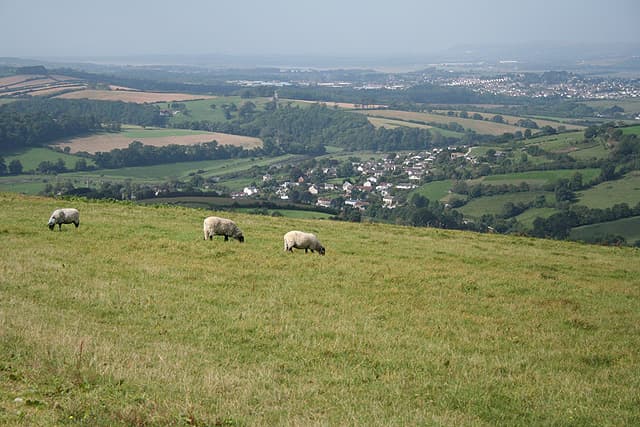
Bishop's Tawton is a village and civil parish in North Devon, England, situated in the valley of the River Taw. Its historical significance is linked to a potential early bishopric in the 10th century, though this is conjectural, with the extant Church of St John the Baptist featuring a 14th-century spire and Norman font.

Blackburn Cathedral
Blackburn Cathedral, officially the Cathedral Church of Saint Mary the Virgin with Saint Paul, is a Church of England cathedral in Blackburn, Lancashire, England. The site has a history of Christian worship spanning over a millennium, with its current form evolving significantly from a Norman parish church to a 19th-century rebuild and a major post-war expansion that transformed it into a modern cathedral.