
Newcastle Cathedral
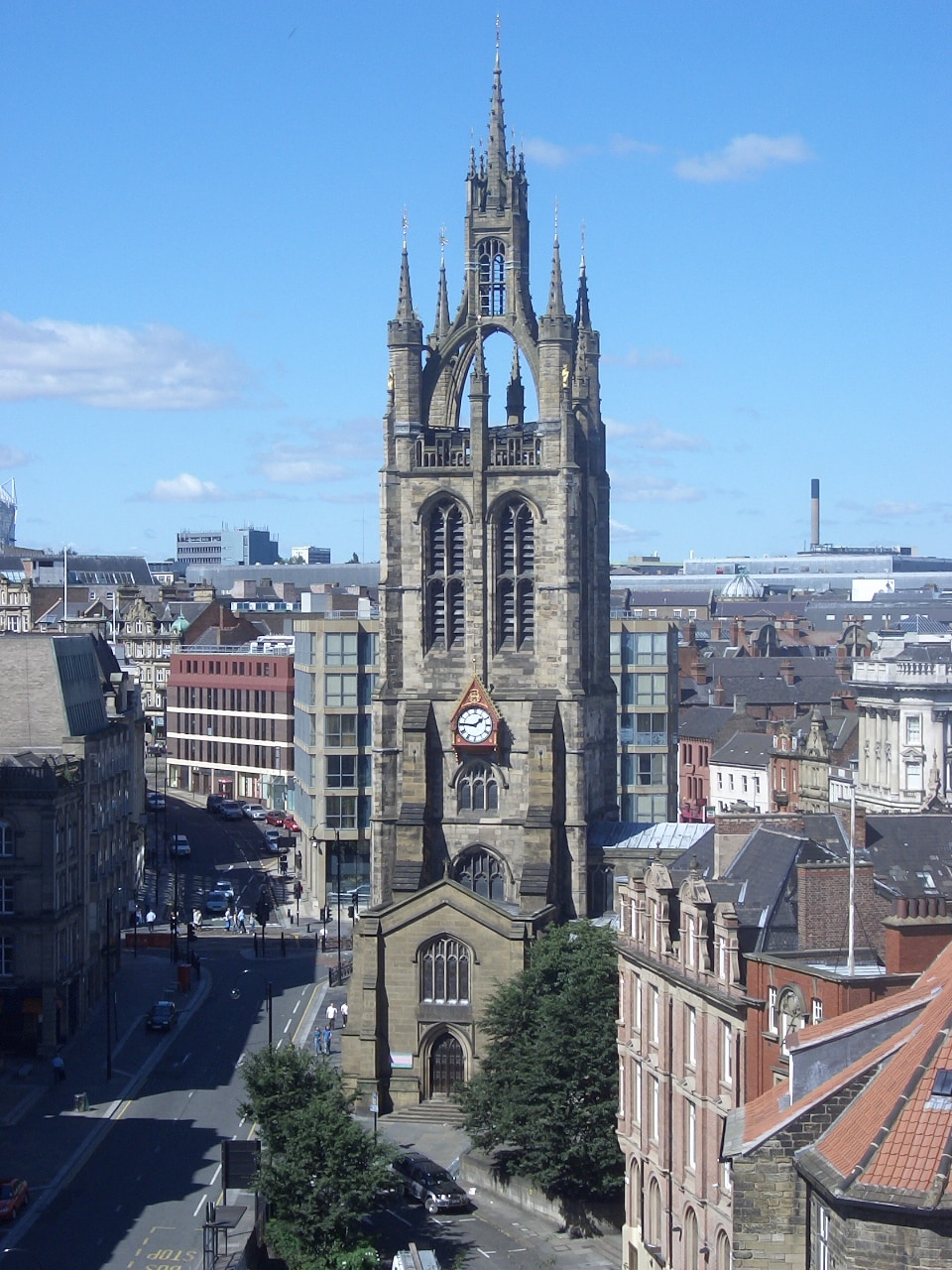
Newcastle Cathedral, formally the Cathedral Church of St Nicholas, is the mother church of the Diocese of Newcastle and the seat of the Bishop of Newcastle. Originally founded as a parish church in 1091, the current structure was completed in 1350, with significant additions and restorations over the centuries, notably its distinctive 15th-century lantern spire. It became a cathedral in 1882, serving the most northerly Anglican diocese in England.
Key Facts
- ›Founded as a Norman parish church in 1091, destroyed by fire in 1216, and the present building completed in 1350.
- ›Features a notable 15th-century lantern spire, which once served as a navigation point for ships on the River Tyne.
- ›Became the Cathedral Church of St Nicholas in 1882 upon the formation of the Diocese of Newcastle.
- ›The interior was damaged by Scottish invaders in 1640 and 1644 during periods of occupation and siege.
- ›Underwent a significant heritage project between 2020-2021, involving renovations and improvements.
- ›Contains a 13th-century tomb effigy of a knight and the Thornton Brass, believed to be the largest brass in the United Kingdom.
Perpendicular Gothic
15th-Century Lantern Spire, 13th-Century Knight Effigy, Thornton Brass, Monument To Admiral Lord Collingwood, Stained Glass Windows, Standards of the Northumberland Fusiliers
11th Century, 14th Century, 15th Century
About Newcastle Cathedral
Newcastle Cathedral, officially the Cathedral Church of St Nicholas, is the ecclesiastical seat of the Bishop of Newcastle and the principal church of the Church of England's Diocese of Newcastle. This diocese is the most northerly in England, extending from the River Tyne to Berwick-upon-Tweed and Alston in Cumbria.
History and Architecture
The site's ecclesiastical history began with a Norman parish church founded in 1091, built near the line of Hadrian's Wall. This original church was destroyed by fire in 1216. The present structure was largely completed by 1350, predominantly in the Perpendicular Gothic style. A significant architectural highlight is its 15th-century lantern spire, an unusual design that historically served as a navigational aid for shipping on the River Tyne. The tower measures approximately 11.20 meters by 11 meters at its base and reaches a height of 59.18 meters to the top of the steeple.
The cathedral has endured periods of damage and restoration. Its interior was affected by Scottish invaders in the 17th century, and the tower required buttressing due to cracking and tilting in the 19th century. Major restoration and renovation work, part of the Common Ground in Sacred Space project, took place between 2020 and 2021, involving the removal of Victorian pews, installation of underfloor heating, and improvements to the churchyards.
Significance and Features
Newcastle Cathedral achieved its status as a cathedral in 1882, coinciding with the establishment of the Diocese of Newcastle to serve the growing city and region. The cathedral is named after Saint Nicholas, the patron saint of sailors, a dedication possibly linked to its elevated position overlooking the River Tyne.
Notable interior features include a 13th-century tomb effigy of a knight, believed to be Peter le Marechal, and the Thornton Brass, a large Flemish brass monument to a prominent merchant, Roger Thornton, his wife, and their children. The monument to Admiral Lord Collingwood, who took command at the Battle of Trafalgar, is also a significant memorial, as he was baptized and married in the church.
The cathedral's artistic heritage includes nave furnishings designed by local craftsman Ralph Hedley and a collection of stained glass. While much of the original medieval glass was lost, surviving fragments include a roundel in St Margaret's Chapel. More modern stained glass commemorates local industrial pioneers and significant events, such as the cathedral's survival during World War II.
The cathedral also houses numerous military standards presented after World War I, displayed in the Chapel of the Northumberland Fusiliers. The strong musical tradition of the cathedral is evidenced by its history, including composer Charles Avison serving as organist, and its choir's appearances on BBC Radio 3.
Source: Wikipedia ↗
Frequently Asked Questions
What is the history of Newcastle Cathedral?
Newcastle Cathedral began as a Norman parish church founded in 1091. It was destroyed by fire in 1216, and the current building was completed in 1350, primarily in the Perpendicular style. It was raised to cathedral status in 1882.
What is the most distinctive architectural feature of Newcastle Cathedral?
The most distinctive feature is its 15th-century lantern spire, which is noted for its unusual design and once served as a navigation aid for ships on the River Tyne. The tower base measures approximately 11.20 m by 11 m, and it stands 59.18 m tall.
Has Newcastle Cathedral always been a cathedral?
No, Newcastle Cathedral was originally a parish church established in 1091. It became a cathedral in 1882 when the Diocese of Newcastle was formed, with St Nicholas's designated as its seat.
What notable figures are associated with Newcastle Cathedral?
John Knox, the Scottish reformer, served as minister here from late 1550 to 1553. The cathedral also commemorates Admiral Lord Collingwood, who was baptized and married there, with a monument inside.
What significant events have affected Newcastle Cathedral?
The church was destroyed by fire in 1216 and its interior was damaged by Scottish invaders in 1640 and later during the Siege of Newcastle in 1644. It also closed temporarily in 2020-2021 due to the COVID-19 pandemic.
Are there any important artworks or memorials inside?
Yes, the cathedral houses a 13th-century tomb effigy of a knight, the Thornton Brass (one of the largest in the UK), and a monument to Admiral Lord Collingwood. It also features stained glass, including a medieval roundel and windows honoring industrial pioneers.
Related Cathedrals

Bath Abbey
Bath Abbey, officially the Abbey Church of Saint Peter and Saint Paul, is a significant parish church and former Benedictine monastery in Bath, Somerset, England. Originally founded in the 7th century, it has undergone numerous rebuildings and restorations, most notably in the 12th and 16th centuries, with major renovations by Sir George Gilbert Scott in the 1860s. It stands as a prime example of Perpendicular Gothic architecture and once served as a cathedral for the Diocese of Bath and Wells before its consolidation at Wells.

Bishop's Tawton
Bishop's Tawton is a village and civil parish in North Devon, England, situated in the valley of the River Taw. Its historical significance is linked to a potential early bishopric in the 10th century, though this is conjectural, with the extant Church of St John the Baptist featuring a 14th-century spire and Norman font.

Blackburn Cathedral
Blackburn Cathedral, officially the Cathedral Church of Saint Mary the Virgin with Saint Paul, is a Church of England cathedral in Blackburn, Lancashire, England. The site has a history of Christian worship spanning over a millennium, with its current form evolving significantly from a Norman parish church to a 19th-century rebuild and a major post-war expansion that transformed it into a modern cathedral.