
Maillezais Cathedral
Maillezais Cathedral, formerly the Abbey of Saint-Pierre, is a ruined Roman Catholic church located in Maillezais, Vendée, France. It evolved from a 10th-century abbey to a cathedral completed in the 15th century, serving as the seat of the Bishopric of Maillezais until its suppression in 1648. The site, known for its Romanesque and Gothic architectural elements, is now a heritage monument reflecting its significant religious and historical past.
Key Facts
- ›Originally founded as the Abbey of Saint-Pierre in the 10th century.
- ›Became the cathedral for the newly created Diocese of Maillezais in 1317.
- ›Suffered destruction during the Wars of Religion in 1562.
- ›Served as a fortified stronghold for Protestants in the late 16th and early 17th centuries.
- ›Designated a monument historique on January 30, 1924.
- ›The ruins consist of the cathedral, refectory, dormitory, kitchen, cellars, turrets, and ramparts.
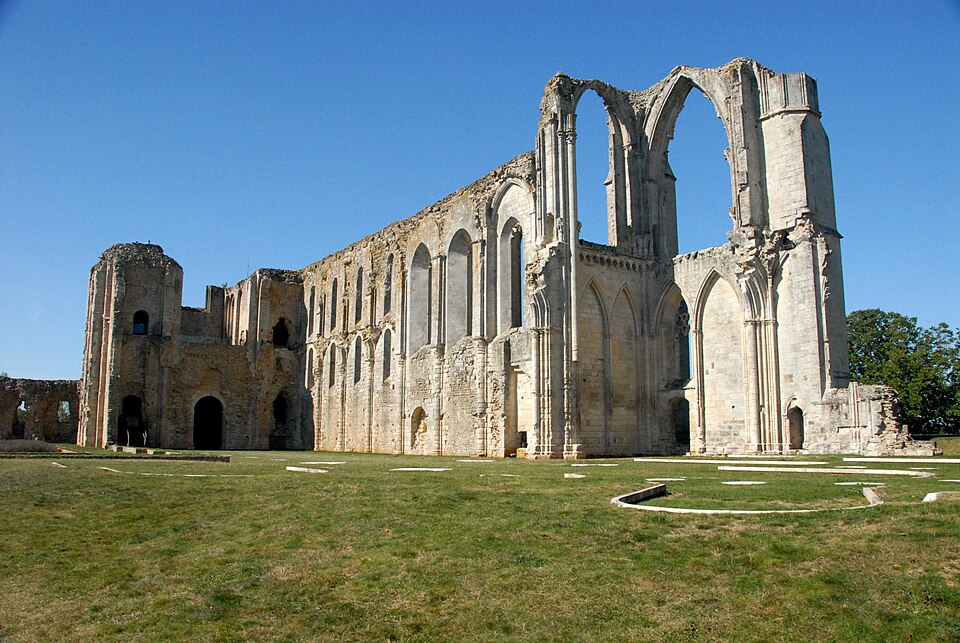
Ruined Cathedral, Refectory, Dormitory, Kitchen, Cellars, Turrets, Ramparts, Bell Tower, Remnants of Fortifications
About Maillezais Cathedral
Maillezais Cathedral, originally the Abbey of Saint-Pierre, is a significant ruined Roman Catholic church located in the commune of Maillezais in the Vendée department of France. Its history spans from its founding as an abbey in the 10th century to its elevation as a cathedral in the 14th century, with its structures largely abandoned by the late 17th century. Today, the site comprises extensive ruins that showcase its Romanesque and Gothic architectural heritage.
History and Development
The origins of Maillezais Cathedral trace back to the late 10th century when Countess Emma, wife of William IV, Duke of Aquitaine, decided to found an abbey at the site of a discovered chapel dedicated to Saint Hilaire. The new church was consecrated in 989. The abbey grew in importance, becoming a Benedictine institution. In 1010, the abbey moved to Maillezais, and a new chapel, dedicated to Saint Peter, was established. Notable figures, including William V, Duke of Aquitaine, were buried at the abbey's cloister.
In 1317, Pope John XXII elevated the Abbey of Maillezais to the status of a diocese, creating the Bishopric of Maillezais. The former abbey church became the seat of the new Bishop of Maillezais, with Abbot Geoffroy Povereau appointed as the first bishop. The site became a center for intellectual activity, with François Rabelais teaching there in the early 16th century. Improvements and additions, including a Gothic transept and enhancements to the interiors, were made throughout the 14th and 15th centuries.
Conflicts and Decline
The history of Maillezais Cathedral was marked by conflict, particularly during the Reformation. The cathedral was destroyed in 1562. In the late 16th and early 17th centuries, it was fortified and served as a stronghold for Protestants. Control shifted back to the Catholics in 1619. The Bishopric of Maillezais, once one of the richest in France, was transferred to La Rochelle in 1648, and the monastic community left Maillezais in 1666, leading to the abandonment of the site.
Architectural Remains and Heritage
Following the French Revolution, the site was sold and used as a stone quarry. It was designated a monument historique on January 30, 1924, recognizing its architectural significance. The surviving ruins offer a glimpse into its past glory, with remnants of the cathedral, refectory, dormitory, kitchen, cellars, turrets, and ramparts. Archaeological excavations have revealed foundational structures, pottery, and architectural elements that shed light on the daily life and construction phases of the former abbey and cathedral. Restoration efforts have been ongoing since the late 20th century to preserve this important historical monument.
Source: Wikipedia ↗
Frequently Asked Questions
When was Maillezais Cathedral founded?
The site began as the Abbey of Saint-Pierre, with foundations laid around 976 by Countess Emma. The new church was consecrated in 989. The abbey moved to its current location in 1010, with groundbreaking for a new chapel soon after.
What was the status of Maillezais Cathedral in the 14th century?
In 1317, Pope John XXII restructured French bishoprics and raised the status of Maillezais to a diocese, with the former abbey church becoming the seat of the Bishop of Maillezais. Abbot Geoffroy Povereau was appointed the first bishop.
What happened to Maillezais Cathedral during the Reformation?
The cathedral was destroyed in 1562 during the Reformation and the subsequent Wars of Religion. Later, in 1589, Agrippa d'Aubigné fortified the cathedral, and it served as a Protestant stronghold until 1618.
When was the Bishopric of Maillezais suppressed?
The Bishopric of Maillezais remained the seat of the bishopric until 1648, when Pope Innocent X transferred it to the St. Louis Cathedral of La Rochelle. The monastic community continued at the Maillezais site until 1666, after which the entire site was abandoned.
What is the current status of Maillezais Cathedral?
After being sold as national property and used as a stone quarry following the French Revolution, the site was returned to the public in 1840. It was designated a historical monument in 1924 and has since been the subject of restoration efforts.
Related Cathedrals
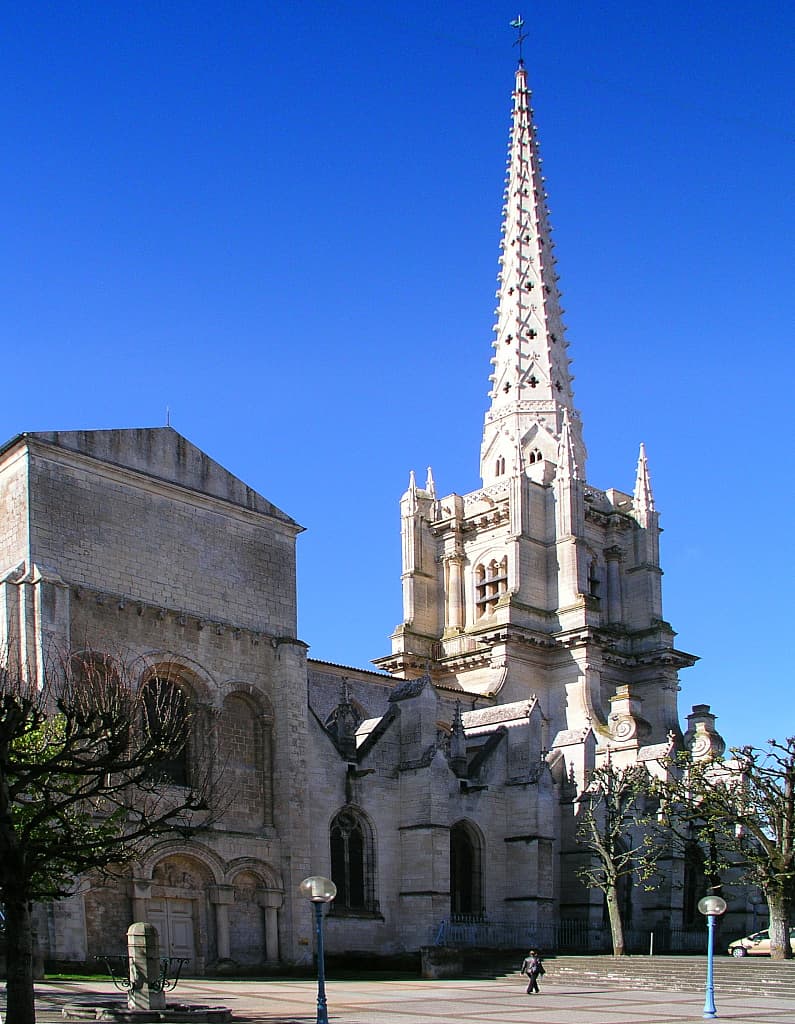
Luçon Cathedral
Luçon Cathedral, officially known as Cathédrale Notre-Dame-de-l'Assomption de Luçon, is a significant Roman Catholic church and a designated national monument in Luçon, France. It serves as the episcopal seat for the Diocese of Luçon, encompassing the Vendée department, and is noted for its historical and architectural importance.

Évreux Cathedral
Évreux Cathedral, officially the Cathedral of Our Lady of Évreux, is a significant Catholic church in Évreux, Normandy, France. It serves as the seat of the Bishop of Évreux and is recognized as a national monument, showcasing a blend of Romanesque and Gothic architectural styles from its 10th-century origins through extensive rebuilding and restoration.

Rouen Cathedral
Rouen Cathedral, officially Cathédrale primatiale Notre-Dame de l'Assomption de Rouen, is a significant Catholic church in Rouen, Normandy, France, serving as the seat of the Archbishop of Rouen. Renowned for its three distinct towers, the cathedral showcases a rich architectural history, evolving from Early Gothic to Flamboyant and Renaissance styles over more than eight centuries. It holds notable importance in art history as the subject of Claude Monet's impressionist series and in architectural history, having been the world's tallest building from 1876 to 1880.