
London Orthodox Cathedral SW7
Sourozh·Russian Orthodox·England
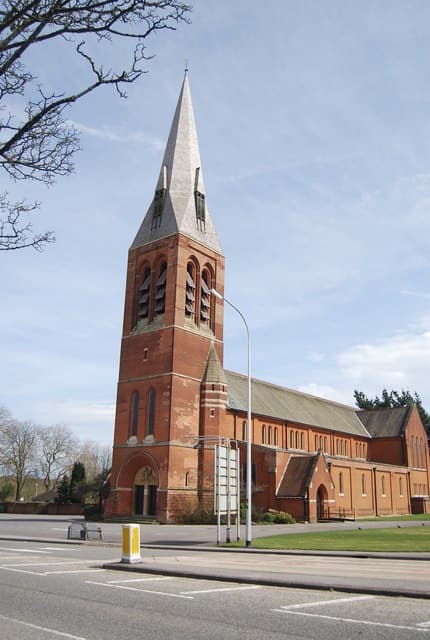
The Russian Orthodox Cathedral of the Dormition of the Mother of God and All Saints serves as the cathedral for the Russian Orthodox Diocese of Sourozh in London, England. Originally built as an Anglican church, it was later consecrated as an Orthodox cathedral and is a significant spiritual center for the Russian Orthodox community in the city, hosting administrative meetings and regular services.
Key Facts
- ›Originally constructed as an Anglican Church to all Saints in 1848-1849, designed by architect Lewis Vulliamy.
- ›The western façade was remodeled in 1891-1892 to closely resemble the Basilica of San Zeno in Verona, Italy.
- ›The bell tower, standing at 36.5 meters, was completed in 1860 based on Vulliamy's designs.
- ›The building was consecrated as an Orthodox Church in December 1956, in honor of the Dormition of the Mother of God.
- ›It was purchased by the Sourozh diocese in 1978 and has since served as a spiritual hub for a multinational congregation.
- ›The cathedral has been the subject of legal challenges regarding its affiliation with the Moscow Patriarchate.

Lombard, Victorian
- Western FaçAde A Close Copy of Basilica of San Zeno, Verona
- Bell Tower Designed By Lewis Vulliamy and Completed By R. L. Roumieu
- Interior Largely Unchanged From Its Anglican Forebear Church
- Sgraffito and Stained Glass Windows By Heywood Sumner
19th Century
Lewis Vulliamy, R. L. Roumieu, Heywood Sumner
About London Orthodox Cathedral SW7
Russian Orthodox Cathedral of the Dormition of the Mother of God and All Saints
The Russian Orthodox Cathedral of the Dormition of the Mother of God and All Saints is the seat of the Russian Orthodox Diocese of Sourozh, located in Knightsbridge, London, England. It serves as a vital center for the Russian Orthodox community, hosting administrative functions and a range of religious services.
History and Architecture
The building's origins lie in the mid-19th century when it was constructed as an Anglican church to All Saints. Architect Lewis Vulliamy was commissioned for its design, proposing a Lombard style rather than the more conventional Gothic. The church was consecrated in July 1849. While Vulliamy's full vision was constrained by finances, later additions enhanced its character. In 1860, architect R. L. Roumieu completed the construction of a bell tower, reaching 36.5 meters, based on Vulliamy's draft designs. The interior saw decoration by Thomas R. Spence, with later contributions of sgraffito and stained glass windows by Heywood Sumner. A significant architectural transformation occurred in 1891-1892 when the western façade was remodeled to become a very close copy of the Basilica of San Zeno in Verona, Italy.
Transition to Orthodox Use
In 1955, the Anglican parish underwent a merger, and the church was subsequently made available for the use of the Russian Orthodox faith, with a trust established in 1944 to facilitate this. The building was officially consecrated as an Orthodox Church in December 1956, dedicated to the Dormition of the Mother of God. In 1978, the Sourozh diocese purchased the cathedral. Over the years, it has welcomed a diverse, multinational congregation, notably during the tenure of Metropolitan Anthony (Bloom). The cathedral has also been involved in complex legal matters concerning its affiliation with the Moscow Patriarchate, with a High Court decision in 2009 affirming its status under the adherents of the Moscow Patriarchate based on the wording of the original trust deed.
Source: Wikipedia ↗
Frequently Asked Questions
What is the history of the building before it became an Orthodox cathedral?
The building was originally erected as an Anglican Church to All Saints, with its consecration taking place in July 1849. Architect Lewis Vulliamy designed it in a Lombard style. Its interior has largely remained unchanged from its time as an Anglican place of worship.
When was the building consecrated as an Orthodox Church?
The church was consecrated as an Orthodox Church in December 1956, dedicated to the Dormition of the Mother of God. This followed its use by the Russian Orthodox faith after the Anglican parish was merged in 1955.
Who designed the original Anglican church and its later modifications?
Lewis Vulliamy was the architect for the original Anglican church, built between 1848 and 1849. R. L. Roumieu completed the bell tower in 1860 from Vulliamy's designs. The western façade received its significant resemblance to the Basilica of San Zeno after reconstruction in 1891-1892.
What is the significance of the western façade?
The western façade underwent a major remodeling in 1891-1892, resulting in a very close copy of the Basilica of San Zeno in Verona, Italy. This architectural change significantly altered its appearance from its original design.
What is the current role of the cathedral?
The Russian Orthodox Cathedral of the Dormition of the Mother of God and All Saints is the cathedral of the Russian Orthodox Diocese of Sourozh. It hosts the diocese's administrative meetings and conducts weekly, seasonal, and special services.
Related Cathedrals
Aldershot Cathedral
The Cathedral Church of St Michael and St George is the Roman Catholic cathedral for the Bishopric of the Forces, located in Aldershot, England. Originally built as an Anglican church for the British Army, it was consecrated in 1893 and later repurposed in 1973 to become the seat of the Roman Catholic Bishop of the Forces. It is a significant landmark due to its Gothic Revival architecture and its close association with military history.

Arundel Cathedral
The Cathedral Church of Our Lady and St Philip Howard in Arundel, West Sussex, England, was dedicated in 1873 as a Catholic parish church and became a cathedral in 1965 with the foundation of the Diocese of Arundel and Brighton. It serves as the seat of the Bishop of Arundel and Brighton and is recognized as a Grade I listed building, notable for its French Gothic Revival architecture.

Bath Abbey
Bath Abbey, officially the Abbey Church of Saint Peter and Saint Paul, is a significant parish church and former Benedictine monastery in Bath, Somerset, England. Originally founded in the 7th century, it has undergone numerous rebuildings and restorations, most notably in the 12th and 16th centuries, with major renovations by Sir George Gilbert Scott in the 1860s. It stands as a prime example of Perpendicular Gothic architecture and once served as a cathedral for the Diocese of Bath and Wells before its consolidation at Wells.