
London Cathedral
Ukrainian Greek Catholic Eparchy of the Holy Family of London·Ukrainian Greek Catholic·England
The Cathedral of the Holy Family is the cathedral of the Ukrainian Greek Catholic Eparchy of the Holy Family of London, serving as the seat of the Ukrainian Catholic eparchial bishop. Originally built as a Congregational church, it was acquired by the Ukrainian Catholic community in 1967 and adapted for their liturgy, becoming a significant center for the British Ukrainian community.
Key Facts
- ›Designed by Alfred Waterhouse in 1891 for a Congregational congregation.
- ›Acquired by the Ukrainian Catholic community in 1967.
- ›Elevated to the rank of an eparchy by Pope Benedict XVI in 2013.
- ›Serves as the seat of the Ukrainian Catholic Eparchy of the Holy Family of London.
- ›Became a rallying point for the British Ukrainian community during the 2022 Russian invasion of Ukraine.
- ›Features an east window by Robert Anning Bell and a confessional from Westminster Cathedral.

Romanesque
East Window By Robert Anning Bell, Confessional By J. F. Bentley, Iconostasis By Juvenalij Mokrytsky, Grade Ii* Listed Building
19th Century
Alfred Waterhouse
About London Cathedral
The Cathedral of the Holy Family
The Cathedral of the Holy Family, formerly known as the Ukrainian Catholic Cathedral of the Holy Family in Exile, is the principal church of the Ukrainian Greek Catholic Eparchy of the Holy Family of London. It serves as the episcopal see for the nation's Ukrainian Catholic eparchial bishop. The cathedral is located on Duke Street in Mayfair, London, England, and is open daily for worship.
History and Architecture
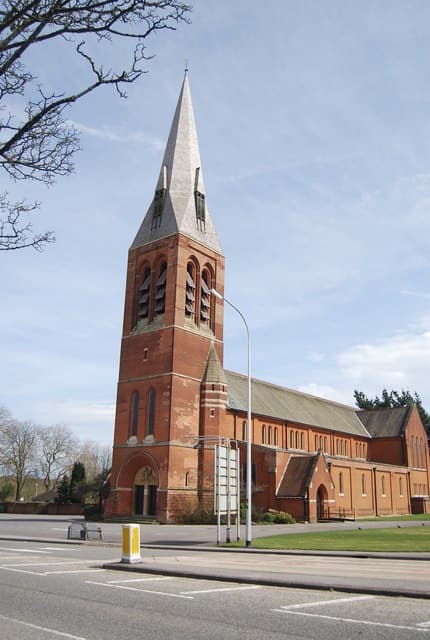
The building that houses the cathedral was originally designed by Alfred Waterhouse and completed in 1891 for a Congregational congregation. Architecturally, the church is characterized by its red brick construction with buff terracotta dressings, an oval nave, and a tower situated in the south-west corner, all executed in a Romanesque style. The building received Grade II* listing in 1970, recognizing its architectural significance.
In 1967, the Congregational church sold the building to the Ukrainian Catholic community. This marked the establishment of the new headquarters for the local apostolic exarchate, which had been created in 1957. Subsequent internal modifications were undertaken to adapt the space for Catholic liturgical practices. Notable interior features include an east window crafted by Robert Anning Bell and a confessional by J. F. Bentley, originally from Westminster Cathedral.
A significant event in its recent history was a temporary closure in 2007 due to a partial ceiling collapse. Following refurbishment, the cathedral reopened. The iconostasis, a significant artistic and spiritual element created by Ukrainian monk Juvenalij Mokrytsky, remained unaffected by the structural issue.
On January 18, 2013, a significant elevation in status occurred when Pope Benedict XVI raised the exarchate to the rank of an eparchy, a full bishopric. More recently, the cathedral became a focal point for the British Ukrainian community, particularly during the 2022 Russian invasion of Ukraine. It hosted addresses from political and religious leaders, including representatives from the Ukrainian Ambassador to the UK and the All Party Parliamentary Group for Ukraine, underscoring its role as a community hub.
Source: Wikipedia ↗
Frequently Asked Questions
What is the history of the building housing the Cathedral of the Holy Family?
The building was originally designed by Alfred Waterhouse and completed in 1891 for the King's Weigh House Congregational congregation. It is constructed of red brick with buff terracotta dressings and features an oval nave and a Romanesque-style tower.
When did the Ukrainian Catholics acquire the building?
The building was sold to the Ukrainian Catholics in 1967. It then became the new headquarters for the local apostolic exarchate, which had been created in 1957.
What significant events have occurred at the cathedral recently?
The cathedral was temporarily closed in 2007 due to a ceiling collapse but has since been refurbished. It became a significant gathering place for the British Ukrainian community during the 2022 Russian invasion of Ukraine, hosting addresses by political and religious figures.
What notable artistic elements are present in the cathedral?
The cathedral includes an east window with glass by Robert Anning Bell and a confessional originally from Westminster Cathedral, designed by J. F. Bentley.
What is the significance of the iconostasis?
The iconostasis, created by Ukrainian monk Juvenalij Mokrytsky, was not affected by the ceiling collapse in 2007. It is a significant element of the cathedral's interior adapted for Catholic liturgy.
Related Cathedrals
Aldershot Cathedral
The Cathedral Church of St Michael and St George is the Roman Catholic cathedral for the Bishopric of the Forces, located in Aldershot, England. Originally built as an Anglican church for the British Army, it was consecrated in 1893 and later repurposed in 1973 to become the seat of the Roman Catholic Bishop of the Forces. It is a significant landmark due to its Gothic Revival architecture and its close association with military history.

Arundel Cathedral
The Cathedral Church of Our Lady and St Philip Howard in Arundel, West Sussex, England, was dedicated in 1873 as a Catholic parish church and became a cathedral in 1965 with the foundation of the Diocese of Arundel and Brighton. It serves as the seat of the Bishop of Arundel and Brighton and is recognized as a Grade I listed building, notable for its French Gothic Revival architecture.

Bath Abbey
Bath Abbey, officially the Abbey Church of Saint Peter and Saint Paul, is a significant parish church and former Benedictine monastery in Bath, Somerset, England. Originally founded in the 7th century, it has undergone numerous rebuildings and restorations, most notably in the 12th and 16th centuries, with major renovations by Sir George Gilbert Scott in the 1860s. It stands as a prime example of Perpendicular Gothic architecture and once served as a cathedral for the Diocese of Bath and Wells before its consolidation at Wells.