
Gibraltar Cathedral
Diocese of Gibraltar (historical, now Diocese of Europe)·Church of England·Gibraltar
The Cathedral of the Holy Trinity, often referred to as Gibraltar Cathedral, serves as the cathedral for the Church of England Diocese of Europe. It is distinguished by its unique Moorish Revival architecture, a style deliberately chosen to reflect Gibraltar's historical ties to Moorish rule. The cathedral plays a vital role as an active place of worship and a historical landmark in Gibraltar.
Key Facts
- ›Construction began in 1825 and was completed in 1832, with modifications to the original design by Peter Harrison.
- ›It was consecrated in 1838 and elevated to cathedral status in 1842 with the establishment of the Diocese of Gibraltar.
- ›The architecture prominently features Moorish Revival elements, including horseshoe arches.
- ›The cathedral sustained significant damage from the RFA Bedenham explosion in 1951, necessitating extensive repairs.
- ›A stone from the ruined Coventry Cathedral, featuring a cross, is incorporated into the wall behind the baptismal font.
- ›It is the cathedral for the Church of England Diocese of Europe, with the Bishop in Europe based in Brussels.
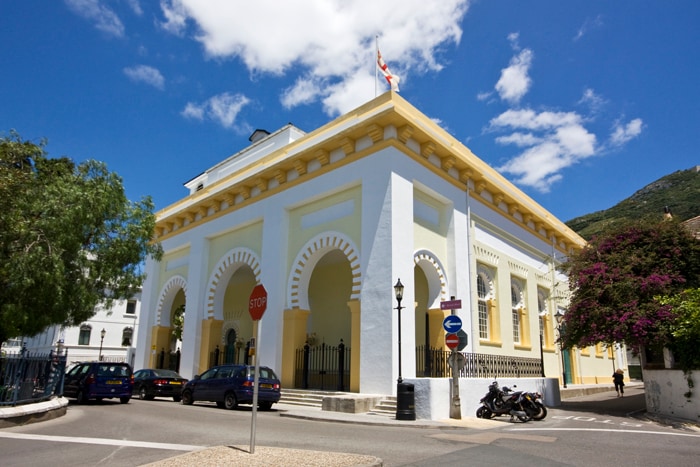
Moorish Revival
- Moorish Revival Architecture
- Horseshoe Arches
- Stone From Coventry Cathedral
- Stained Glass Window Above the High Altar Created From Fragments After 1951 Explosion
19th Century
Peter Harrison, Colonel Pilkington
About Gibraltar Cathedral
The Cathedral of the Holy Trinity, often referred to simply as Gibraltar Cathedral, stands as a significant religious and architectural landmark in Gibraltar. It serves as the cathedral for the Church of England's Diocese of Europe. Its architectural style is particularly noteworthy, featuring a prominent Moorish Revival design that incorporates horseshoe arches, a deliberate nod to Gibraltar's historical period under Moorish rule.
History and Development
The genesis of the cathedral's construction in the 19th century was to provide a dedicated place of worship for the Anglican civilian population of Gibraltar, as the existing King's Chapel was primarily designated for military use. The initiative stemmed from John Pitt, Earl of Chatham, who was the Governor of Gibraltar. He successfully persuaded the British Government to facilitate the acquisition of land for the church's construction.
Building commenced in 1825, with the structure being completed by 1832. The initial architectural plans were drawn by Peter Harrison around 1740, but these did not include the characteristic Moorish arches. Over eighty years later, Colonel Pilkington of the Royal Engineers oversaw the work and modified the design. During the construction phase, the partially completed church had to be repurposed as an emergency hospital to cope with an outbreak of yellow fever.
The church was formally consecrated in 1838 by Archdeacon Edward Burrow, with the Dowager Queen Adelaide, widow of William IV, in attendance. A pivotal moment occurred in 1842 when the Diocese of Gibraltar was established, and the church was elevated to cathedral status with George Tomlinson becoming the first Bishop of Gibraltar.
20th Century Events
Gibraltar Cathedral remained undamaged during the Second World War. In the post-war era, Bishop Harold Buxton launched an appeal titled "Saying Thank You to Malta and Gibraltar." Funds raised were allocated for improvements to both St Paul's Pro-Cathedral in Malta and the cathedral in Gibraltar. In Gibraltar, these funds were utilized for the construction of new vestries and the creation of a second chapel in the south aisle, dedicated to Saint George and in remembrance of those who perished in the Mediterranean during the war. A symbolic stone from Coventry Cathedral, which was destroyed during the Blitz, bearing a cross, was incorporated into the wall behind the baptismal font.
A significant incident occurred on April 27, 1951, when the explosion of the RFA Bedenham caused severe damage to the cathedral. The blast lifted the roof and shattered the stained glass windows. While the side windows were replaced with plain glass, the fragments of colored glass were ingeniously used to create the new stained glass window that now adorns the east wall, situated above the high altar. The cathedral underwent extensive repairs and was not fully operational again until Christmas of that year.
Clergy and Administration
As is customary for Church of England cathedrals, the principal clergy member is the Dean. The current Dean is Ian Tarrant, succeeding John Paddock who retired in 2017. Other key figures include Canon Theologian Robin Gill and honorary Lay Canon Precentor Adrian Mumford. It is important to note that the Bishop in Europe resides in Brussels, which also hosts a pro-cathedral.
Source: Wikipedia ↗
Frequently Asked Questions
What is the architectural style of Gibraltar Cathedral?
Gibraltar Cathedral is notable for its Moorish Revival architecture. This style is characterized by features such as horseshoe arches, a design choice inspired by the historical period of Moorish control in Gibraltar.
When was Gibraltar Cathedral built?
Building work on the cathedral commenced in 1825 and it was completed in 1832. It was officially consecrated in 1838 and later raised to cathedral status in 1842.
What historical events impacted Gibraltar Cathedral?
During its construction, the partially built church served as an emergency hospital during a yellow fever epidemic. Later, in 1951, the explosion of the RFA Bedenham caused substantial damage, including lifting the roof and smashing stained glass windows, requiring extensive repairs.
What is the significance of the stone from Coventry Cathedral?
A small stone with a cross from the blitz-ruined Coventry Cathedral is set into the wall behind the baptismal font in Gibraltar Cathedral. This stone serves as a memorial and a symbol of shared history and resilience.
What is the Diocese of Gibraltar Cathedral part of?
The Cathedral of the Holy Trinity is the cathedral for the Church of England Diocese of Europe. The Bishop in Europe is based in Brussels, where another pro-cathedral exists.
Related Cathedrals

Bath Abbey
Bath Abbey, officially the Abbey Church of Saint Peter and Saint Paul, is a significant parish church and former Benedictine monastery in Bath, Somerset, England. Originally founded in the 7th century, it has undergone numerous rebuildings and restorations, most notably in the 12th and 16th centuries, with major renovations by Sir George Gilbert Scott in the 1860s. It stands as a prime example of Perpendicular Gothic architecture and once served as a cathedral for the Diocese of Bath and Wells before its consolidation at Wells.

Birmingham Cathedral
The Birmingham Cathedral, officially the Cathedral Church of Saint Philip, is the principal Anglican cathedral in Birmingham, England. Originally built as a Baroque parish church designed by Thomas Archer and consecrated in 1715, it was elevated to cathedral status in 1905, becoming the seat of the Bishop of Birmingham. It is recognized as a Grade I listed building and is a significant example of English Baroque architecture.

Bishop's Tawton
Bishop's Tawton is a village and civil parish in North Devon, England, situated in the valley of the River Taw. Its historical significance is linked to a potential early bishopric in the 10th century, though this is conjectural, with the extant Church of St John the Baptist featuring a 14th-century spire and Norman font.