
Cremona Cathedral
Cremona Cathedral, officially the Cathedral of Santa Maria Assunta, is a significant Romanesque-Gothic cathedral in Cremona, Lombardy, Italy, serving as the seat of the Bishop of Cremona. Its construction began in the early 12th century and, despite interruptions, evolved over centuries to incorporate Gothic, Renaissance, and Baroque elements, making it a notable monument of medieval European art.
Key Facts
- ›Construction began in 1107, with significant rebuilding and additions occurring throughout the 12th to 14th centuries.
- ›The cathedral is dedicated to the Assumption of the Blessed Virgin Mary and its main altar was consecrated in 1196.
- ›The main façade and adjoining baptistery are considered important examples of Romanesque art in Europe.
- ›The interior features extensive fresco decorations from the Renaissance and Mannerist periods, depicting biblical scenes and lives of saints.
- ›Adjoining the cathedral is the Torrazzo, a famous bell tower and symbol of Cremona, which is the tallest pre-modern tower in Italy.
- ›The cathedral houses important artworks including the Arch of the Persian Martyrs and the urn of Saints Marcellinus and Peter.
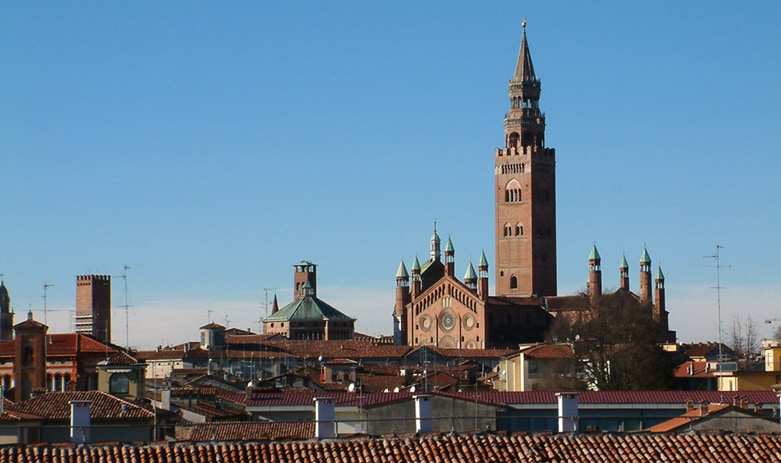
Torrazzo, Baptistery, Renaissance Loggia On the FaçAde, Rose Window, Frescoes of the Life of Mary and Christ, Arch of the Persian Martyrs, Urn of Saints Marcellinus and Peter, Wooden Choir With Inlay Work
Giovanni Antonio Amadeo, Benedetto Briosco, Platina, Ambrogio Pozzi, Agostino Sacchi, Boccaccio Boccaccino, Giovan Francesco Bembo, Altobello Melone, Girolamo Romanino, Il Pordenone, Bernardino Gatti, Bernardino Campi, Il Genovesino, Bonino Da Campione, Masters From Campione
About Cremona Cathedral
Cremona Cathedral, officially known as the Cathedral of Santa Maria Assunta, stands as a significant religious and architectural landmark in Cremona, Lombardy, northern Italy. It serves as the principal church and the seat of the Bishop of Cremona. The cathedral's history is deeply intertwined with its evolving architectural styles, beginning with Romanesque foundations and later incorporating Gothic, Renaissance, and Baroque elements through numerous restorations and extensions.
History and Architecture
The initial construction of Cremona Cathedral commenced in 1107. However, this early phase was disrupted by an earthquake in 1117, leading to a halt in works. Construction resumed in 1129, and the main body of the cathedral was likely completed between 1160 and 1170. The main altar, dedicated to the patron saints Archelaus and Himerius, was consecrated in 1196. The cathedral's façade, a notable example of Romanesque art in Europe, was largely developed during the 13th and early 14th centuries. The transepts were added sequentially, with the northern arm constructed in 1288 and the southern arm in 1348. The façade features a portico with a narthex, a Renaissance loggia with three niches added in 1491, and a large rose window, all supported by columns resting on Veronese marble lions.
Interior and Artistry
The interior of Cremona Cathedral houses a rich collection of artworks spanning several centuries. Significant frescoes adorn the vaults of the transepts, dating from the late 14th to the early 15th century, depicting stories from the Old Testament. The Renaissance period is represented by works such as the Arch of the Persian Martyrs (1482) and the relief of Saint Himerius (1481–1484), both by Giovanni Antonio Amadeo. The crypt contains the urn of Saints Marcellinus and Peter, largely sculpted by Benedetto Briosco (1506–1513). A major artistic highlight is the extensive fresco decoration on the nave's side walls, executed in the early 16th century by various artists including Boccaccio Boccaccino, Giovan Francesco Bembo, Altobello Melone, Girolamo Romanino, Il Pordenone, and Bernardino Gatti, who collectively depicted the Life of Mary and Christ, as well as scenes from the Passion. Later Mannerist frescoes were added in the mid-16th century, and in the 17th century, Il Genovesino contributed frescoes of the Life of St. Roch.
Adjacent Structures and Significance
Adjacent to the cathedral is the baptistery, another important medieval monument. The cathedral's bell tower, known as the Torrazzo, is a famous symbol of Cremona and holds the distinction of being the tallest pre-modern tower in Italy. Its presence, alongside the cathedral and baptistery, forms a significant architectural ensemble that highlights the city's medieval and Renaissance heritage.
Source: Wikipedia ↗
Frequently Asked Questions
What is the history of Cremona Cathedral's construction?
Construction of Cremona Cathedral began in 1107 but was halted by an earthquake in 1117. Work resumed in 1129 and the main building was likely completed between 1160 and 1170. The façade was developed in the 13th and early 14th centuries, with transepts added in the late 13th and mid-14th centuries.
What are the main architectural styles of Cremona Cathedral?
Cremona Cathedral was originally built in the Romanesque style. Over time, it has been restored and extended, incorporating Gothic, Renaissance, and Baroque elements into its structure and decoration.
What notable artworks are found inside Cremona Cathedral?
The interior boasts significant artworks, including Renaissance frescoes on the nave walls depicting the Life of Mary and Christ, the Arch of the Persian Martyrs by Giovanni Antonio Amadeo, and the urn of Saints Marcellinus and Peter sculpted by Benedetto Briosco. The wooden choir with inlay work by Platina is also a notable feature.
What is the significance of the Torrazzo next to the cathedral?
The Torrazzo is the cathedral's famous bell tower and a prominent symbol of the city of Cremona. It holds the distinction of being the tallest pre-modern tower in Italy.
To whom is the main altar of Cremona Cathedral dedicated?
The main altar of Cremona Cathedral is dedicated to the city's patron saints, Archelaus and Himerius. It was consecrated in 1196.
What is the dedication of Cremona Cathedral?
Cremona Cathedral is dedicated to the Assumption of the Blessed Virgin Mary.
Related Cathedrals

Angers Cathedral
Angers Cathedral, officially Cathédrale Saint-Maurice d'Angers, is a Catholic cathedral in Angers, France, serving as the seat of the Bishops of Angers. Renowned for its blend of Romanesque and Gothic architectural styles, it also features significant Baroque elements and an exceptional collection of stained-glass windows, some dating back to the late 12th century.

Bordeaux Cathedral
Bordeaux Cathedral, officially the Primatial Cathedral of St Andrew of Bordeaux, is a Roman Catholic cathedral in Bordeaux, France, serving as the seat of the Archbishop of Bordeaux. It is a significant landmark included in the UNESCO World Heritage Site of the Routes of Santiago de Compostela in France. The cathedral showcases a rich architectural history, evolving from Romanesque to Gothic styles and incorporating Renaissance elements, making it a vital historical and religious site.

Mantua Cathedral
Mantua Cathedral, officially the Cathedral of Saint Peter the Apostle, is the principal Roman Catholic church and seat of the Bishop of Mantua in Lombardy, northern Italy. Its history spans centuries, with significant rebuilding and renovations reflecting Romanesque, Gothic, Renaissance, and Baroque architectural influences, making it a layered testament to artistic and religious evolution.