
Cathedral Shrine of the Transfiguration
The Cathedral Shrine of the Transfiguration is an open-air sanctuary located at Shrine Mont, a retreat and conference center in Orkney Springs, Virginia. Consecrated in 1925, it was built using stones gathered by local people from the surrounding mountain. The shrine is part of the Episcopal Diocese of Virginia and serves as a significant spiritual site within the Shenandoah Valley.
Key Facts
- ›The Cathedral Shrine of the Transfiguration is an open-air sanctuary consecrated in 1925.
- ›Its stones were personally gathered by local individuals from the mountain where it is situated.
- ›The baptismal font is a repurposed Native American grinding stone.
- ›It is owned and operated by the Episcopal Diocese of Virginia.
- ›The shrine is located within the Shrine Mont retreat and conference center.
- ›The site of Shrine Mont has a history of attracting visitors due to natural springs since the MID-1800s.

- Open-Air Sanctuary
- Stones Gathered By Local People From the Mountain
- Baptismal Font Made From A Native American Grinding Stone
- Bell Tower
- Sacristy
- Shrine Crossing
- Choir and Clergy Stalls
- Pulpit
- Font
- Lectern
About Cathedral Shrine of the Transfiguration
The Cathedral Shrine of the Transfiguration is a notable open-air sanctuary situated within the Shrine Mont retreat and conference center in Orkney Springs, Virginia. Owned by the Episcopal Diocese of Virginia, this unique cathedral stands as a testament to community effort and spiritual devotion.
History and Construction
The site's history is intertwined with the natural springs of the Shenandoah Valley, which attracted visitors and led to the establishment of hotels as early as the mid-1800s. Episcopal services began to be held in the area in the late 1800s. Following the death of the Sixth Bishop of Virginia, Robert Atkinson Gibson, in 1919, his son-in-law, the Rev. Edmund Lee Woodward, was instrumental in establishing year-round worship. The Shrine of the Transfiguration was subsequently built on land that had been part of Bishop Gibson's property, with construction occurring between 1924 and 1925 in a natural amphitheater.
A distinctive aspect of the cathedral's construction is that each stone was personally brought by local people, either pulled by horse or rolled, from the embracing mountain. This communal effort imbued the structure with a deep connection to its surroundings. The baptismal font holds particular historical and cultural significance, as it was originally a dugout stone used by Native Americans for grinding corn.
The consecration of the Cathedral Shrine of the Transfiguration took place in 1925, at which time the Woodwards presented a Deed of Donation, conveying the land to the Diocese of Virginia. Rev. Woodward was appointed rector of the shrine for life. Under his guidance and later that of directors like Wilmer E. Moomaw, Shrine Mont evolved into a comprehensive retreat center, with various buildings, cottages, and facilities developed over the decades to accommodate guests and enhance the spiritual experience.
Significance and Features
As an active place of worship, the Cathedral Shrine of the Transfiguration serves as a spiritual heart for the Shrine Mont center and the wider Episcopal community. Its open-air design offers a unique setting for services, blending the sacred with the natural beauty of the Shenandoah Valley. The cathedral includes a bell tower, sacristy, shrine crossing, choir and clergy stalls, a pulpit, a font, and a lectern, all contributing to its functional and spiritual purpose. The adjacent The Virginia House, a historic hotel structure, further adds to the rich historical tapestry of the Shrine Mont property.
Source: Wikipedia ↗
Frequently Asked Questions
Where is the Cathedral Shrine of the Transfiguration located?
The Cathedral Shrine of the Transfiguration is located in Orkney Springs, Virginia, within the Shrine Mont retreat and conference center. It is situated at the foot of Great North Mountain in the Shenandoah Valley.
When was the Cathedral Shrine of the Transfiguration consecrated?
The open-air sanctuary was consecrated in 1925. Its construction took place from 1924 to 1925 in a natural amphitheater.
What is unique about the construction of the cathedral?
Each stone used in the construction of the Cathedral Shrine of the Transfiguration was pulled by horse or rolled by local people from the mountain nearby. The baptismal font is also notable, having originally been a dugout stone used by Native Americans for grinding corn.
Who owns the Cathedral Shrine of the Transfiguration?
The Cathedral Shrine of the Transfiguration is owned by the Episcopal Diocese of Virginia. It is an integral part of the Shrine Mont retreat and conference center.
What historical significance does the area around the cathedral hold?
The area around Shrine Mont has historical significance dating back to Native American settlements, evidenced by relics found near seven springs. In the mid-1800s, visitors began coming to the area for the spring waters, leading to the establishment of hotels like the Orkney Springs Hotel.
Related Cathedrals

St. Paul's Episcopal Church
St. Paul's Episcopal Church in Richmond, Virginia, is a historic church recognized for its association with prominent figures during the American Civil War, earning it the nickname "Cathedral of the Confederacy." Located across from the Virginia State Capitol, it has traditionally been a popular place of worship for political leaders, though it has undergone a process of removing Confederate imagery starting in 2015.
American Cathedral in Paris
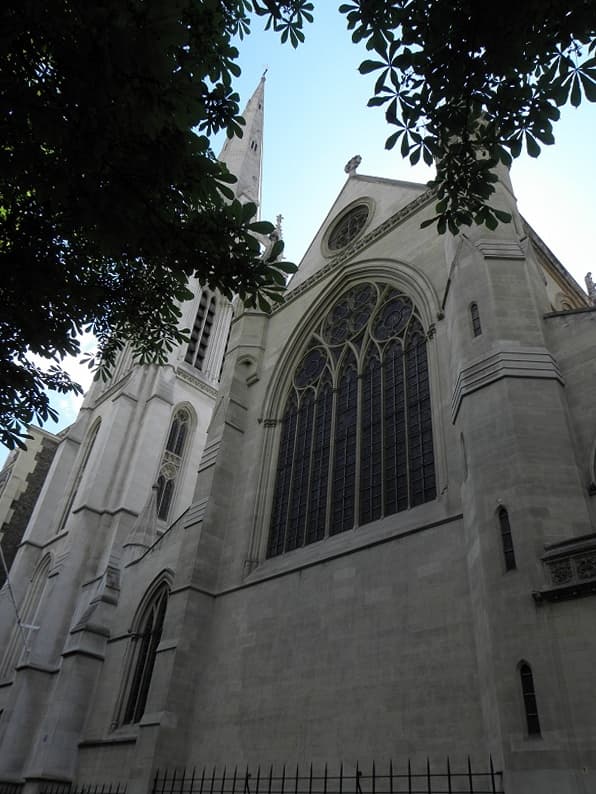
The American Cathedral in Paris, officially the Cathedral Church of the Holy Trinity, is one of the oldest English-speaking churches in Paris and serves as the gathering church for the Convocation of Episcopal Churches in Europe. Designed in the Gothic Revival style by English architect George Edmund Street, its construction was completed in 1886, with the tower finished in 1909.

Anglican Catholic Church
The Anglican Catholic Church (ACC) is a distinct Christian denomination within the continuing Anglican movement, established in response to theological and liturgical changes within the Episcopal Church. It positions itself as a preserver of historic Anglican traditions, emphasizing its Catholic roots and adherence to traditional Anglican faith, order, and morality. The ACC aims to be a global alternative for those seeking a more traditional expression of Anglicanism.