
Anglican Catholic Church
Anglican Catholic·United States
The Anglican Catholic Church (ACC) is a distinct Christian denomination within the continuing Anglican movement, established in response to theological and liturgical changes within the Episcopal Church. It positions itself as a preserver of historic Anglican traditions, emphasizing its Catholic roots and adherence to traditional Anglican faith, order, and morality. The ACC aims to be a global alternative for those seeking a more traditional expression of Anglicanism.
Key Facts
- ›Originated from the 1977 Congress of St. Louis, a reaction against the Episcopal Church's revision of the Book of Common Prayer and the ordination of women.
- ›Considers itself a continuation of historic Anglicanism, embracing Henrician Catholicism, the theological methods of Hooker and the Carolines, and the piety of Andrewes.
- ›Officially named the Anglican Catholic Church at a constitutional assembly in Denver in October 1978, with the name registered with the us Patent Office in 1979.
- ›Operates under an episcopal and synodal polity, organized according to its constitution and canons.
- ›Has expanded globally since 1990, with parishes and missions on six continents.
- ›Maintains inter-communion agreements and dialogues with several other continuing Anglican bodies, including the Anglican Province of America and the Anglican Church in America.

- the Affirmation of St. Louis As A Foundational Document
- Emphasis On Traditional Anglican Liturgy and Sacraments
- Global Presence Across Six Continents
20th Century, 21st Century
About Anglican Catholic Church
The Anglican Catholic Church (ACC) is a Christian denomination that emerged from the continuing Anglican movement, distinguishing itself from the mainstream Anglican Communion. Its formation was a direct response to significant liturgical, theological, and moral changes perceived within the Episcopal Church, particularly the revision of the Book of Common Prayer and the decision to ordain women. The ACC views itself as a preserver of historic Anglican traditions, drawing inspiration from "Henrician Catholicism," the theological scholarship of figures like Hooker and Andrewes, the liturgical recovery efforts of the Non-Jurors, and the Oxford Movement.
The organization that would become the Anglican Catholic Church was formally named at a constitutional assembly held in Denver, Colorado, between October 18–21, 1978. The name "Anglican Catholic Church" was officially registered with the US Patent Office in 1979. The church's self-understanding of its name reflects its belief that "Anglican" signifies its English heritage, while "Catholic" denotes its adherence to the universal, undivided Christian Church.
History and Development
The foundational event for the ACC was the 1977 Congress of St. Louis. This congress brought together Anglicans who felt the Episcopal Church had departed from core tenets of scripture and historical Anglicanism. The resulting "Affirmation of St. Louis" served as a declaration of principles for the new church, asserting that the Anglican Church of Canada and the Protestant Episcopal Church in the United States of America had deviated from the "One, Holy, Catholic and Apostolic Church." Following the congress, four bishops were consecrated in January 1978 to lead this new movement.
Initially, the church faced internal challenges related to jurisdiction and authority, leading to divisions. American parishes eventually formed separate bodies, including the Anglican Catholic Church, while Canadian parishes established the Anglican Catholic Church of Canada. Despite these splits, the ACC experienced periods of growth and reorganization. By 1981, it comprised eight dioceses and a missionary district with approximately 200 congregations. A statement of unity in 1983 led to further coalescence, though some members departed over disagreements regarding the church's constitution and canons.
The ACC has actively sought to establish a global presence, expanding to six continents and numerous countries since 1990. As of the end of 2015, its membership in the Original Province was reported at over 30,000. The church engages in worldwide mission and development through the St. Paul Mission Society. Significant developments in recent years include the reception of the Diocese of Aweil in Sudan into the ACC in 2007, the erection of a new province in South Africa in 2021, and expansion into Tanzania in 2024.
Ecumenical Relations and Doctrine
The Anglican Catholic Church holds the Affirmation of St. Louis as a central guiding document. Its governance is episcopal and synodal, organized through a constitution and canons that detail the establishment of dioceses, provinces, and the election of bishops. The church maintains a strong stance against what it perceives as the "innovations" of recent decades within some Anglican bodies, such as the ordination of women and revisions to liturgical texts.
The ACC has actively pursued ecumenical relationships with other continuing Anglican churches, including the Anglican Province of America, the Anglican Church in America, and the Diocese of the Holy Cross, with whom it signed the Atlanta Concordat in 2017, affirming full communion. It has also engaged in dialogue with the Polish National Catholic Church and the Nordic Catholic Church. The church has expressed reservations about ecumenical overtures that it believes do not sufficiently address fundamental theological and doctrinal differences, such as the establishment of the Personal Ordinariate of the Chair of Saint Peter by the Roman Catholic Church.
Source: Wikipedia ↗
Frequently Asked Questions
When was the Anglican Catholic Church founded?
The Anglican Catholic Church was officially named at a constitutional assembly in Denver in October 1978. Its origins trace back to the 1977 Congress of St. Louis, which was formed in reaction to changes within the Episcopal Church.
What theological principles guide the Anglican Catholic Church?
The church is guided by the Affirmation of St. Louis, which outlines its commitment to scripture and historical Anglicanism. It sees itself as rooted in a Catholic stream of faith and practice, embracing traditional Anglican theology and piety.
What is the "continuing Anglican movement"?
The continuing Anglican movement refers to various groups of Christians who have separated from the Anglican Communion, often due to theological or liturgical disagreements, and seek to preserve what they consider traditional Anglican faith and practice.
What are the ecumenical relations of the Anglican Catholic Church?
The ACC engages in dialogues and maintains inter-communion with several other continuing Anglican jurisdictions, such as the Anglican Province of America and the Anglican Church in America, with a goal of eventual corporate unity. They also have dialogues with the Polish National Catholic Church and the Nordic Catholic Church.
What is the structure of the Anglican Catholic Church's governance?
The church's governance is episcopal and synodal. It is organized according to its constitution and canons, with bishops holding administrative responsibility for provinces and dioceses, overseen by metropolitan archbishops.
Related Cathedrals

Chester Cathedral
Chester Cathedral is the mother church of the Diocese of Chester, located in Chester, England. Originally the abbey church of a Benedictine monastery dedicated to Saint Werburgh, it is now dedicated to Christ and the Blessed Virgin Mary and has served as the seat of the bishop of Chester since 1541. The cathedral showcases a rich history of architectural styles, from Norman to Perpendicular Gothic, and has undergone significant restoration throughout its existence.

Abercorn
Abercorn is a village and civil parish in West Lothian, Scotland, historically significant for its 7th-century monastery which served as the seat of Bishop Trumwine, the sole bishop of the Northumbrian see of the Picts. While the monastery is long gone, the parish church partially dates from the 12th century and contains notable private aisles and mausoleums. Abercorn also held a short-lived bishopric in the 7th century and was the site of a castle from the 12th century.
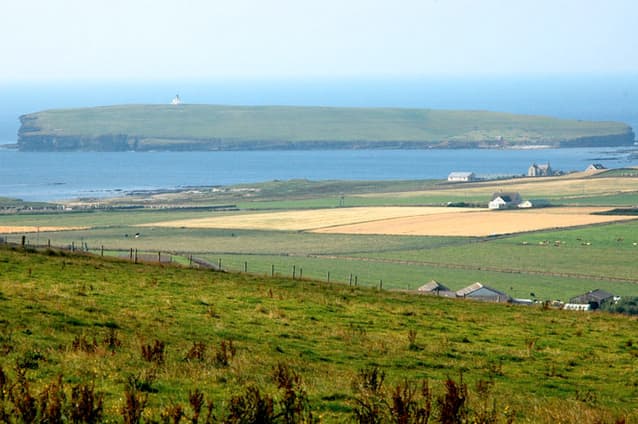
Birsay
Birsay is a parish in Orkney, Scotland, notable for its ancient monuments and historical significance as the potential site of Orkney's first cathedral. The area features prehistoric and Norse settlements on the Brough of Birsay and the ruins of the 16th-century Earl's Palace.