
American Cathedral in Paris
Convocation of Episcopal Churches in Europe·Episcopalian·France
The American Cathedral in Paris, officially the Cathedral Church of the Holy Trinity, is one of the oldest English-speaking churches in Paris and serves as the gathering church for the Convocation of Episcopal Churches in Europe. Designed in the Gothic Revival style by English architect George Edmund Street, its construction was completed in 1886, with the tower finished in 1909.
Key Facts
- ›Founded in the 1830s, with a formal parish established in 1859 and the first church consecrated in 1864.
- ›The current building's construction was completed in 1886, with the tower finished by 1909.
- ›Designed in the Gothic Revival style by English architect George Edmund Street.
- ›The church became a cathedral in 1922, serving as the seat for the bishop overseeing Episcopal churches in Europe.
- ›During World War II, the cathedral was occupied by the German military chaplaincy.
- ›The tower stands at 280 feet (85 meters), making it one of the tallest in Paris.
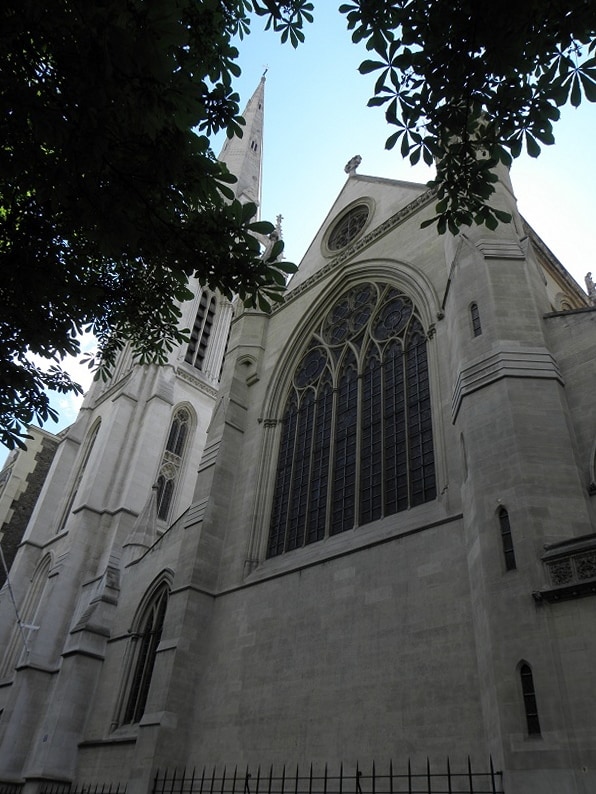
Tower At 280 Feet, Stained-Glass Windows By James Bell, Oak Nave Vaulting, Gothic Revival Architecture
George Edmund Street, Arthur E. Street, Arthur Blomfield
About American Cathedral in Paris
The American Cathedral in Paris
The American Cathedral in Paris, formally known as the Cathedral Church of the Holy Trinity, holds a significant place as one of the oldest English-speaking churches in the French capital. It functions as the primary gathering place for the Convocation of Episcopal Churches in Europe and is an integral part of the worldwide Anglican Communion. Located centrally in Paris at 23 avenue George V in the 8th arrondissement, its position places it between the famed Champs-Élysées and the River Seine, making it accessible to both residents and visitors.
History and Development
The roots of the American Cathedral trace back to the 1830s when American Episcopalians began congregating for services. Initially, these gatherings took place in the garden pavilion of the Hôtel Matignon. The formal establishment of a parish occurred in 1859, leading to the consecration of the first church building on Rue Bayard in 1864. A pivotal moment arrived in the 1870s when John B. Morgan, a cousin of J. P. Morgan, became the rector. Recognizing the need for a larger space, he spearheaded a successful fundraising campaign that enabled the purchase of land on Avenue George V. Construction of the current edifice commenced, with plans approved in 1882 and the building completed in under four years, holding its inaugural services in September 1886. The official consecration took place on Thanksgiving Day, November 25, 1886, coinciding with the dedication of the Statue of Liberty in New York. The church officially became a cathedral in 1922, retaining its role as a parish church while also serving as the episcopal seat for the bishop overseeing Episcopal churches in Europe.
During the tumultuous period of the German occupation of France in World War II (1940–44), the cathedral was requisitioned and used by the German military chaplaincy.
Architectural Design and Features
The current structure was designed by the English architect George Edmund Street, renowned for his Gothic Revival style and his philosophy of "ethical architecture," which emphasized structural honesty. Street died before the finalization of plans, and his son, Arthur E. Street, along with Arthur Blomfield, oversaw the completion of the work. The cathedral features stone vaults in the chancel and aisles, while the nave is vaulted in oak, a choice potentially influenced by the constrained site which limited the possibility of stone ceiling buttresses. The construction was executed by Henry Lovatt of Wolverhampton.
While the main body of the church was finished by 1886, work on the tower and other elements continued for over two decades, with the tower being dedicated on Easter Sunday in 1909. The tower itself stands impressively at 280 feet (85 meters), ranking it among the tallest structures in Paris. The cathedral is adorned with forty-two stained-glass windows, designed by James Bell and crafted between 1883 and 1893. These windows are unified by the theme of the words from the Te Deum.
Contemporary Role and Community
The congregation of the American Cathedral is a diverse mix, comprising around four hundred permanent parishioners, supplemented by a significant number of students, tourists, and business travelers. The church actively engages in a wide range of ministries, including parish life, Christian education, development, finance, mission and outreach, community outreach, stewardship, a dedicated group for those in their 20s and 30s, and music programs. The building also serves as a hub for various community services, hosting a bilingual Montessori school, recovery groups such as Alcoholics Anonymous, and a weekly free concert series on Sundays sponsored by Les Arts George V, the Paris Choral Society, and other community organizations.
Source: Wikipedia ↗
Frequently Asked Questions
When was the American Cathedral in Paris founded?
The origins of the American Cathedral in Paris date back to the 1830s when American Episcopalians began meeting for services. A formal parish was established in 1859, and the first church building was consecrated in 1864.
Who designed the American Cathedral in Paris?
The current building was designed by English architect George Edmund Street in the Gothic Revival style. His son, Arthur E. Street, and Arthur Blomfield took over the work after Street's death.
What is the architectural style of the American Cathedral in Paris?
The cathedral is designed in the Gothic Revival style. Architect George Edmund Street subscribed to 'ethical architecture,' meaning structural elements should be honest and visible.
What is the significance of the American Cathedral in Paris?
It is one of the oldest English-speaking churches in Paris and serves as the gathering church for the Convocation of Episcopal Churches in Europe. It became a cathedral in 1922, acting as the official seat of the bishop for Episcopal churches in Europe.
What are some notable features of the American Cathedral in Paris?
Notable features include its Gothic Revival architecture, a tower standing at 280 feet (85 meters), and stained-glass windows designed by James Bell depicting the words of the Te Deum. The nave is vaulted in oak.
What happened to the cathedral during World War II?
During the German occupation of France from 1940 to 1944, the American Cathedral in Paris was taken over by the German military chaplaincy.
Related Cathedrals
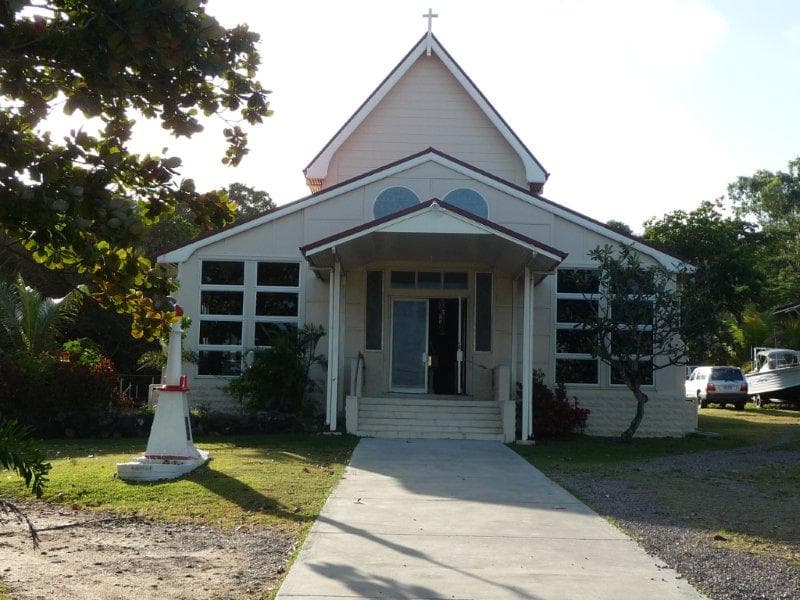
All Souls and St Bartholomew's Cathedral Church
All Souls and St Bartholomew's Cathedral Church on Thursday Island, Queensland, Australia, is a significant heritage-listed Anglican church. It was established as a memorial to the lives lost in the 1890 shipwreck of the RMS Quetta, with construction beginning in 1893. The cathedral serves as a spiritual center for the diverse community of Thursday Island and commemorates maritime tragedies.

Armagh
St. Patrick's Cathedral in Armagh, Northern Ireland, serves as the principal church of the Roman Catholic Archdiocese of Armagh, holding the title of Primate of All Ireland. Its construction, spanning from 1840 to 1904, was a significant undertaking aimed at re-establishing a Catholic presence in the ancient ecclesiastical capital following the Irish Reformation.

Armagh Cathedral
St. Patrick's Cathedral in Armagh, Northern Ireland, serves as the seat of the Catholic Archbishop of Armagh and Primate of All Ireland. Its construction, spanning from 1840 to 1904, was a significant undertaking following the appropriation of the original medieval cathedral by the state church during the Irish Reformation, symbolizing a re-establishment of Catholic presence in the ancient ecclesiastical capital.