
Cathedral of the Immaculate Conception
Diocese of Albany·Catholic·United States
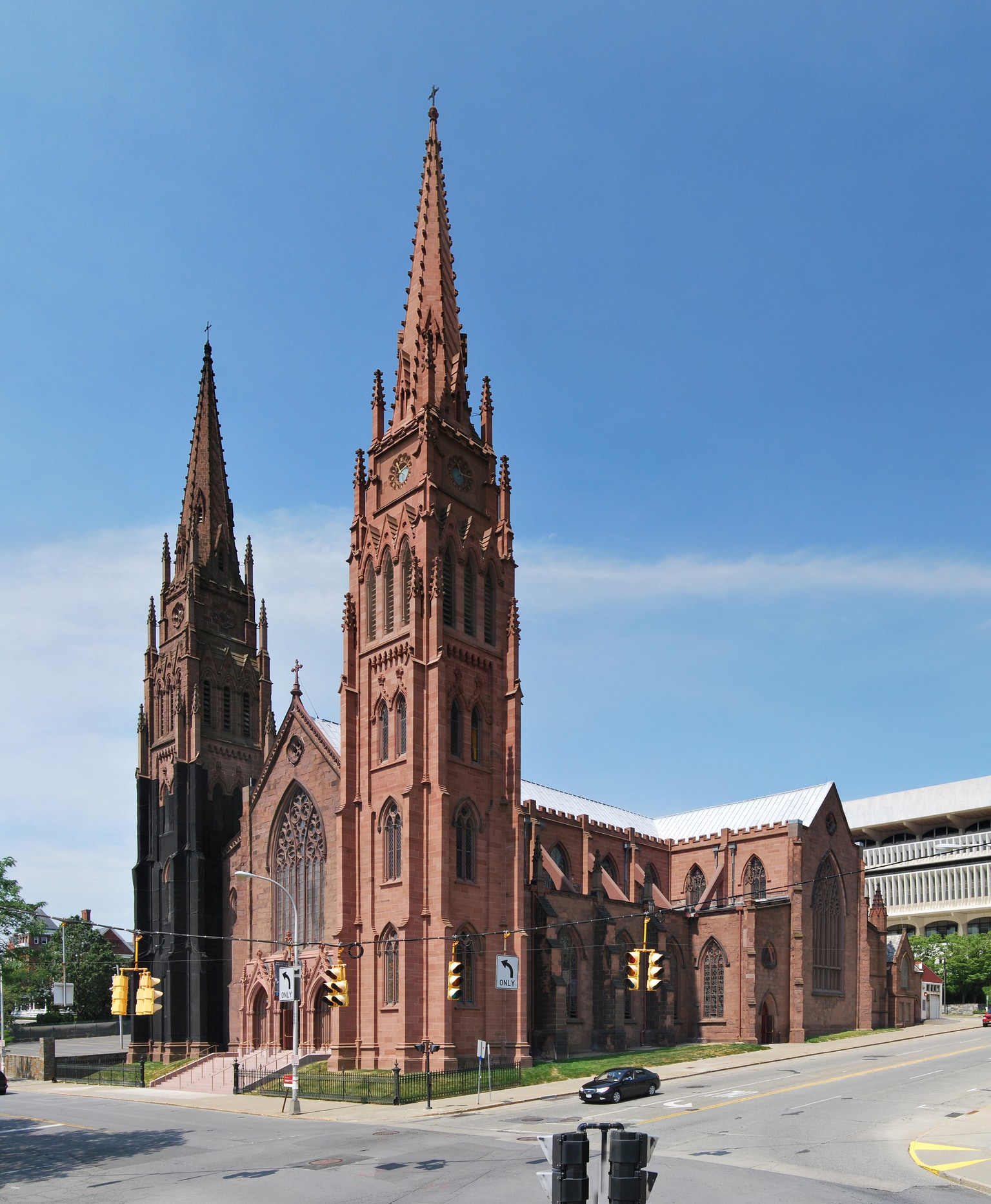
The Cathedral of the Immaculate Conception in Albany, New York, is a significant Catholic church and the mother church of the Diocese of Albany. Designed by Patrick Keely in the Neo-Gothic style, it was the first American Catholic cathedral of its kind and, upon completion, was the tallest building in Albany. It holds historical importance for its role in accommodating Catholic immigrants and for hosting interfaith events.
Key Facts
- ›Built between 1848 and 1852, it is the mother church of the Diocese of Albany.
- ›Designed by Irish American architect Patrick Keely in the Neo-Gothic style, it was the first American Catholic cathedral in this style.
- ›Upon completion, it was the tallest building in Albany.
- ›It is the second-oldest cathedral in New York State and the third oldest Catholic cathedral in the United States.
- ›The cathedral interior features original stained glass windows imported from England and award-winning Stations of the Cross statuary.
- ›In 1986, it hosted the first-ever service of forgiveness between Catholics and Jews on Palm Sunday.
- Original Stained Glass Windows Imported From England
- Award-Winning Stations of the Cross Statuary
- Two 210-Foot Bell Towers
- Sculpture 'Portal' Commemorating Interfaith Service
- Lady Window Depicting the Life of the Virgin Mary
Patrick Keely
About Cathedral of the Immaculate Conception
The Cathedral of the Immaculate Conception, located in Albany, New York, stands as a significant monument to the growth of the Catholic Church in the United States and a testament to the aspirations of its immigrant communities. Constructed between 1848 and 1852, it serves as the mother church for the Diocese of Albany. Its design by Irish American architect Patrick Keely established it as the first American Catholic cathedral in the Neo-Gothic architectural style, a designation that underscored its importance and visual presence within the city.
History and Context
The origins of the cathedral are deeply intertwined with the influx of Irish immigrants to Albany in the mid-19th century, particularly during the Great Famine. St. Mary's Parish, established in 1796, initially served the growing Catholic population. However, as the diocese expanded and the Catholic community flourished, the need for a larger, more imposing structure became apparent. Bishop John McCloskey, recognizing the need for a building that would assert the place of Irish Catholics in Albany, commissioned Patrick Keely. Keely, heavily influenced by the Gothic Revival movement, designed a cathedral that was not only functional but also symbolic of the community's strength and faith.
Architectural Significance
The Cathedral of the Immaculate Conception is a prime example of Neo-Gothic architecture in the United States. Its exterior is characterized by sandstone facing, buttresses, and crocketed pinnacles, with two prominent 210-foot bell towers flanking the main entrance. The interior, shaped like a Latin cross, features a vaulted ceiling, side aisles, and a circular chancel. Noteworthy interior elements include original stained glass windows imported from England and award-winning Stations of the Cross statuary. When completed, the cathedral's height made it the tallest building in Albany for a period, a symbol of its prominence.
Enduring Legacy and Modern Role
Throughout its history, the Cathedral of the Immaculate Conception has faced challenges, including the demolition of its surrounding neighborhood for the Empire State Plaza and periods of deferred maintenance. However, extensive restorations, particularly in the early 21st century, have preserved its architectural integrity and ensured its continued role as an active place of worship. Beyond its religious function, the cathedral has been a site of significant civic and interfaith events, including the first-ever service of forgiveness between Catholics and Jews on Palm Sunday in 1986, an event commemorated by an external sculpture. It remains a vital spiritual and historical center for the Diocese of Albany and the wider community.
Source: Wikipedia ↗
Frequently Asked Questions
When was the Cathedral of the Immaculate Conception built?
The construction of the Cathedral of the Immaculate Conception took place between 1848 and 1852. The south tower's spire was added later, and the entire structure was formally consecrated on its 50th anniversary in 1902.
Who designed the Cathedral of the Immaculate Conception?
The cathedral was designed by Irish American architect Patrick Keely. He was influenced by the Neo-Gothic architectural trends of his time, particularly the ideas of Augustus Pugin and contemporary Gothic Revival churches in Manhattan.
What are some notable features of the cathedral's interior?
The interior of the Cathedral of the Immaculate Conception features original stained glass windows imported from England, as well as award-winning Stations of the Cross statuary. The ceiling is vaulted and supported by clustered engaged columns decorated with carvings of grapes and grape leaves.
Has the cathedral undergone significant renovations?
Yes, the cathedral has undergone several renovations. A major restoration in the early 21st century addressed issues like a leaking roof and deteriorated exterior elements, costing approximately $19 million. It was closed again in 2018 for electrical and lighting updates.
What is the historical significance of the Cathedral of the Immaculate Conception?
The cathedral was built to accommodate Albany's growing Catholic immigrant population and to assert their presence in the diocese. It has also played a role in interfaith relations, notably hosting the first service of reconciliation between Catholics and Jews on Palm Sunday in 1986.
Related Cathedrals
Cathedral of St. Paul
The Cathedral of Saint Paul, also known as Saint Paul's Cathedral, is the mother church of the Catholic Diocese of Birmingham in Alabama. Originally built as a parish church in 1893, it was elevated to cathedral status in 1969 following the creation of the Diocese of Birmingham. The cathedral is a significant example of Victorian Gothic architecture and has undergone several renovations and additions throughout its history.

Cathedral of Saint Mary of the Immaculate Conception
The Cathedral of Saint Mary of the Immaculate Conception, commonly known as St. Mary's Cathedral, is a Roman Catholic cathedral in Peoria, Illinois. It serves as the seat of the Diocese of Peoria and holds significant historical and religious importance, notably as the final resting place of Archbishop Fulton J. Sheen. The cathedral is recognized for its Neo-Gothic architecture and its role in the religious life of the region.

Cathedral Basilica of St. John the Baptist
The Cathedral Basilica of St. John the Baptist is a prominent Roman Catholic cathedral and minor basilica located in Savannah, Georgia, serving as the mother church for the Diocese of Savannah. Its history traces back to the late 18th century, evolving through several church buildings before the current structure, which has undergone numerous renovations and restorations to maintain its architectural integrity and functional capacity.