
Cathedral of Saint Mary of the Immaculate Conception
Diocese of Peoria·Catholic·United States
The Cathedral of Saint Mary of the Immaculate Conception, commonly known as St. Mary's Cathedral, is a Roman Catholic cathedral in Peoria, Illinois. It serves as the seat of the Diocese of Peoria and holds significant historical and religious importance, notably as the final resting place of Archbishop Fulton J. Sheen. The cathedral is recognized for its Neo-Gothic architecture and its role in the religious life of the region.
Key Facts
- ›The present cathedral was designed by Chicago architect Casper Mehler and completed in 1889.
- ›Its exterior is constructed from Anamosa Limestone, with twin spires reaching a height of 230 feet (70 M).
- ›The cathedral houses a 1873 painting of the Crucifix by Spanish artist Yzquierda, originally from the old St. Mary's Church.
- ›Archbishop Fulton J. Sheen, a sainthood candidate, was born and raised in Peoria and is now interred at the cathedral.
- ›It underwent a major renovation from 2014 to 2016, executed by Daprato Rigali Studios.
- ›The cathedral is a contributing property within the North Side Historic District, listed on the National Register of Historic Places.

Twin Spires Rising To 230 Feet, Anamosa Limestone Exterior, Painting of the Crucifix By Yzquierda, Wicks Organ Company Pipe Organ, Burial Site of Archbishop Fulton J. Sheen
Casper Mehler
About Cathedral of Saint Mary of the Immaculate Conception
The Cathedral of Saint Mary of the Immaculate Conception, commonly referred to as St. Mary's Cathedral, stands as a prominent Catholic cathedral in Peoria, Illinois. It holds the distinction of being the episcopal seat for the Diocese of Peoria. The cathedral is notable for its historical significance, architectural features, and its role in the life of Archbishop Fulton J. Sheen, a revered figure in American Catholicism.
History and Construction
The origins of Catholic worship in the Peoria vicinity date back to early missionary efforts. The foundation for the current cathedral was laid on June 28, 1885, by Bishop John Lancaster Spalding. Designed by Chicago architect Casper Mehler, the cathedral was conceived to emulate the style of St. Patrick's Cathedral in New York City. Its construction was completed in 1889, utilizing Anamosa Limestone for its exterior. The cathedral's twin spires on the main facade are a striking feature, reaching a height of 230 feet (70 meters).
Architectural Details and Features
The cathedral's architecture reflects a style influenced by St. Patrick's Cathedral. The exterior is crafted from Anamosa Limestone, contributing to its stately appearance. Inside, a significant artistic element is the painting of the Crucifix, created in 1873 by the Spanish artist Yzquierda. This painting was acquired by Bishop Spalding and was originally displayed in the older St. Mary's Church, with only this artwork and a bell from the former structure remaining in the present cathedral after the old church was dismantled in 1898. The cathedral also boasts a large pipe organ, installed in 1936, featuring 3,329 pipes.
Religious Significance and Recent Developments
St. Mary's Cathedral is central to the Catholic faith in Peoria, serving as the mother church of the Diocese of Peoria. It is particularly significant as the final resting place of Archbishop Fulton J. Sheen, who was born and raised in Peoria, ordained a priest for the diocese, and served as an altar boy in the cathedral. Following a legal dispute, his remains were transferred from St. Patrick's Cathedral in New York to St. Mary's Cathedral in 2019, where they are entombed at a side altar.
The cathedral has undergone significant restoration and renovation, with a major project completed between 2014 and 2016 by Daprato Rigali Studios. The cathedral, along with the neighboring Bishop's House, is recognized for its historical value and is included as a contributing property within the North Side Historic District, which was added to the National Register of Historic Places in 1983.
Source: Wikipedia ↗
Frequently Asked Questions
Where is the Cathedral of Saint Mary of the Immaculate Conception located?
The Cathedral of Saint Mary of the Immaculate Conception is located in Peoria, Illinois, United States. It is the seat of the Diocese of Peoria.
When was the current St. Mary's Cathedral built?
Construction on the present cathedral was completed in 1889. The cornerstone was laid on June 28, 1885, by Bishop John Lancaster Spalding.
What is notable about Archbishop Fulton J. Sheen and this cathedral?
Archbishop Fulton J. Sheen, a Catholic televangelist and sainthood candidate, was born and raised in Peoria and ordained a priest in this cathedral. Since 2019, his remains have been interred at St. Mary's Cathedral.
What is the architectural style of St. Mary's Cathedral?
The cathedral was designed by Casper Mehler to reflect the style of St. Patrick's Cathedral in New York City. Its exterior features Anamosa Limestone and twin spires.
Has the cathedral undergone renovations?
Yes, the cathedral underwent a major renovation that began in 2014 and concluded in 2016. The restoration work was carried out by Daprato Rigali Studios.
Related Cathedrals
Cathedral of St. Paul
The Cathedral of Saint Paul, also known as Saint Paul's Cathedral, is the mother church of the Catholic Diocese of Birmingham in Alabama. Originally built as a parish church in 1893, it was elevated to cathedral status in 1969 following the creation of the Diocese of Birmingham. The cathedral is a significant example of Victorian Gothic architecture and has undergone several renovations and additions throughout its history.
Cathedral of the Immaculate Conception
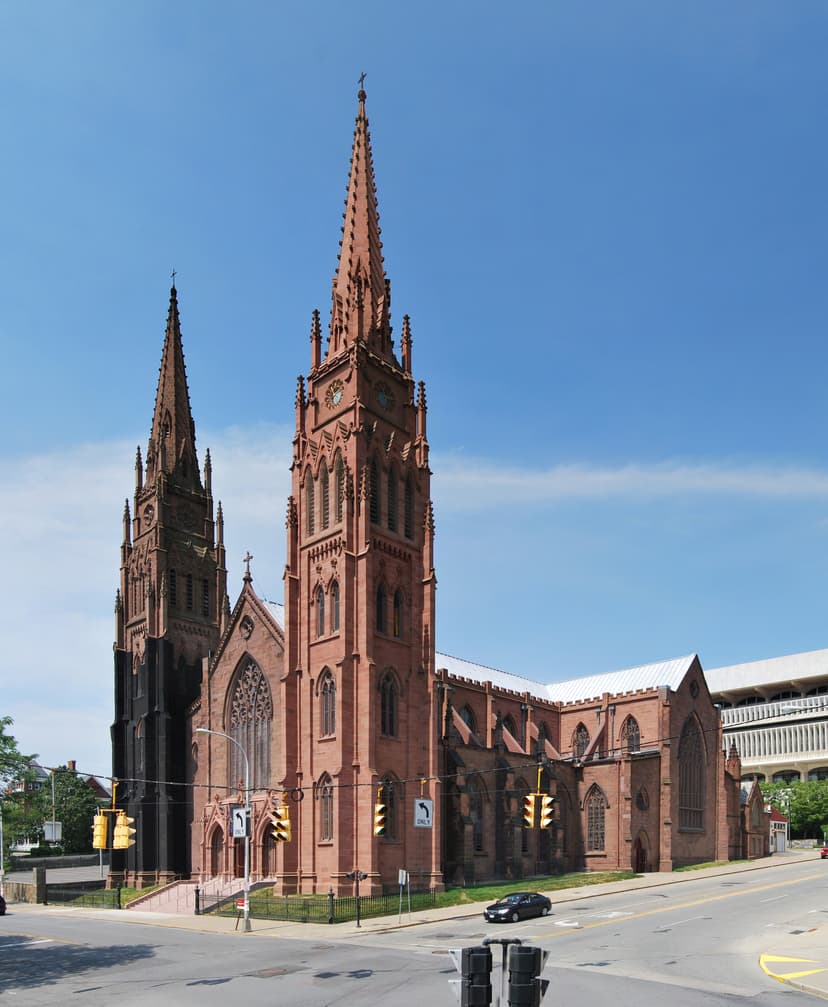
The Cathedral of the Immaculate Conception in Albany, New York, is a significant Catholic church and the mother church of the Diocese of Albany. Designed by Patrick Keely in the Neo-Gothic style, it was the first American Catholic cathedral of its kind and, upon completion, was the tallest building in Albany. It holds historical importance for its role in accommodating Catholic immigrants and for hosting interfaith events.

Cathedral Basilica of St. John the Baptist
The Cathedral Basilica of St. John the Baptist is a prominent Roman Catholic cathedral and minor basilica located in Savannah, Georgia, serving as the mother church for the Diocese of Savannah. Its history traces back to the late 18th century, evolving through several church buildings before the current structure, which has undergone numerous renovations and restorations to maintain its architectural integrity and functional capacity.