
Capua Cathedral
Archdiocese of Capua·Roman Catholic·Italy
Capua Cathedral, officially the Basilica Cathedral of the Assumption of the Virgin Mary into Heaven, serves as the episcopal seat for the Archbishops of Capua. This Roman Catholic cathedral has a long history of rebuilding and renovation, with its current structure largely dating from post-World War II reconstruction.
Key Facts
- ›The original construction is traditionally attributed to Bishop Landulfo in 856, utilizing spolia from local Roman structures.
- ›The cathedral underwent significant rebuilding in the 10th century, and again towards the end of the 11th century under Archbishop Erveo.
- ›The bell-tower exhibits Lombard and Norman architectural influences.
- ›The entire church was destroyed by bombardment on September 9, 1943, and subsequently rebuilt between 1949 and 1957.
- ›Notable artworks include paintings by Domenico Vaccaro and Francesco Solimena, as well as columns from the 11th century and a font from the late 16th century.
- Bell-Tower With Lombard and Norman Influences
- Columns By Archbishop Erveo
- Font By Archbishop Cesare Costa
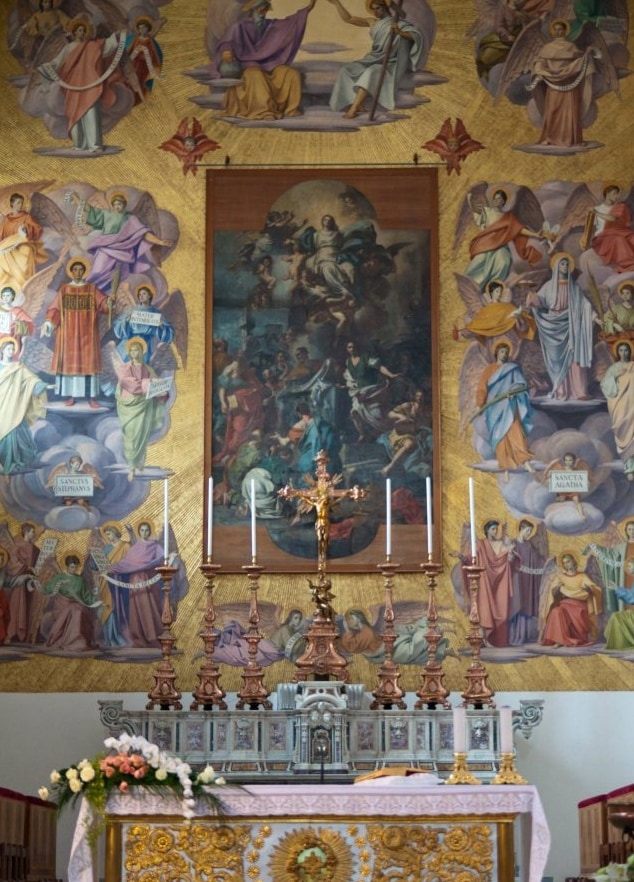
- Altarpiece of the Assumption of the Virgin By Francesco Solimena
- Frescoes By Domenico Vaccaro
- Crypt With A Painting of A Dead Christ By Matteo Bottiglieri
About Capua Cathedral
Capua Cathedral, officially the Basilica Cathedral of the Assumption of the Virgin Mary into Heaven (Italian: Basilica cattedrale di Maria SS. Assunta in Coelo; Duomo di Capua), is a significant Roman Catholic cathedral located in the city of Capua, Campania, Italy. It holds the distinguished position of being the episcopal seat for the Archbishops of Capua and was granted the status of a basilica minor in 1827.
History and Reconstruction
The origins of the first church on the site are traditionally traced to Bishop Landulfo of Capua in 856, with construction potentially utilizing spolia columns from local Roman amphitheaters or other churches. The structure underwent significant rebuilding in the 10th century. Further substantial renovations occurred towards the end of the 11th century under Archbishop Erveo, with subsequent major works continuing over the centuries. The bell-tower is noted for its Lombard and Norman architectural influences.
A devastating event in the cathedral's history occurred on September 9, 1943, when the entire church was destroyed by bombardment during World War II. Following this destruction, the cathedral was meticulously rebuilt between 1949 and 1957, resulting in its present form. The Diocesan Museum was established within a chapel at the cathedral in 1992.
Artistic and Architectural Features
Capua Cathedral houses several notable works of art. Among the paintings are contributions by Domenico Vaccaro, with frescoes in the presbytery depicting Eucharistic scenes, completed in 1961. The main altarpiece is an Assumption of the Virgin by the renowned artist Francesco Solimena. The nave showcases columns attributed to Archbishop Erveo from his tenure between 1073 and 1088, alongside a baptismal font commissioned by Archbishop Cesare Costa (1572-1602). The crypt contains further artistic treasures, including a painting of a Dead Christ by Matteo Bottiglieri, an Addolorata from the school of Canova, and an ancient Roman sarcophagus.
Source: Wikipedia ↗
Frequently Asked Questions
When was Capua Cathedral first built?
The construction of the first church on the site is traditionally attributed to Bishop Landulfo in 856. However, it was rebuilt in the 10th century and again towards the end of the 11th century.
What happened to Capua Cathedral during World War II?
The entire church was destroyed by bombardment on September 9, 1943. It was later rebuilt between 1949 and 1957.
What are some notable artworks within Capua Cathedral?
Among the paintings are works by Domenico Vaccaro, with frescoes depicting Eucharistic scenes. The main altarpiece is the Assumption of the Virgin by Francesco Solimena. The nave features columns from the 11th century and a font from the late 16th century.
What architectural styles can be seen at Capua Cathedral?
The bell-tower displays Lombard and Norman influences. While the original styles are not detailed, the post-war reconstruction would have incorporated contemporary architectural approaches.
Related Cathedrals

London Orthodox Cathedral SW7
The Russian Orthodox Cathedral of the Dormition of the Mother of God and All Saints serves as the cathedral for the Russian Orthodox Diocese of Sourozh in London, England. Originally built as an Anglican church, it was later consecrated as an Orthodox cathedral and is a significant spiritual center for the Russian Orthodox community in the city, hosting administrative meetings and regular services.

Amalfi Cathedral
Amalfi Cathedral, officially the Cathedral of Saint Andrew, is a medieval Roman Catholic cathedral located in Amalfi, Italy. It is renowned for its elaborate architecture, a blend of various historical styles, and for housing the relics of the Apostle Saint Andrew. The cathedral has been an important religious center and a significant landmark of the Amalfi Coast for centuries.

Aleth Cathedral
Aleth Cathedral, also known as Cathédrale Saint-Pierre d'Aleth, was a Roman Catholic cathedral located in Saint-Servan, Saint-Malo, Brittany, France. It served as the seat of the Diocese of Aleth, established in the 9th century, before its relocation and eventual obsolescence.