
Brescia Cathedral (New)
The Duomo Nuovo, or New Cathedral, is the largest Catholic church in Brescia, Italy, and a prominent example of Baroque architecture. Its construction, initiated in 1604, spanned centuries, incorporating designs from notable architects and featuring significant interior artworks. The cathedral stands as a testament to the city's religious and artistic heritage, continuing its role as an active place of worship.
Key Facts
- ›Construction began in 1604 on the site of a 5th-6th century basilica.
- ›Initial commission was by Andrea Palladio, with Giovanni Battista Lantana and Pietro Maria Bagnadore also contributing to its design and construction.
- ›Work was interrupted by plague around 1630 and significantly advanced in the 19th century.
- ›The dome, completed in 1825, was designed by Luigi Cagnola and reaches a height of 80 meters, making it one of Italy's highest.
- ›The facade features statues of the Virgin of the Assumption and Saints Peter, Paul, James, and John.
- ›Interior artworks include scenes from the life of the Virgin by Girolamo Romanino and a Sacrifice of Isaac by Moretto da Brescia.
- Dome Designed By Luigi Cagnola
- Facade Statues
- Interior Artworks By Girolamo Romanino, Moretto Da Brescia, and Jacopo Zoboli
- Monument To Pope Paul Vi
Andrea Palladio, Giovanni Battista Lantana, Pietro Maria Bagnadore, Giovanni Battista Marchetti, Antonio Marchetti, Luigi Cagnola
About Brescia Cathedral (New)
The Duomo Nuovo, or New Cathedral, is the largest Catholic church in Brescia, Italy. Its construction began in 1604 on the site of an earlier paleo-Christian basilica, the San Pietro de Dom. While the initial commission was given to the renowned architect Andrea Palladio, the project was later undertaken by Giovanni Battista Lantana, with assistance from Pietro Maria Bagnadore.
History and Construction
The building process for the Duomo Nuovo was lengthy and marked by interruptions. A significant pause occurred around 1630 due to a season of plague. Work slowly resumed but only gained significant momentum in the nineteenth century. The facade was designed by Giovanni Battista and Antonio Marchetti. A major architectural achievement is the dome, completed in 1825, which was designed by Luigi Cagnola and stands as one of the highest in Italy at 80 meters. This dome was later rebuilt following destruction during the Second World War.
Art and Architecture
The facade of the Duomo Nuovo is adorned with statues depicting the Virgin of the Assumption and Saints Peter, Paul, James, and John. The interior houses notable works of art, including scenes from the life of the Virgin by Girolamo Romanino and a Sacrifice of Isaac by Moretto da Brescia. The main altarpiece, created between 1733 and 1735, is The Assumption of the Virgin with the Apostles by Jacopo Zoboli. A monument to the Brescian Pope Paul VI, sculpted by Raffaele Scorzelli in 1975, is located in the left transept. The imposing Baroque structure of the New Cathedral stands in contrast to the older, smaller Romanesque Old Cathedral of Brescia (Duomo Vecchio) situated nearby.
Source: Wikipedia ↗
Frequently Asked Questions
When was the Duomo Nuovo in Brescia built?
Construction of the Duomo Nuovo began in 1604. The work was sporadic, with the facade designed in the 19th century and the dome completed in 1825. The dome was later rebuilt after destruction during World War II.
Who designed the dome of the Duomo Nuovo?
The dome of the Duomo Nuovo was designed by Luigi Cagnola. It was completed in 1825 and stands as one of the highest domes in Italy, measuring 80 meters.
What are some notable artworks inside the Duomo Nuovo?
Inside the Duomo Nuovo, visitors can find scenes from the life of the Virgin by Girolamo Romanino, a Sacrifice of Isaac by Moretto da Brescia, and the main altarpiece, The Assumption of the Virgin with the Apostles, by Jacopo Zoboli.
Is the Duomo Nuovo an active church?
Yes, the Duomo Nuovo is the largest Catholic church in Brescia and remains an active place of worship. It also contains a monument to Pope Paul VI.
Related Cathedrals

Angers Cathedral
Angers Cathedral, officially Cathédrale Saint-Maurice d'Angers, is a Catholic cathedral in Angers, France, serving as the seat of the Bishops of Angers. Renowned for its blend of Romanesque and Gothic architectural styles, it also features significant Baroque elements and an exceptional collection of stained-glass windows, some dating back to the late 12th century.

Alatri Cathedral
Alatri Cathedral, officially the Basilica of Saint Paul, is a Roman Catholic cathedral in Alatri, Lazio, Italy. Originally the cathedral of the Diocese of Alatri, it is now a co-cathedral of the Diocese of Anagni-Alatri. It holds significant relics, including those of Saint Sixtus I and the Ostia incarnata from the Eucharistic miracle of Alatri, making it a site of considerable religious importance.
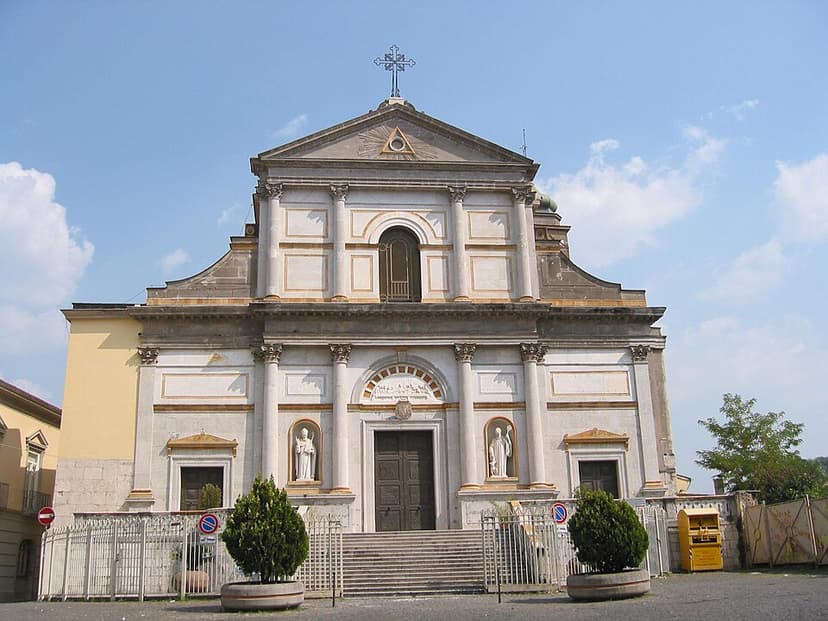
Avellino Cathedral
Avellino Cathedral, officially the Duomo di Santa Maria Assunta e di San Modestino, is the Roman Catholic cathedral of Avellino, Italy, serving as the seat of the bishops of Avellino. Originally a Romanesque structure built in the 12th century, it has undergone significant transformations over the centuries, evolving into its current Neoclassical appearance after extensive Baroque renovations and later modifications.