
Blois Cathedral
Blois Cathedral, officially the Cathedral of Saint-Louis of Blois, is a significant example of Late Gothic architecture located in Blois, France. It serves as the seat of the Diocese of Blois and holds a rich history, having been rebuilt and modified over centuries, most notably after a severe storm in 1678 led to a major Gothic reconstruction.
Key Facts
- ›The cathedral is a prime example of Late Gothic architecture, with later Renaissance and Neoclassical influences.
- ›Its construction began in the 12th century, though little of the original structure remains except for crypt traces.
- ›A major reconstruction of the nave occurred between 1680 and 1700 following damage from a 1678 storm.
- ›The impressive bell-tower, begun in 1544, is in the Renaissance style and features Ionic and Corinthian columns.
- ›The cathedral was elevated to its status as a cathedral in 1697, and Louis XIV gifted the organ console in 1704.
- ›Modern stained-glass windows by Jan Dibbets were installed in 2000 as part of a general restoration project.
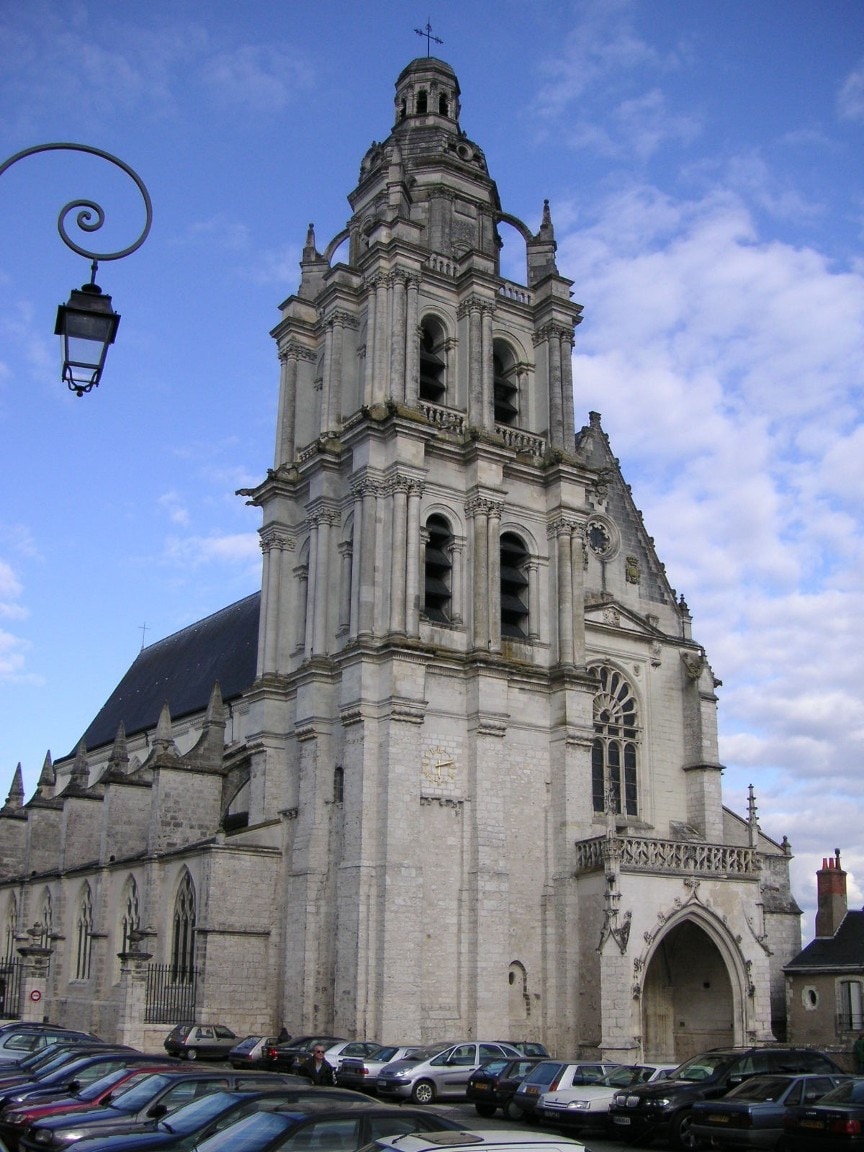
Late Gothic, Renaissance, Neoclassical
- Renaissance Bell-Tower
- West Front With Gothic and Neoclassical Elements
- Modern Stained-Glass Windows By Jan Dibbets
- Crypt of Saint Solenne With Traces of Carolingian Church
- Organ Console Gifted By Louis Xiv
Arnoul-SéRaphin Poictevin, Jules De La MorandièRe
About Blois Cathedral
Blois Cathedral, officially known as the Cathedral of Saint-Louis of Blois, stands as a significant monument of Late Gothic architecture in Blois, France. It has been recognized as a monument historique since 1906, highlighting its importance within the national heritage of France. The cathedral serves as the episcopal seat for the Diocese of Blois, which was established in 1697.
History and Construction
The current structure is a testament to centuries of architectural evolution and reconstruction. While construction began in the 12th century, only remnants in the crypt and the base of the bell-tower survive from this early period. A devastating storm in 1678 destroyed the nave, necessitating a major reconstruction in the Gothic style between 1680 and 1700, undertaken at the instigation of Jean-Baptiste Colbert. The church's elevation to cathedral status in 1697 was celebrated with the presentation of an organ console by Louis XIV in 1704, and the dedication was changed to Saint Louis.
Architectural Features
The cathedral showcases a blend of styles. The west front, dating from the mid-16th century, exhibits a fascinating compromise between Late Gothic elements like gargoyles and pinnacles, and early Neoclassical features such as a triangular pediment. The bell-tower on the north façade is a striking Renaissance structure, with Ionic and Corinthian columns, topped by a dome added in 1603, said to be a replica of those at Tours Cathedral. The interior features a long nave without a transept, side aisles, side chapels, and a chancel with a pentagonal apse.
Notable Additions and Restoration
The Chapel of Notre-Dame was added in 1860, under the direction of Jules de La Morandière. A significant event in its recent history was the destruction of most of its stained-glass windows during World War II. A comprehensive restoration project, begun in 1985, included the dedication of new stained-glass windows in 2000, created by Dutch artist Jan Dibbets and French master glass-worker Jean Mauret, covering over 360 square meters.
The Crypt
Beneath the chancel lies the Crypt of Saint Solenne, which contains traces of a Carolingian church believed to have been built in the late 10th century. This structure was converted into a crypt when the new church was built in the 12th century. Visible within the crypt are parts of the original church's nave and apse, as well as tombs of the Bishops of Blois.
Source: Wikipedia ↗
Frequently Asked Questions
What is the architectural style of Blois Cathedral?
Blois Cathedral is primarily in the Late Gothic style. However, its west front incorporates elements of early Neoclassical design, and the bell-tower features Renaissance characteristics with Ionic and Corinthian columns.
When was Blois Cathedral constructed?
Construction of the cathedral began in the 12th century. Significant rebuilding and modifications occurred in the late 17th century (1680-1700) and the bell-tower was constructed starting in 1544.
What notable features does Blois Cathedral have?
Key features include its Late Gothic architecture, the Renaissance-style bell-tower with a dome, the west front's blend of Gothic and Neoclassical styles, and modern stained-glass windows by Jan Dibbets.
Is Blois Cathedral an active place of worship?
Yes, Blois Cathedral is an active Catholic cathedral and serves as the seat of the Diocese of Blois.
What is the history of the bell-tower at Blois Cathedral?
The foundations of the bell-tower date back to the 12th century, but construction on the current Renaissance-style tower began in 1544. It was topped with a dome in 1603, which is said to resemble those of Tours Cathedral.
What happened to the stained-glass windows during World War II?
American bombardment during World War II destroyed most of the original stained-glass windows in Blois Cathedral. New windows by Jan Dibbets were dedicated in 2000.
Related Cathedrals

Angers Cathedral
Angers Cathedral, officially Cathédrale Saint-Maurice d'Angers, is a Catholic cathedral in Angers, France, serving as the seat of the Bishops of Angers. Renowned for its blend of Romanesque and Gothic architectural styles, it also features significant Baroque elements and an exceptional collection of stained-glass windows, some dating back to the late 12th century.

Bordeaux Cathedral
Bordeaux Cathedral, officially the Primatial Cathedral of St Andrew of Bordeaux, is a Roman Catholic cathedral in Bordeaux, France, serving as the seat of the Archbishop of Bordeaux. It is a significant landmark included in the UNESCO World Heritage Site of the Routes of Santiago de Compostela in France. The cathedral showcases a rich architectural history, evolving from Romanesque to Gothic styles and incorporating Renaissance elements, making it a vital historical and religious site.
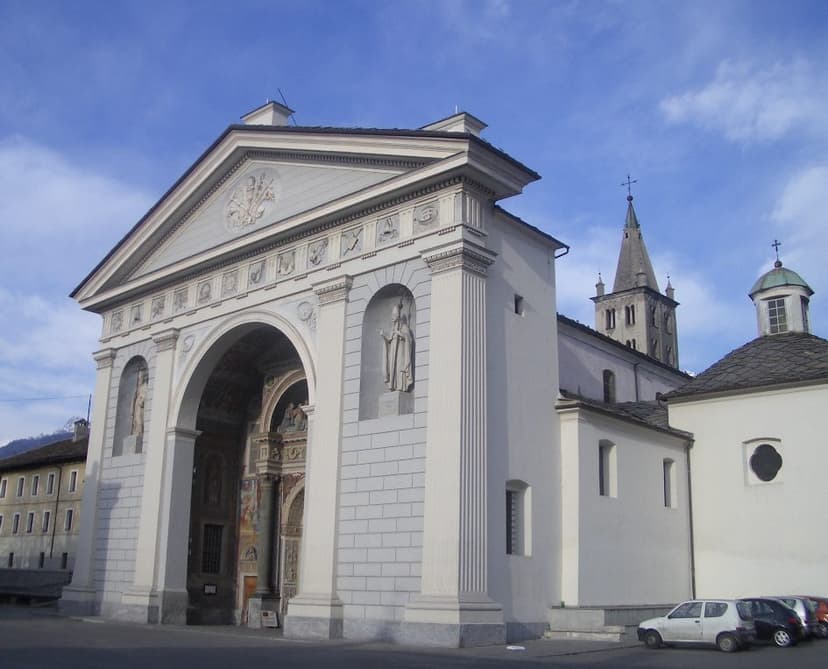
Aosta Cathedral
Aosta Cathedral, also known as the Cathedral of Santa Maria Assunta and San Giovanni Battista, is a Roman Catholic cathedral in Aosta, Italy, with origins dating back to the 4th century. It serves as the episcopal seat for the Diocese of Aosta and has undergone significant architectural modifications throughout its history, reflecting various styles from its Romanesque foundations to its Neoclassical facade.