
Birmingham Orthodox Cathedral
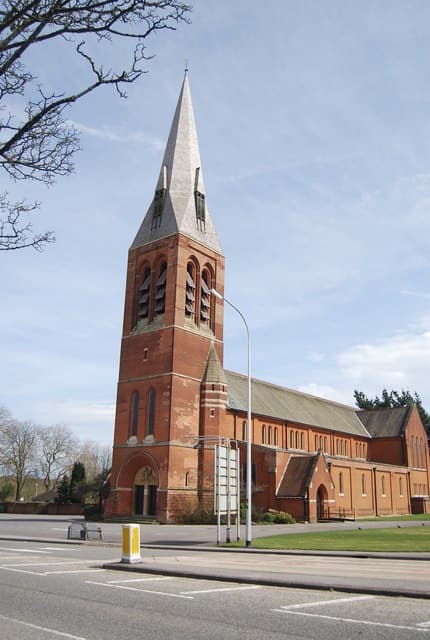
The Birmingham Orthodox Cathedral, officially the Cathedral Church of the Dormition of the Mother of God and St. Andrew, is a Greek Orthodox cathedral located in Birmingham, England. Originally built as a Catholic Apostolic church in 1873, it was inaugurated as the first Greek Orthodox Church in Birmingham in 1958 and later consecrated as a cathedral in 1980. The cathedral serves as a spiritual center for the Greek Orthodox community and also houses a Greek school dedicated to preserving the language and culture.
Key Facts
- ›The building was originally designed by J.A. Chatwin in 1873 as a Gothic Revival church in the Early English style.
- ›It was inaugurated as the first Greek Orthodox Church in Birmingham in 1958, with regular liturgies conducted by Father Nicodemos Anagnostou.
- ›The church was consecrated as a cathedral in 1980 following the ordination of Irineos of Patara as a bishop.
- ›The cathedral is dedicated to the Dormition of the Theotokos and Saint Andrew.
- ›It houses the Apostolos Andreas Greek School, founded in 1958 to teach Greek language, history, religion, and culture.
- ›The cathedral features a Gothic Revival brick architecture with a wide rectangular nave and apses at each end.

Gothic Revival, Early English
- Gothic Revival Brick Architecture
- Wide Rectangular Nave
- Apse At Each End
- Passage Aisles Through Buttresses
- Heavy Brick Arches On Stout Columns
- Clerestory Windows
- High Arched Roof
- Tall Archway At the West End Leading Into A Baptistery
- Apostolos Andreas Greek School
19th Century, 20th Century, 21st Century
J.A. Chatwin
About Birmingham Orthodox Cathedral
The Cathedral Church of the Dormition of the Mother of God and St. Andrew, commonly known as Birmingham Orthodox Cathedral, stands as a significant spiritual and cultural center for the Greek Orthodox community in Birmingham, England.
History and Foundation
The establishment of a Greek Orthodox presence in Birmingham gained momentum after the Second World War, driven by emigration from Cyprus. By 1947, a priest was sent monthly to conduct services. These services eventually moved to the Anglican Church of Saint James in Edgbaston in 1951, allowing for weekly liturgies. It was during this period that the first Greek school was established to teach the Greek language and culture.
The community's dedication led to the inauguration of their first permanent church building in 1958, devoted to the Dormition of the Virgin Mary and Saint Andrew. Father Nicodemos Anagnostou became the first permanent priest.
Consecration as a Cathedral
A pivotal moment in the church's history occurred on December 14, 1980, when it was consecrated as The Cathedral of The Dormition of The Theotokos and St. Andreas. This consecration coincided with the ordination of Irineos of Patara as a bishop, making the church the seat of the new bishop for the Archdiocese of Great Britain and Thyateira.
Architectural Significance
The cathedral building itself has a rich architectural history. It was originally designed in 1873 by J.A. Chatwin, a notable Birmingham architect, as a Catholic Apostolic church. The structure is a notable example of Gothic Revival architecture in the Early English style, characterized by its brick construction, a wide rectangular nave, apses at each end, and distinctive interior features such as heavy brick arches and a high arched roof. Some of its decorative elements were crafted by Gibbs and Canning of Tamworth.
Apostolos Andreas Greek School
Integral to the cathedral's mission is the Apostolos Andreas Greek School, founded in 1958. Initially operating from a Greek coffee shop, the school expanded significantly due to the influx of Cypriot immigrant families. Over the years, it has occupied various premises, eventually moving to its own dedicated building next to the cathedral in 2002. The school continues its commitment to teaching Greek language, history, religion, and culture, fostering pride in heritage among its students. Notably, Mr. Christophoros Cartoudis, a long-serving teacher and Headmaster, was recognized with the British Empire Medal for his contributions.
Current Status
Birmingham Orthodox Cathedral remains an active place of worship and a vibrant hub for the Greek Orthodox community. Renovations have taken place since the early 2000s, ensuring the preservation of this important religious and educational institution.
Source: Wikipedia ↗
Frequently Asked Questions
When was the first Greek Orthodox Church in Birmingham established?
The first Greek Orthodox Church in Birmingham was inaugurated in 1958. Regular liturgies began in the city with the arrival of the first permanent priest, Father Nicodemos Anagnostou.
What is the architectural style of the Birmingham Orthodox Cathedral?
The cathedral is a brick Gothic Revival church designed in the Early English style. It features a wide rectangular nave, apses at each end, and passage aisles through the buttresses.
What is the significance of the Apostolos Andreas Greek School?
The Apostolos Andreas Greek School was founded in 1958 to teach Greek language, history, religion, and culture to children and adults. It has played a significant role in preserving Greek heritage in Birmingham for over six decades.
When was the church consecrated as a cathedral?
The church was consecrated as the Cathedral of The Dormition of The Theotokos and St. Andreas on December 14, 1980. This followed the ordination of Irineos of Patara as a bishop, who made the church his episcopal seat.
Who designed the original building?
The building was designed in 1873 by J.A. Chatwin, an architect known for his work on many churches in Birmingham, including St Philip's Cathedral.
Related Cathedrals

Camden Town Cathedral
All Saints Cathedral, originally an Anglican church in Camden Town, London, is now the Greek Orthodox Cathedral Church of All Saints. Built between 1822 and 1824 by William and Henry Inwood, it is a Grade I listed building known for its Ionic order architecture, inspired by Greek examples.

London Orthodox Cathedral
Saint Sophia Cathedral, consecrated in 1882, is a prominent Greek Orthodox church in London's Bayswater area. It was established to serve the growing Greek community and has since become a significant religious and cultural center, even serving as the cathedral for the Greek government in exile during World War II.
Aldershot Cathedral
The Cathedral Church of St Michael and St George is the Roman Catholic cathedral for the Bishopric of the Forces, located in Aldershot, England. Originally built as an Anglican church for the British Army, it was consecrated in 1893 and later repurposed in 1973 to become the seat of the Roman Catholic Bishop of the Forces. It is a significant landmark due to its Gothic Revival architecture and its close association with military history.