
Belfort Cathedral
Belfort–Montbéliard·Roman Catholic·France
Belfort Cathedral, officially the Cathedral of Saint Christopher of Belfort, is a Roman Catholic church in Belfort, France, that has served as the seat of the Diocese of Belfort–Montbéliard since 1979. Originally constructed as a church between 1727 and 1750, it was elevated to cathedral status in the late 20th century and has been recognized as a national monument.
Key Facts
- ›Construction of the building that is now the cathedral took place between 1727 and 1750.
- ›The church was built from red sandstone quarried at Offemont.
- ›The north tower was not completed until 1845, long after the church opened for worship in 1750.
- ›It houses an organ built by Joseph Valtrin, installed in 1752, which is itself an historic monument.
- ›Belfort Cathedral became the seat of the Bishop of Belfort–Montbéliard in 1979 when the diocese was created.
- ›The cathedral has been a national monument since 1930 and was declared a minor basilica in 1952.
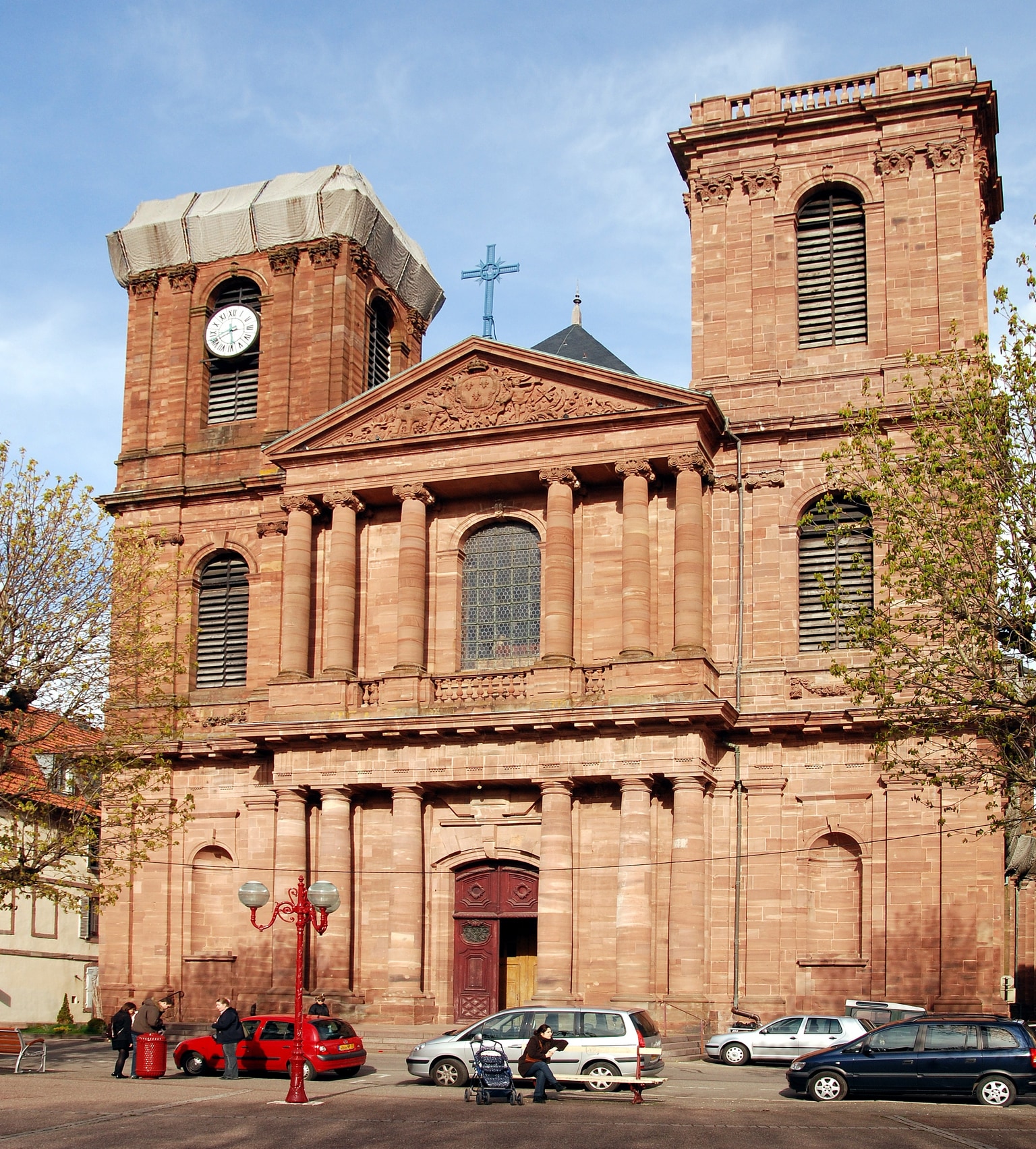
Organ By Joseph Valtrin, Red Sandstone Construction, National Monument Status
Jacques Philippe Mareschal
About Belfort Cathedral
Belfort Cathedral, officially known as the Cathedral of Saint Christopher of Belfort, is a significant religious edifice located in the city of Belfort, within the Territoire de Belfort department of France. The building's history as a place of worship began in the mid-18th century, and it officially became the seat of the Diocese of Belfort–Montbéliard in 1979. It has been recognized for its historical and architectural importance, designated as a national monument in 1930 and declared a minor basilica in 1952.
History and Construction
The structure that now serves as Belfort Cathedral was constructed as a church between 1727 and 1750. The plans were drawn by Jacques Philippe Mareschal, who served as the king's engineer in Strasbourg. The construction utilized red sandstone, a material sourced from a quarry located at Offemont, approximately three kilometers from Belfort. While the church was opened for worship in 1750, the completion of its north tower was delayed until 1845.
Architectural Significance and Features
The cathedral is noted for its construction from locally quarried red sandstone. A notable artistic and historical feature within the cathedral is the organ built by the organ-builder Joseph Valtrin, which was installed in 1752. This organ is recognized in its own right as an historic monument. The cathedral's elevation to the status of a cathedral occurred with the creation of the Diocese of Belfort–Montbéliard on November 3, 1979, which was formed from territory previously belonging to the Archdiocese of Besançon. The bishop's seat was subsequently established at Belfort, marking the church's new ecclesiastical role.
Source: Wikipedia ↗
Frequently Asked Questions
When was Belfort Cathedral built?
The main structure of the church that is now Belfort Cathedral was built between 1727 and 1750. However, its north tower was not completed until 1845.
What is Belfort Cathedral made of?
The cathedral is constructed from red sandstone that was excavated from a quarry at Offemont, located three kilometers from Belfort.
When did Belfort Cathedral become a cathedral?
Belfort Cathedral was elevated to the status of cathedral on November 3, 1979, when the Diocese of Belfort–Montbéliard was created and its bishop's seat was established there.
What are some notable features of Belfort Cathedral?
The cathedral contains an organ built by Joseph Valtrin in 1752, which is recognized as an historic monument. It is also a national monument and was declared a minor basilica in 1952.
Related Cathedrals
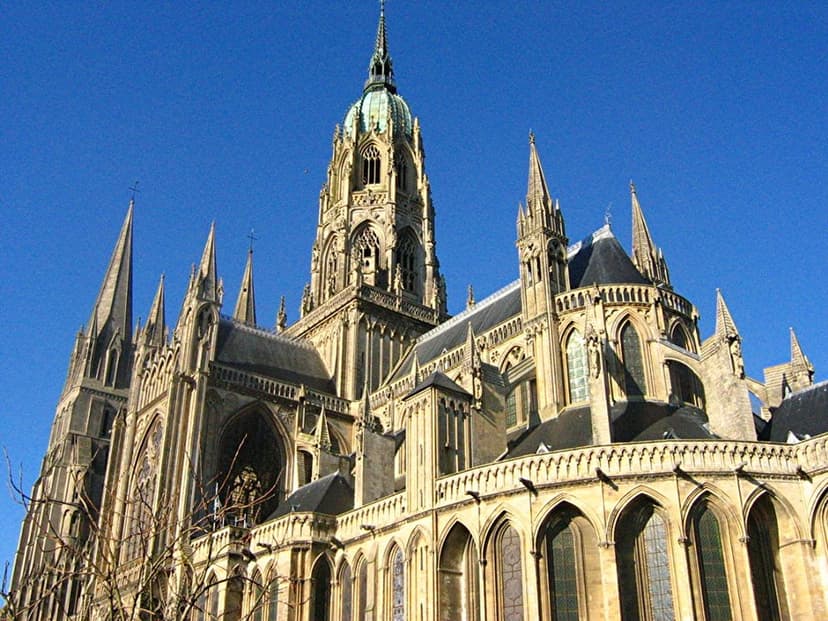
Bayeux Cathedral
Bayeux Cathedral, officially the Cathedral of Our Lady of Bayeux, is a significant Roman Catholic cathedral located in Bayeux, Normandy, France. It stands as a prime example of European Norman-Romanesque and Gothic architecture and was the original home of the renowned Bayeux Tapestry. The cathedral's history is marked by multiple reconstructions and modifications, reflecting evolving architectural styles and enduring historical events.
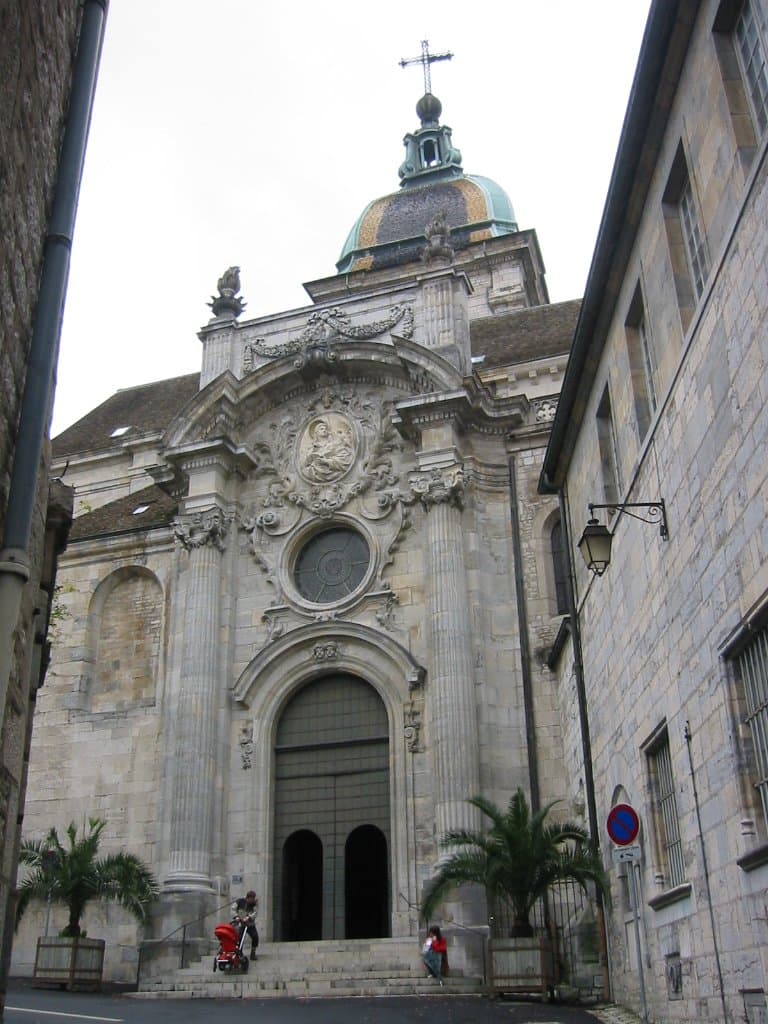
Besançon Cathedral
Besançon Cathedral, officially Cathédrale Saint-Jean de Besançon, is a Roman Catholic cathedral serving as the seat of the Archbishop of Besançon in France. Its construction spans from the 11th to the 13th century, featuring unique architectural elements like twin apses and Romanesque arches, with later additions and modifications throughout its history.

Arras Cathedral
Arras Cathedral, officially named Cathédrale Notre-Dame-et-Saint-Vaast d'Arras, serves as the principal church and seat of the Bishops of Arras in France. The current structure is built upon the site of the former Abbey Church of Saint-Vaast, which was consecrated in 1834 after a significant rebuilding in neoclassical style following the French Revolution.