
Bayeux Cathedral
Bayeux and Lisieux·Roman Catholic·France
Bayeux Cathedral, officially the Cathedral of Our Lady of Bayeux, is a significant Roman Catholic cathedral located in Bayeux, Normandy, France. It stands as a prime example of European Norman-Romanesque and Gothic architecture and was the original home of the renowned Bayeux Tapestry. The cathedral's history is marked by multiple reconstructions and modifications, reflecting evolving architectural styles and enduring historical events.
Key Facts
- ›Originally consecrated in 1077 in the presence of William, Duke of Normandy.
- ›Represents a significant example of Norman-Romanesque and Gothic architectural traditions.
- ›Was the initial repository for the Bayeux Tapestry, which documented the Norman Conquest of England.
- ›Has undergone numerous reconstructions and modifications due to fires, sieges, and evolving architectural trends.
- ›Sacked by Calvinists in the late 16th century and later repurposed as a Temple of Reason during the French Revolution.
- ›Largely spared from destruction during World War I and World War II, serving as a navigation point for Allied troops in the latter.
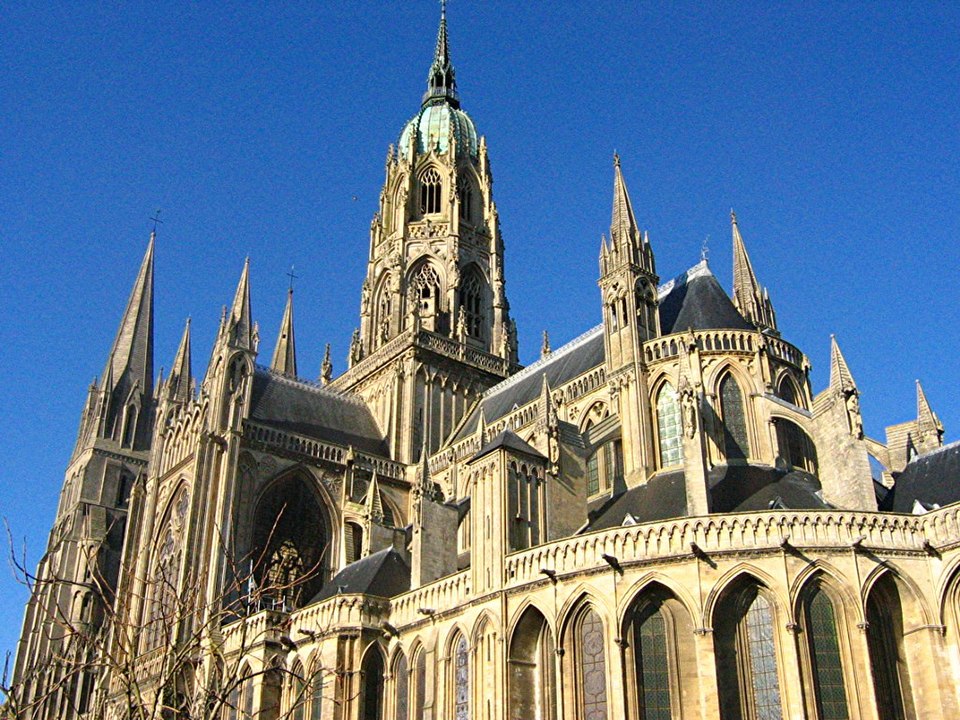
Norman-Romanesque, Gothic, Rayonnant Gothic
Original Home of the Bayeux Tapestry, Norman-Romanesque Crypt, Gothic Nave and Choir, Crossing Tower, Stained Glass Windows
EugèNe Viollet-Le-Duc, EugèNe Flachat, Cyril Boucaud
About Bayeux Cathedral
Bayeux Cathedral, officially known as the Cathedral of Our Lady of Bayeux (Cathédrale Notre-Dame de Bayeux), is a significant Roman Catholic cathedral located in the city of Bayeux in Normandy, France. It serves as the seat of the Bishop of Bayeux and Lisieux and is a prominent example of European Norman-Romanesque and Gothic architectural traditions. The cathedral is historically noteworthy as the original home of the Bayeux Tapestry, a remarkable embroidery depicting the events leading up to the Norman Conquest of England.
History and Construction
The current cathedral was consecrated on July 14, 1077, in the presence of William, Duke of Normandy, and his half-brother, Bishop Odo of Bayeux. This construction occurred on a site with a history of ecclesiastical buildings dating back to Roman ruins. The cathedral's existence has been marked by several significant events, including a fire in 1046 that necessitated rebuilding, and another fire in 1105 that led to a complete reconstruction starting around 1120, incorporating Norman Romanesque elements.
A subsequent fire in 1160 prompted further reconstruction, beginning in 1180. This phase saw a shift towards the emerging Gothic architectural style, with modifications including the removal of the clerestory and the expansion of the rib vaulting. Between 1245 and 1255, the upper sections of the nave were rebuilt in the Rayonnant Gothic style, featuring larger bays and stained glass windows. The cathedral endured invasions and religious conflicts, including being sacked by Calvinists in the late 16th century and later being converted into a Temple of Reason during the French Revolution.
Restoration efforts in the early 18th century introduced a classical-style dome. In the mid-19th century, architect Eugène Viollet-le-Duc proposed extensive modifications, though many were not implemented due to popular protest. The classical dome was dismantled, but the core structure was preserved. The cathedral was largely spared during World War I and served as a navigation point during World War II.
Architecture
Bayeux Cathedral showcases a blend of architectural styles, primarily Norman-Romanesque and Gothic. The Norman-Romanesque influence is evident in its earlier structures, while later phases of rebuilding and modification introduced Gothic elements, particularly in the nave, transepts, and the impressive crossing tower, which was initiated in the 15th century and completed in the 19th century. The cathedral has been recognized for its architectural significance and has been listed as a Monument historique since 1862.
Source: Wikipedia ↗
Frequently Asked Questions
When was Bayeux Cathedral consecrated?
Bayeux Cathedral was consecrated on July 14, 1077. This significant event took place in the presence of William, Duke of Normandy, and his half-brother, Bishop Odo of Bayeux.
What architectural styles can be found at Bayeux Cathedral?
The cathedral exhibits a blend of Norman-Romanesque and Gothic architectural styles. Following a 12th-century fire, it was rebuilt in Gothic style, particularly evident in the crossing tower, transepts, and east end. Later modifications also incorporated elements of Rayonnant Gothic.
What is the historical significance of Bayeux Cathedral?
Bayeux Cathedral holds historical importance as the original home of the Bayeux Tapestry, which is a crucial historical document detailing the events leading up to the Norman Conquest of England. The site itself has been a place of worship since Roman times.
Has Bayeux Cathedral been damaged throughout its history?
Yes, the cathedral has suffered significant damage and undergone multiple reconstructions due to fires in 1046 and 1105, and again in 1160. It was also sacked by Calvinists in the late 16th century and damaged during the French Revolution.
What role did Bayeux Cathedral play during World War II?
During World War II, Bayeux Cathedral served as a crucial navigation point for Allied troops during Operation Overlord. This strategic importance likely contributed to it being less heavily targeted by bombing compared to other cities in Normandy.
Related Cathedrals
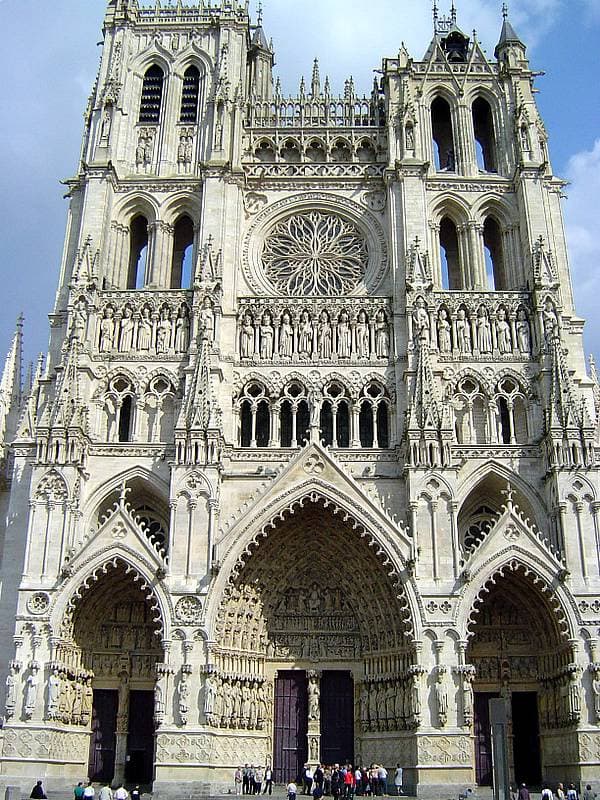
Amiens Cathedral
Amiens Cathedral, officially the Cathedral of Our Lady of Amiens, is a preeminent example of Gothic architecture and a significant religious site in France. It is renowned for its immense scale, being the largest cathedral by volume in France, and for its remarkably unified High Gothic and Rayonnant style, achieved through a swift construction period. The cathedral is also celebrated for its extensive collection of early Gothic sculpture, particularly on its west facade, and holds a UNESCO World Heritage designation.
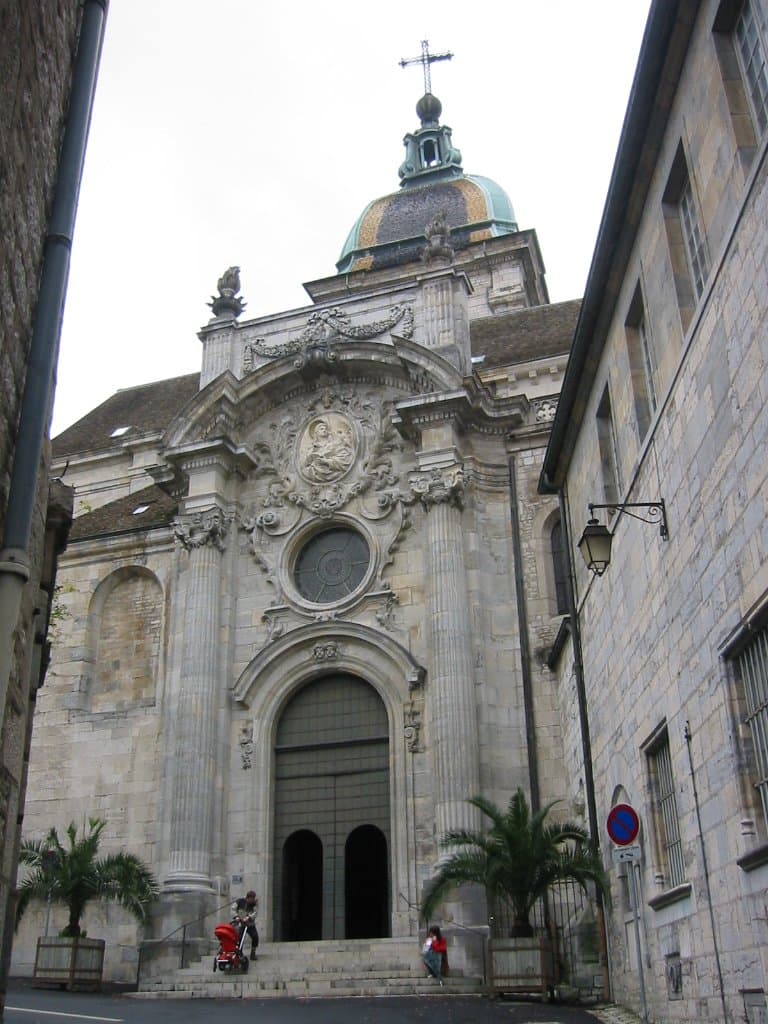
Besançon Cathedral
Besançon Cathedral, officially Cathédrale Saint-Jean de Besançon, is a Roman Catholic cathedral serving as the seat of the Archbishop of Besançon in France. Its construction spans from the 11th to the 13th century, featuring unique architectural elements like twin apses and Romanesque arches, with later additions and modifications throughout its history.

Arras Cathedral
Arras Cathedral, officially named Cathédrale Notre-Dame-et-Saint-Vaast d'Arras, serves as the principal church and seat of the Bishops of Arras in France. The current structure is built upon the site of the former Abbey Church of Saint-Vaast, which was consecrated in 1834 after a significant rebuilding in neoclassical style following the French Revolution.