
Beauvais Cathedral
Beauvais Cathedral, officially the Cathedral of Saint Peter of Beauvais, is a Catholic cathedral in Beauvais, France, renowned for its exceptionally high Gothic choir, which ranks as the tallest in the world. Despite its architectural ambition to be the largest cathedral in France, it remains unfinished due to significant construction challenges and collapses, with only the choir and transept completed.
Key Facts
- ›Construction began in 1225, with the choir completed in 1272 and the transept in 1548.
- ›Features the world's highest Gothic choir vault at 48.5 meters (159 ft).
- ›Suffered two major collapses, in the 13th and 16th centuries, halting construction and leaving the nave unbuilt.
- ›Was the world's tallest human construction from 1569 to 1573 with its 153m tower.
- ›The remnant of a previous 10th-century Romanesque cathedral, the Basse Œuvre, occupies the site of the planned nave.
- ›Underwent significant damage during the French Revolution but was largely spared during World War II.
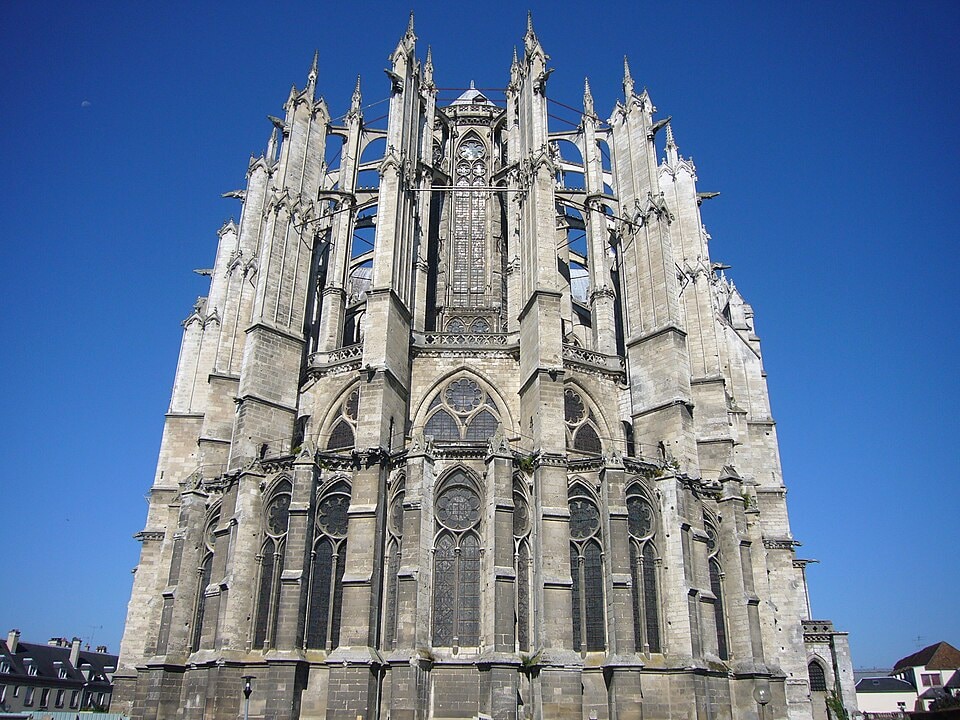
World's Highest Gothic Choir Vault, Basse œUvre, Medieval Clock, Beauvais Astronomical Clock, Stained Glass Windows, Carved Wooden Doors
About Beauvais Cathedral
Beauvais Cathedral, known in French as Cathédrale Saint-Pierre de Beauvais, is a significant Catholic cathedral located in the northern French town of Beauvais. It serves as the seat of the Bishop of Beauvais, Noyon and Senlis and is recognized as a national monument of France.
History and Construction
Construction on Beauvais Cathedral commenced in 1225, initiated by count-bishop Milo of Nanteuil. The ambition was to create the largest Gothic cathedral in France, surpassing Amiens and Notre-Dame de Paris. The choir was completed in two phases by 1272, reaching an astonishing vault height of 48.5 meters (159 ft), making it the highest Gothic choir in the world. This height surpassed that of Amiens Cathedral, which had a nave height of 42 meters (138 ft).
However, the cathedral's ambitious design led to significant structural challenges. In 1284, part of the choir's vaulting collapsed, a disaster that coincided with a period of demographic decline and the Hundred Years' War. The choir was rebuilt at the same height, but with modifications including more columns and the conversion of the vaulting from quadripartite to sexpartite. Construction continued through the 16th century, with the transept finished in 1548 and a 153-meter (502 ft) tower completed in 1569, making the church the tallest structure in the world at that time. Tragically, the tower and crossing vaults collapsed on Ascension Day in 1573, halting further major construction.
Plans to build a nave were drawn up, and a single arch was constructed in the early 17th century before work ceased permanently. The unfinished opening of the choir was closed with a provisional west wall, while the surviving section of the earlier 10th-century Romanesque basilica, known as the Basse Œuvre, remains in place, occupying the intended site of the nave.
Architectural Significance and Current State
Beauvais Cathedral is celebrated for its daring engineering, pushing the limits of Gothic architecture. The pursuit of maximum light led to thinner buttresses, which, combined with factors like high winds, are believed to have contributed to the 1384 collapse. Modern interventions, including the reinstallation of steel tie rods and large wood-and-steel lateral trusses in the north transept, highlight ongoing efforts to preserve the structure.
Despite its unfinished state, the interior of the cathedral features a soaring ribbed vault and contains remarkable artistic treasures. These include stained glass windows from the 13th to 16th centuries, with notable contributions from Renaissance artist Engrand Le Prince. The cathedral also houses a medieval clock, possibly the oldest fully preserved and functioning mechanical clock in Europe, and a complex astronomical clock installed in the 19th century. The south façade, in particular, showcases the richness of the late Gothic style, and the carved wooden doors of the north and south portals are considered masterpieces.
Source: Wikipedia ↗
Frequently Asked Questions
When was Beauvais Cathedral built?
Construction on Beauvais Cathedral began in 1225. The choir was completed in 1272, and the transept was finished in 1548. However, due to collapses and funding issues, the cathedral remains unfinished, with the nave never having been constructed.
What makes Beauvais Cathedral notable?
Beauvais Cathedral is most famous for its incredibly high Gothic choir, which is the tallest in the world at 48.5 meters (159 ft). It also held the title of the world's tallest human construction for a period with its 153-meter tower.
Why is Beauvais Cathedral unfinished?
The cathedral's construction was plagued by difficulties. It suffered two major collapses, one in the 13th century and another in the 16th century, which led to halts in construction. Funding crises and the ambition for extreme height also contributed to its incomplete state.
What is the Basse Œuvre?
The Basse Œuvre is the remnant of the previous 10th-century Romanesque cathedral. It is located on the site where the nave of the current Gothic cathedral was intended to be built.
Has Beauvais Cathedral been damaged?
Yes, Beauvais Cathedral has experienced significant damage. It suffered severe damage during the French Revolution and was largely spared from major harm during World War II, though the city itself was heavily bombed.
Related Cathedrals

Angers Cathedral
Angers Cathedral, officially Cathédrale Saint-Maurice d'Angers, is a Catholic cathedral in Angers, France, serving as the seat of the Bishops of Angers. Renowned for its blend of Romanesque and Gothic architectural styles, it also features significant Baroque elements and an exceptional collection of stained-glass windows, some dating back to the late 12th century.

Bordeaux Cathedral
Bordeaux Cathedral, officially the Primatial Cathedral of St Andrew of Bordeaux, is a Roman Catholic cathedral in Bordeaux, France, serving as the seat of the Archbishop of Bordeaux. It is a significant landmark included in the UNESCO World Heritage Site of the Routes of Santiago de Compostela in France. The cathedral showcases a rich architectural history, evolving from Romanesque to Gothic styles and incorporating Renaissance elements, making it a vital historical and religious site.
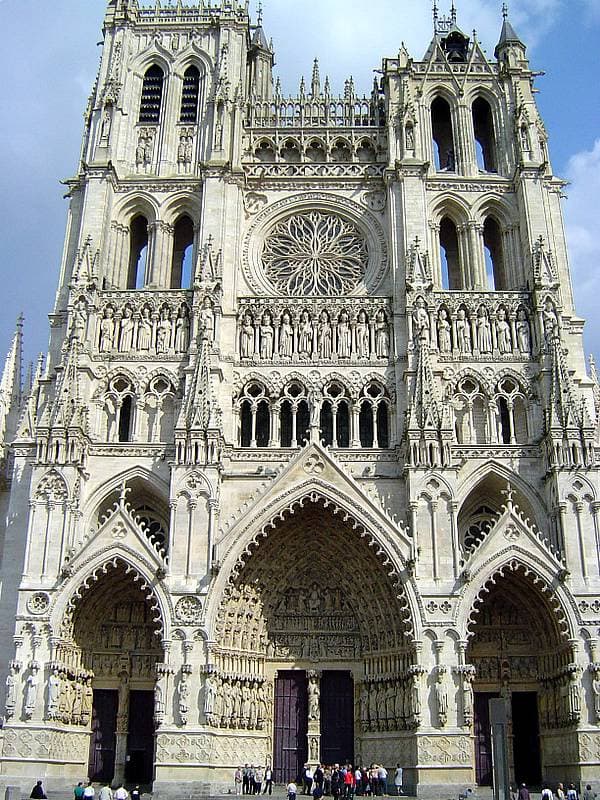
Amiens Cathedral
Amiens Cathedral, officially the Cathedral of Our Lady of Amiens, is a preeminent example of Gothic architecture and a significant religious site in France. It is renowned for its immense scale, being the largest cathedral by volume in France, and for its remarkably unified High Gothic and Rayonnant style, achieved through a swift construction period. The cathedral is also celebrated for its extensive collection of early Gothic sculpture, particularly on its west facade, and holds a UNESCO World Heritage designation.