
Basilica of the National Shrine of the Assumption of the Blessed Virgin Mary
Catholic Archdiocese of Baltimore·Catholic·United States
The Basilica of the National Shrine of the Assumption of the Blessed Virgin Mary, also known as the Baltimore Basilica, is a significant Catholic cathedral in Baltimore, Maryland. It holds the distinction of being the first Catholic cathedral built in the United States after the nation's founding and was among the earliest major religious structures erected following the adoption of the U.S. Constitution. It serves as a co-cathedral for the Archdiocese of Baltimore, a parish church, and a national shrine, recognized for its architectural brilliance and historical importance in shaping American Catholicism.
Key Facts
- ›Designed by Benjamin Henry Latrobe, considered the "Father of American Architecture", and built between 1806 and 1863.
- ›Chosen in a Neoclassical style by Bishop John Carroll as a statement of American Catholicism's embrace of the Enlightenment.
- ›Served as a site for consecrations of many early American bishops and hosted numerous church councils that shaped Catholicism in the U.S.
- ›Designated a Minor Basilica by Pope Pius XI in 1937 and listed on the National Register of Historic Places in 1969.
- ›Underwent a major restoration completed in 2006, returning the interior to Latrobe's original design and revealing previously inaccessible areas.
- ›Houses the crypt for nine deceased Archbishops of Baltimore, including the first American Bishop, John Carroll.

- Neoclassical Design By Benjamin Henry Latrobe
- Massive Central Dome
- Classical Greek Portico With Ionic Columns
- Crypt Containing the Tombs of Nine Archbishops of Baltimore
- Two Heroic Portraits: 'Descent From the Cross' By Pierre-Narcisse GuéRin and A Depiction of Louis Ix of France By Baron Charles De Steuben
- Historic Pipe Organ Built By Thomas Hall In 1821
Benjamin Henry Latrobe
About Basilica of the National Shrine of the Assumption of the Blessed Virgin Mary
The Basilica of the National Shrine of the Assumption of the Blessed Virgin Mary
The Basilica of the National Shrine of the Assumption of the Blessed Virgin Mary, commonly referred to as the Baltimore Basilica, stands as a landmark Catholic cathedral in Baltimore, Maryland. Its construction, spanning from 1806 to 1863, marked a significant moment in American religious architecture, being the first Catholic cathedral erected in the United States after the nation's founding and one of the earliest major religious buildings constructed following the ratification of the United States Constitution. The Basilica is not only a parish church and national shrine but also a co-cathedral, serving as one of the seats of the Catholic Archdiocese of Baltimore.
History and Significance
Designed by Benjamin Henry Latrobe, the "Father of American Architecture," the Basilica was built under the guidance of John Carroll, the first American bishop. Latrobe presented Carroll with two design options: Gothic and Neoclassical. Carroll's remarkable choice of the Neoclassical style was a deliberate statement, aligning American Catholicism with the Enlightenment and the spirit of the newly independent, Republican America, rather than with the Old World's medieval associations of Gothic architecture. The building was blessed and opened for use in 1821 and consecrated in 1876.
The Basilica's walls have witnessed numerous historically significant events. It hosted the funeral Mass for Charles Carroll of Carrollton, the sole Catholic signatory of the Declaration of Independence and its last surviving signer. Moreover, it served as the consecration site for most of the first American bishops, crucial for staffing the expanding dioceses of the young nation. Historically, more priests were ordained within its walls than in any other church in the United States.
Internally, the Basilica was the venue for many pivotal 19th-century meetings that shaped the Catholic Church in America, including seven Provincial Councils and three Plenary Councils. These gatherings were instrumental in the founding of The Catholic University of America and the commissioning of the Baltimore Catechism during the Third Plenary Council, which was the largest assembly of Catholic bishops outside Rome since the Council of Trent.
Architecture
The Basilica's architecture is characterized by its monumental Neoclassical style, adhering to a Latin cross basilica plan. This design, a departure from prior American church architecture but consistent with European cathedral traditions, unifies a domed central space with a longitudinal axis. The exterior features a classical Greek portico with Ionic columns, while the interior is dominated by a large dome at the intersection of the transepts, creating a striking centralizing effect. Latrobe's design emphasized a light-filled interior, contrasting with the darker, more cavernous spaces typical of Gothic cathedrals.
Significant artistic works are housed within the Basilica, including two large portraits gifted by King Louis XVIII: "Descent from the Cross" by Pierre-Narcisse Guérin and a depiction of Louis IX of France by Baron Charles de Steuben.
Restoration and Modern Status
In 1937, Pope Pius XI elevated the cathedral to the rank of Minor Basilica. It was further recognized with its inclusion on the National Register of Historic Places in 1969 and declared a National Historic Landmark in 1971. In 1993, the United States Conference of Catholic Bishops designated it a National Shrine.
A comprehensive 32-month, $34 million restoration project concluded in 2006. This extensive renovation integrated modern building systems while meticulously restoring the interior to Latrobe's original vision, correcting earlier modifications. The restoration work included reopening the 24 skylights in the main dome, restoring original wall colors, and re-exposing the light-colored marble flooring. The crypt and the undercroft were also made accessible to the public, with the undercroft's sand removed to finally realize the vision of an Our Lady Seat of Wisdom Chapel.
In 2011, an earthquake caused damage to the Basilica's ceilings and walls, necessitating a subsequent seven-month restoration completed in 2012.
Interments
The Basilica's crypt serves as the final resting place for nine of the fourteen deceased Archbishops of Baltimore. Among them is John Carroll, the first Bishop of the United States. The crypt is located beneath the main altar and is accessible to visitors.
Source: Wikipedia ↗
Frequently Asked Questions
What is the architectural style of the Baltimore Basilica?
The Basilica is a monumental Neoclassical-style building. Its design features a classical Greek portico with Ionic columns and a massive dome at the crossing of its Latin cross plan, creating a centralizing interior effect.
Who designed the Basilica of the National Shrine of the Assumption of the Blessed Virgin Mary?
The Basilica was designed by Benjamin Henry Latrobe, who is recognized as America's first professionally trained architect. He was also Thomas Jefferson's Architect of the Capitol.
When was the Baltimore Basilica constructed?
Construction of the Basilica took place between 1806 and 1863. It was blessed and opened for use on May 31, 1821, and officially consecrated on May 25, 1876.
What is the significance of the Baltimore Basilica in American Catholic history?
It was the first Catholic cathedral built in the United States after the nation's founding and played a crucial role in the development of the Catholic Church in America. Many early bishops were consecrated here, and it hosted significant church councils that led to important developments like the founding of The Catholic University of America and the Baltimore Catechism.
Are there any notable interments at the Baltimore Basilica?
Yes, the Basilica's historic crypt is the final resting place for nine deceased Archbishops of Baltimore, including John Carroll, the first Bishop of the United States. The crypt is accessible to the public.
What recent renovations has the Basilica undergone?
A significant 32-month, $34 million restoration project was completed in 2006. This restoration aimed to incorporate modern mechanical systems while returning the interior to Latrobe's original Neoclassical design, reopening skylights and restoring original wall colors and flooring.
Related Cathedrals

Basilica of the Co-Cathedral of the Sacred Heart
The Basilica of the Co-Cathedral of the Sacred Heart is a prominent cathedral church and minor basilica in Charleston, West Virginia. It serves as a co-cathedral for the Catholic Diocese of Wheeling-Charleston, sharing episcopal duties with the Cathedral of St. Joseph in Wheeling. Its history traces back to the mid-19th century with the establishment of the first parish and has undergone several phases of construction and renovation, culminating in its designation as a basilica in 2009.

Arras Cathedral
Arras Cathedral, officially named Cathédrale Notre-Dame-et-Saint-Vaast d'Arras, serves as the principal church and seat of the Bishops of Arras in France. The current structure is built upon the site of the former Abbey Church of Saint-Vaast, which was consecrated in 1834 after a significant rebuilding in neoclassical style following the French Revolution.
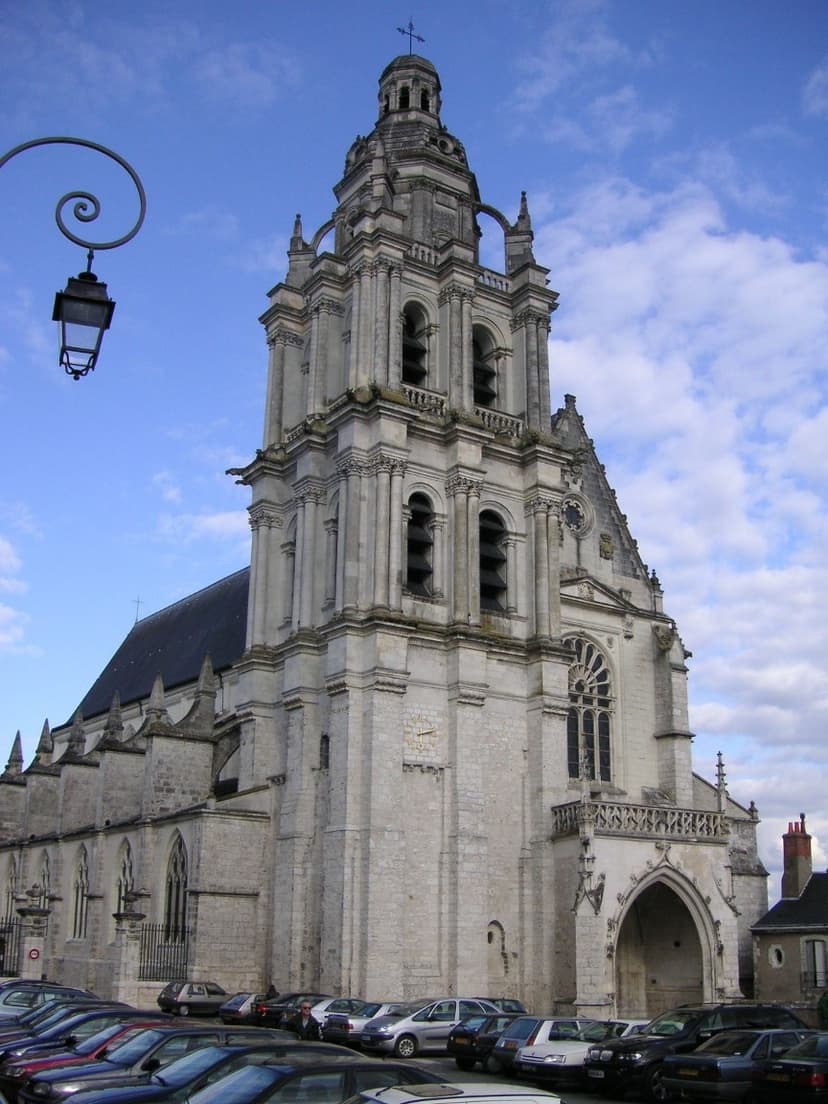
Blois Cathedral
Blois Cathedral, officially the Cathedral of Saint-Louis of Blois, is a significant example of Late Gothic architecture located in Blois, France. It serves as the seat of the Diocese of Blois and holds a rich history, having been rebuilt and modified over centuries, most notably after a severe storm in 1678 led to a major Gothic reconstruction.