
Basilica of Saint Nicholas, Bari
The Pontifical Basilica of Saint Nicholas in Bari, Italy, is a significant pilgrimage destination for both Catholics and Orthodox Christians, holding immense religious importance across Europe. Constructed between 1087 and 1197, its foundation is directly linked to the recovery of Saint Nicholas' relics from Myra, marking it as a pivotal site for the veneration of the saint.
Key Facts
- ›Built between 1087 and 1197 during the Italo-Norman period.
- ›Houses the relics of Saint Nicholas, transferred from Myra in 1087.
- ›Features a unique Romanesque architectural style with castle-like fortifications.
- ›Contains notable Romanesque sculptural works, including a bishop's throne and mosaic pavements.
- ›Serves as an important pilgrimage site for both Catholic and Orthodox Christians.
- ›The crypt was consecrated in 1089, and the edifice officially consecrated in 1197.

Relics of Saint Nicholas, Bishop's Throne By Elias, Mosaic Pavements, Ciborium With Mosaic, Tomb of Bona Sforza, 12th-Century Candelabras, Castle-Like Architecture
About Basilica of Saint Nicholas, Bari
The Pontifical Basilica of Saint Nicholas, Bari
The Pontifical Basilica of Saint Nicholas, located in Bari, southern Italy, is a church of profound religious significance throughout Europe and the wider Christian world. It holds the distinction of being a basilica by privilege of immemorial status and is a vital pilgrimage destination for both Catholic and Orthodox Christians.
History and Relics
The basilica's construction took place between 1087 and 1197, during the Italo-Norman period in Apulia. Its genesis is intrinsically linked to the recovery of relics belonging to Saint Nicholas. When the saint's original shrine in Myra (modern-day Turkey) fell under Saracen control, there was a concerted effort to move the relics to a more secure location. According to tradition, Saint Nicholas himself designated Bari as his final resting place. A fierce rivalry for possession of the relics existed between Venice and Bari, with Bari ultimately succeeding in bringing them to the city on May 9, 1087. A new church was erected to house these sacred remains, and Pope Urban II was present for the consecration of the crypt in 1089. The basilica was officially consecrated in 1197, attended by numerous dignitaries, including the Imperial Vicar, Bishop Conrad of Hildesheim. Elias, the abbot of the nearby monastery of Saint Benedict, became the first archbishop, and his cathedra, or bishop's throne, remains a significant artifact within the church.
Architectural Significance
The Basilica of Saint Nicholas possesses a distinctive architectural character, presenting a rather square and solid facade that evokes the appearance of a castle, a resemblance further emphasized by its two low, massive towers. This martial aspect is not merely aesthetic; the building has served as a castle at various points in its history. The interior comprises a nave and two aisles, separated by granite columns and pilasters. The presbytery is demarcated by three arches supported by columns exhibiting Byzantine influence. Above the aisles, the matronaeum, a tribune gallery historically for women, overlooks the nave. This particular design was pioneering for its time and served as a precedent for numerous subsequent constructions in the region.
Treasures and Artistry
Within its walls, the basilica houses remarkable artistic and historical treasures. Among the most notable is a cathedra, a bishop's throne, completed in the late eleventh century for Elias, recognized as a prime example of Romanesque sculpture in southern Italy. The crypt and presbytery feature precious mosaic pavements. The ciborium, the oldest of its kind in the region, is also adorned with mosaic work and features four columns decorated with foliage, animals, and mythological figures. The crypt itself contains 26 columns with capitals in Byzantine and Romanesque styles and serves as the resting place for the relics of Saint Nicholas. Additionally, the basilica holds a 16th-century Renaissance tomb of Bona Sforza, the former Queen of Poland, crafted from marble. The Museum of the Basilica exhibits valuable works of art, including a collection of twelfth-century candelabras donated by King Charles I of Anjou. Several restorations have taken place throughout the basilica's history, including in the late 13th century, 1456, the 17th century, and a significant 20th-century restoration that removed most Baroque additions, preserving only the gilded wooden ceiling with canvases by Carlo De Rosa.
Feast Days and Devotion
Saint Nicholas Day, celebrated on December 6th, is the basilica's principal feast day. On this occasion, it is a tradition for the clergy to lower a flask into the subterranean tomb of Saint Nicholas to collect myrrh, believed to emanate from the relics. These containers of myrrh are distributed globally, and believers have reported numerous miracles attributed to its use. For Orthodox Churches observing the Julian Calendar, December 6th corresponds to December 19th of the Gregorian Calendar, leading to two distinct celebrations of the holy day, both observed with great solemnity in Bari. May 9th (Gregorian May 22nd) is also commemorated annually in the Russian Orthodox Church as the feast day of the "Translation of the Relics of Saint Nicholas from Myra to Bari." Since the fall of the Iron Curtain, pilgrimages to the basilica from Eastern Europe have seen a substantial increase, occurring not only during these feast days but throughout the year.
Source: Wikipedia ↗
Frequently Asked Questions
When was the Basilica of Saint Nicholas built?
The basilica was constructed between 1087 and 1197. The crypt was consecrated in 1089, and the entire edifice was officially consecrated in 1197.
Why are Saint Nicholas' relics housed in Bari?
The relics of Saint Nicholas were brought to Bari in 1087 from Myra, which was then under Saracen control. This move was seen as a way to secure the relics in a safer location.
What is the architectural style of the Basilica of Saint Nicholas?
The basilica exhibits a Romanesque architectural style, characterized by a robust, somewhat square appearance and massive towers, giving it a castle-like impression. Its interior design, with a nave and two aisles divided by columns, was influential in the region.
Is the Basilica of Saint Nicholas a pilgrimage site?
Yes, it is a significant pilgrimage destination for both Catholics and Orthodox Christians. Pilgrimages, especially from Eastern Europe, have increased dramatically in recent decades.
What are some notable treasures within the basilica?
The basilica houses a significant Romanesque cathedra (bishop's throne), precious mosaic pavements in the crypt and presbytery, and a ciborium decorated with mosaic. It also contains the 16th-century tomb of Bona Sforza, Queen of Poland, and 12th-century candelabras.
How is Saint Nicholas Day celebrated at the basilica?
Saint Nicholas Day, December 6th, is the main feast day. Clergy extract myrrh, believed to exude from the relics, which is sent worldwide. Both Catholic and Orthodox traditions celebrate this day with solemnity.
Related Cathedrals
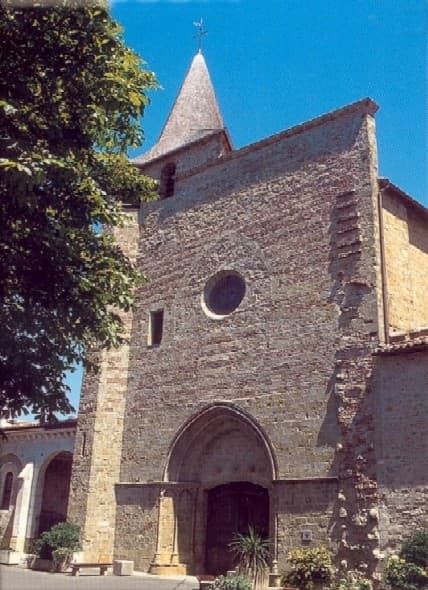
Aire Cathedral
Aire Cathedral, officially known as the Cathédrale Saint-Jean-Baptiste d'Aire, is a Roman Catholic church located in Aire-sur-l'Adour, France. It served as the episcopal seat for the Bishops of Aire for centuries, and although its status has shifted, it remains a significant historical and religious site on a major pilgrimage route.

Acquapendente Cathedral
Acquapendente Cathedral, also known as the Basilica Cattedrale di San Sepolcro, is a Roman Catholic cathedral located in Acquapendente, Lazio, Italy. Originally the church of a Benedictine monastery, it became a cathedral in 1649 and now serves as a co-cathedral within the Diocese of Viterbo. It is notable for its Romanesque origins, its ancient crypt, and its dedication to the Holy Sepulchre.

Bordeaux Cathedral
Bordeaux Cathedral, officially the Primatial Cathedral of St Andrew of Bordeaux, is a Roman Catholic cathedral in Bordeaux, France, serving as the seat of the Archbishop of Bordeaux. It is a significant landmark included in the UNESCO World Heritage Site of the Routes of Santiago de Compostela in France. The cathedral showcases a rich architectural history, evolving from Romanesque to Gothic styles and incorporating Renaissance elements, making it a vital historical and religious site.