
Annecy Cathedral
Annecy Cathedral, officially the Cathédrale Saint-Pierre d'Annecy, is a Roman Catholic church in Annecy, France, designated as a national monument. Originally built as a chapel in the early 16th century, it was elevated to cathedral status in 1822 with the establishment of the Diocese of Annecy.
Key Facts
- ›Erected in the early 16th century by Jacques Rossel as a chapel for a Franciscan priory.
- ›Served as a Temple of Reason during the French Revolution.
- ›Became a cathedral in 1822 when the Diocese of Annecy was created.
- ›Features an organ built by Nicolas-Antoine Lété between 1840 and 1842.
- ›Recognized as a national monument in France.

Organ Built By Nicolas-Antoine LéTé
Jacques Rossel
About Annecy Cathedral
Annecy Cathedral, officially known as the Cathédrale Saint-Pierre d'Annecy, is a significant Roman Catholic church located in the city of Annecy, France. It holds the status of a national monument within the country, acknowledging its historical and cultural importance.
History and Status
The structure that now serves as Annecy Cathedral was originally erected at the beginning of the 16th century. Its initial purpose was as a chapel for a Franciscan priory, with Jacques Rossel credited as its builder. The building's history took a turn during the French Revolution when it was repurposed and used as a temple dedicated to the Goddess Reason. Its designation as a cathedral came much later, in 1822, following the establishment of the Diocese of Annecy, which was formed from the older Diocese of Chambéry.
Architectural and Artistic Features
While specific details of its architectural style are not extensively documented in historical records, the cathedral does possess notable artistic elements. One prominent feature is its organ, which was constructed between 1840 and 1842 by Nicolas-Antoine Lété, a craftsman noted for his work for the French monarchy. This organ represents a significant addition to the cathedral's interior and its function as a place of worship and musical performance.
Source: Wikipedia ↗
Frequently Asked Questions
When was Annecy Cathedral built?
Annecy Cathedral was erected at the beginning of the 16th century. It was originally constructed as a chapel for a Franciscan priory.
What was the role of Annecy Cathedral during the French Revolution?
During the French Revolution, the building that is now Annecy Cathedral was used as a temple of the Goddess Reason. This period marked a significant shift in its function from religious worship.
When did Annecy Cathedral become a cathedral?
The church was raised to the status of a cathedral in 1822. This elevation coincided with the establishment of the Diocese of Annecy.
Who built the organ at Annecy Cathedral?
The organ at Annecy Cathedral was built by Nicolas-Antoine Lété, who was an organ builder to the French king. His work on the organ took place between 1840 and 1842.
Related Cathedrals

Angers Cathedral
Angers Cathedral, officially Cathédrale Saint-Maurice d'Angers, is a Catholic cathedral in Angers, France, serving as the seat of the Bishops of Angers. Renowned for its blend of Romanesque and Gothic architectural styles, it also features significant Baroque elements and an exceptional collection of stained-glass windows, some dating back to the late 12th century.
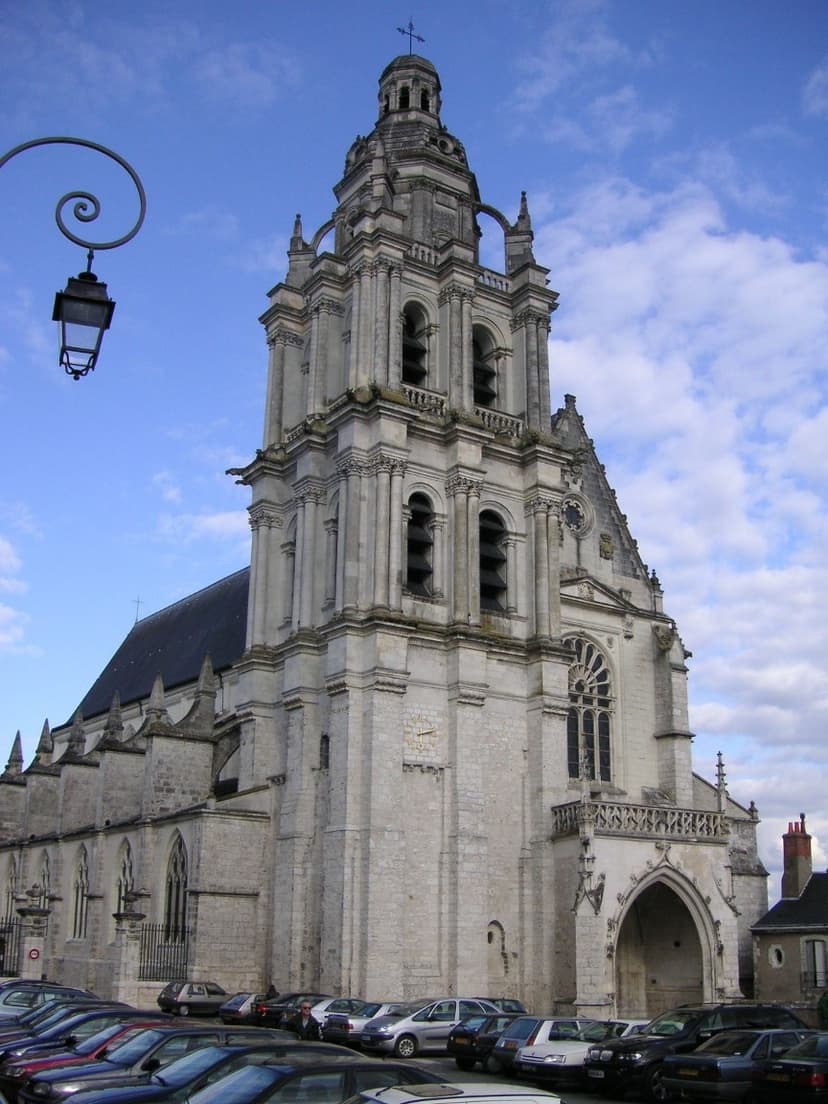
Blois Cathedral
Blois Cathedral, officially the Cathedral of Saint-Louis of Blois, is a significant example of Late Gothic architecture located in Blois, France. It serves as the seat of the Diocese of Blois and holds a rich history, having been rebuilt and modified over centuries, most notably after a severe storm in 1678 led to a major Gothic reconstruction.

Bordeaux Cathedral
Bordeaux Cathedral, officially the Primatial Cathedral of St Andrew of Bordeaux, is a Roman Catholic cathedral in Bordeaux, France, serving as the seat of the Archbishop of Bordeaux. It is a significant landmark included in the UNESCO World Heritage Site of the Routes of Santiago de Compostela in France. The cathedral showcases a rich architectural history, evolving from Romanesque to Gothic styles and incorporating Renaissance elements, making it a vital historical and religious site.