
All Saints Anglican Cathedral
Diocese of Western Anglicans·Anglican Church in North America·Usa
All Saints Anglican Cathedral, formerly All Saints Episcopal Church, is an active place of worship located in Long Beach, California. Founded in 1923, it became the cathedral of the Anglican Church in North America's Diocese of Western Anglicans in 2017, following its disaffiliation from the Episcopal Church in 2004. The cathedral is known for its blend of high church liturgy, evangelical theology, and charismatic spirituality.
Key Facts
- ›Founded in 1923 as all Saints Episcopal Church, it was originally a mission of St. Luke's Episcopal Church.
- ›The current site in Belmont Heights was purchased in 1925, with services beginning in a newly constructed Tudor Revival building in 1929.
- ›The church underwent renovations for seismic soundness after the 1933 Long Beach earthquake and later expanded its nave.
- ›In 2004, the congregation disaffiliated from the Episcopal Church and joined the Anglican Church in North America.
- ›In 2017, it was officially designated as the cathedral for the ACNA Diocese of Western Anglicans.
- ›Known for its unique 'immersive theatre' presentation of the death of Jesus Christ during Holy Week.

Tudor Revival
- Tudor Revival Architecture
- 'Good Friday At 5:15 Pm' Immersive Theatre Presentation
- Columbarium
- Preschool Space
About All Saints Anglican Cathedral
All Saints Anglican Cathedral, located in Long Beach, California, is a prominent center for Anglican worship and a significant institution within the Anglican Church in North America (ACNA). Originally founded in 1923 as All Saints Episcopal Church, its history is marked by growth, theological evolution, and a significant realignment within the broader Anglican Communion.
History and Development
The church's origins trace back to the growing population of Long Beach in the early 20th century. Initially established as a mission of St. Luke's Episcopal Church, its first services were held in a local elementary school. By 1925, a permanent site was secured in the Belmont Heights neighborhood, where fundraising for construction began. Lay readers conducted services at the site while funds were being raised.
The first rector, the Rev. F. Augustus Martyr, served for a substantial period from 1928 to 1952. During his tenure, the first services in the newly constructed Tudor Revival church commenced in September 1929. The building sustained damage in the 1933 Long Beach earthquake but was subsequently renovated to improve its seismic resilience. Martyr's leadership also saw the installation of the main altar and reredos.
The mid-20th century brought further development. Following Martyr's long service, the church saw several rectors before the Rev. Donald Behm led from 1966 to 1975. This period witnessed significant architectural changes, including the expansion of the nave to incorporate north and south transepts and the relocation of the altar to a central crossing. During these years, All Saints became a spiritual home for many influential citizens of Long Beach, including future California Governor George Deukmejian.
In 1966, a young member named Bill Thompson was recommended for ordained ministry. After seminary, Thompson returned to All Saints in 1973 and, in 1975, was elected as the church's sixth rector at the age of 28. He served until 2012, overseeing a period of membership growth to 400 individuals and the addition of a columbarium and new preschool facilities. Under his guidance, All Saints became a notable contributor to the Diocese of Los Angeles' Mission Share Fund.
Anglican Realignment
All Saints was recognized as a theologically conservative congregation within the Episcopal Diocese of Los Angeles. Tensions escalated in 2003 with the election of an openly partnered gay bishop within the Episcopal Church. In response, in June 2004, then-rector Bill Thompson led a conference of Anglican Communion Network members seeking alternative episcopal oversight. In August 2004, All Saints voted to disaffiliate from the Episcopal Church and sought oversight from the Church of Uganda's Diocese of Luwero, renaming itself All Saints Anglican Church.
This departure led to legal disputes over church property, with the Diocese of Los Angeles filing a lawsuit. While an initial trial court ruled in favor of All Saints, the California Supreme Court ultimately found for the diocese in 2009, establishing precedent for similar cases.
Following the litigation, an agreement was reached for All Saints to purchase the church property. Thompson and All Saints were instrumental in the formation of the Anglican Church in North America, with the western convocation becoming the Diocese of Western Anglicans. In 2009, Bill Thompson was elected the first bishop of this new diocese and was consecrated later that year. He stepped down as rector in 2012 to focus on his diocesan responsibilities, succeeded by the Rev. Scott Pedersen.
On October 27, 2017, All Saints was officially designated as the cathedral for the Diocese of Western Anglicans.
Churchmanship and Programs
All Saints is characterized by its unique combination of high church liturgical practices, evangelical theology, and charismatic spirituality. As is customary for Anglican cathedrals, it offers daily prayer services and observes the Eucharist on designated feast days.
A particularly distinctive program is the annual "immersive theatre" presentation during Lent and Holy Week, titled “Good Friday At 5:15 PM.” This event recreates scenes and locations from Jerusalem on Good Friday, allowing attendees to experience the events through improvisation and interactive vignettes.
Source: Wikipedia ↗
Frequently Asked Questions
When was All Saints Anglican Cathedral founded?
All Saints Anglican Cathedral was founded in 1923 as All Saints Episcopal Church. It began as a mission of St. Luke's Episcopal Church in Long Beach.
What is the architectural style of All Saints Anglican Cathedral?
The original church building, constructed and first used in 1929, was built in the Tudor Revival style. The building has undergone renovations and expansions since its initial construction.
Why did All Saints leave the Episcopal Church?
All Saints left the Episcopal Church in 2004 due to theological differences, particularly following the 2003 election of Gene Robinson, an openly gay bishop. The congregation sought alternative episcopal oversight and joined the nascent Anglican Church in North America.
When did All Saints become a cathedral?
All Saints was designated as the cathedral of the Diocese of Western Anglicans on October 27, 2017. This followed its role as a founding member of the Anglican Church in North America.
What is notable about the church's worship or programs?
The cathedral is known for combining high church liturgical worship with evangelical theology and charismatic spirituality. It also hosts an annual 'immersive theatre' presentation of the crucifixion during Holy Week.
Related Cathedrals
Ascension Cathedral
The Ascension Greek Orthodox Cathedral in Oakland, California, is a significant center for the Eastern Orthodox faith in the region. Originally established as a community in 1917 and later building its first church in 1921, it was elevated to cathedral status in 1992. It now serves as the largest Greek Orthodox community in its Metropolis, spanning multiple generations of parishioners.

Bryn Athyn Cathedral
Bryn Athyn Cathedral is the episcopal seat of the General Church of the New Jerusalem, a Swedenborgian denomination, located in Bryn Athyn, Pennsylvania. Constructed between 1913 and 1949, its design is primarily Early Gothic, with adjoining structures exhibiting a blend of Gothic and Norman styles, and its exterior evokes Gloucester Cathedral. The cathedral is notable for its revival of medieval stained glass techniques and its unique, intentionally asymmetrical architectural features.
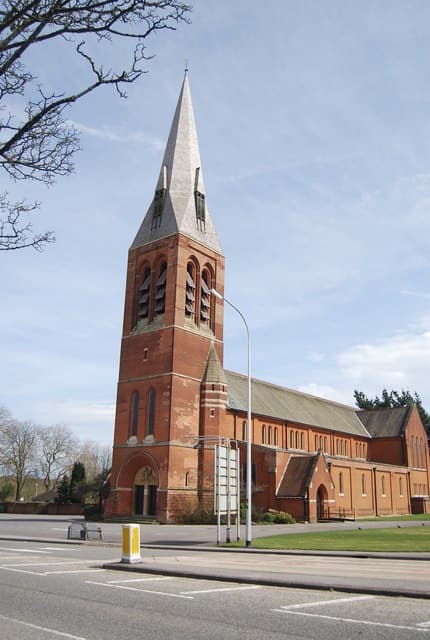
Aldershot Cathedral
The Cathedral Church of St Michael and St George is the Roman Catholic cathedral for the Bishopric of the Forces, located in Aldershot, England. Originally built as an Anglican church for the British Army, it was consecrated in 1893 and later repurposed in 1973 to become the seat of the Roman Catholic Bishop of the Forces. It is a significant landmark due to its Gothic Revival architecture and its close association with military history.