
U Thant
U Thant was a Burmese diplomat who served as the third Secretary-General of the United Nations from 1961 to 1971. He was the first non-Scandinavian and first Asian to hold this position, serving for a record ten years. Thant is particularly remembered for his crucial role in mediating the Cuban Missile Crisis and for his public criticism of the United States' involvement in the Vietnam War.
Key Facts
- ›Served as the third Secretary-General of the United Nations from 1961 to 1971.
- ›Was the first non-Scandinavian and Asian to hold the UN Secretary-General position.
- ›Played a key role in mediating the Cuban Missile Crisis, helping to avert nuclear war.
- ›Publicly criticized U.S. conduct in the Vietnam War during his second term.
- ›Oversaw the entry of numerous newly independent African and Asian states into the UN.
- ›Died of lung cancer in New York City in 1974.

Important Relationships
Pantanaw, Rangoon, United Nations Headquarters, New York City
Sir Stafford Cripps, Sun Yat-Sen, Mahatma Gandhi
Un Secretary-General
About U Thant
U Thant: A Diplomat for Peace
U Thant, born in Pantanaw, Burma, on January 22, 1909, was a distinguished Burmese diplomat who attained global prominence as the third Secretary-General of the United Nations. Serving from 1961 to 1971, he holds the distinction of being the first non-Scandinavian and the first Asian to hold this pivotal international role, completing a tenure of ten years and one month. His early life was marked by a strong educational foundation, and he maintained moderate political views amidst the tense political climate of Burma. A close friend of Burma's first Prime Minister U Nu, Thant held various positions within Nu's cabinet before embarking on his international career.
Diplomatic Career and Key Achievements
Thant's career at the United Nations was defined by his calm demeanor and his effectiveness in navigating complex international crises. He succeeded Dag Hammarskjöld, who died in a plane crash, and was appointed Acting Secretary-General in 1961. In his first term, Thant played an instrumental role in mediating the Cuban Missile Crisis of 1962, a moment when the world stood on the brink of nuclear war. His diplomatic efforts facilitated negotiations between U.S. President John F. Kennedy and Soviet Premier Nikita Khrushchev, ultimately helping to avert global catastrophe. He also ordered "Operation Grandslam" to end a secessionist insurgency in the Congo.
During his second term, reappointed in 1966, Thant became a vocal critic of U.S. policy in the Vietnam War. He also championed the entry of numerous newly independent African and Asian nations into the UN and established several of its key development and environmental agencies. Despite his public service, Thant faced political challenges upon his return to Burma, where the ruling military junta refused him honors, leading to significant civil unrest following his death in 1974.
Personal Life and Influences
Educated at the National High School and Rangoon University, Thant was nicknamed "The Philosopher" by his schoolmates due to his avid reading habits. His father, Po Hnit, was a proponent of education and instilled a love for learning in his children. Thant's intellectual development was influenced by a wide array of British and American books, and his later thought was shaped by figures such as Sir Stafford Cripps, Sun Yat-sen, and Mahatma Gandhi. Though his family were devout Buddhists, Thant's ancestry included diverse ethnic and religious backgrounds, reflecting the multicultural fabric of Burma. He passed away from lung cancer in New York City on November 25, 1974.
Source: Wikipedia ↗
Frequently Asked Questions
Who was U Thant?
U Thant was a Burmese diplomat and the third Secretary-General of the United Nations. He served from 1961 to 1971, making him the first Asian and non-Scandinavian to hold the post.
What was U Thant's role in the Cuban Missile Crisis?
During the Cuban Missile Crisis in 1962, U Thant played a critical mediating role between U.S. President John F. Kennedy and Soviet Premier Nikita Khrushchev. His proposals helped to de-escalate tensions and avert a potential nuclear war.
What was U Thant's stance on the Vietnam War?
During his second term as Secretary-General, U Thant became well-known for publicly criticizing the United States' conduct in the Vietnam War. He also made secret attempts at direct peace talks between Washington and Hanoi, which were rejected by the Johnson administration.
What significant developments occurred at the UN during U Thant's tenure?
During his time as Secretary-General, U Thant oversaw the admission of many newly independent African and Asian states into the United Nations. He also established several UN development and environmental agencies, including the UN Development Programme (UNDP) and the UN Environmental Programme.
When did U Thant serve as UN Secretary-General?
U Thant served as the United Nations Secretary-General for a record ten years and one month, from 1961 to 1971. He was appointed Acting Secretary-General in 1961 and then officially appointed for two terms.
Related Buddhists
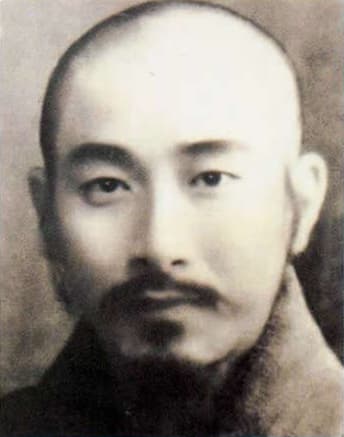
Nan Huai-Chin
Nan Huai-Chin was a prominent Chinese Buddhist monk, religious scholar, and writer who became a major force in the revival of Chinese Buddhism in the contemporary era. He was a highly respected spiritual teacher, particularly influential in Chan and Vajrayana Buddhism, though his fame was largely confined to the Chinese cultural sphere. Nan authored numerous books that achieved significant popularity, selling millions of copies and becoming standard university references.
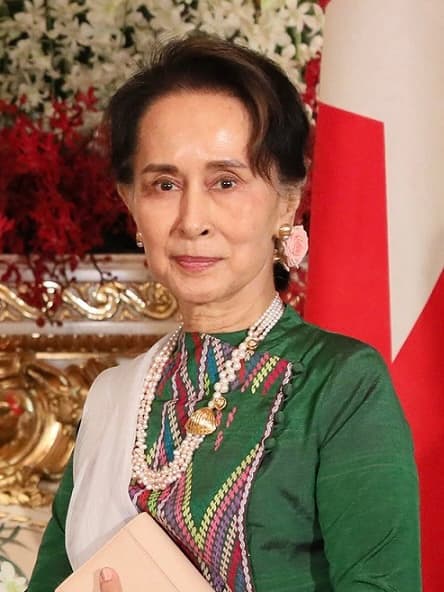
Aung San Suu Kyi
Aung San Suu Kyi is a prominent Burmese politician, diplomat, and author, widely recognized as the de facto leader of Myanmar from 2016 to 2021. She is the general secretary of the National League for Democracy (NLD) and played a crucial role in Myanmar's transition towards partial democracy. Awarded the 1991 Nobel Peace Prize for her non-violent struggle for democracy and human rights, she has also endured significant periods of house arrest.

Taunggwin Sayadaw
The Taunggwin Sayadaw U Visuddha Silacaraha was the final Buddhist monk to hold the esteemed office of Thathanabaing of Burma. This significant position, overseeing the Sangha, was abolished following his death in 1938, marking the end of an era for Buddhist ecclesiastical administration in the region.