
Aung San Suu Kyi
Myanmar·National League for Democracy (NLD)·Female·20th century
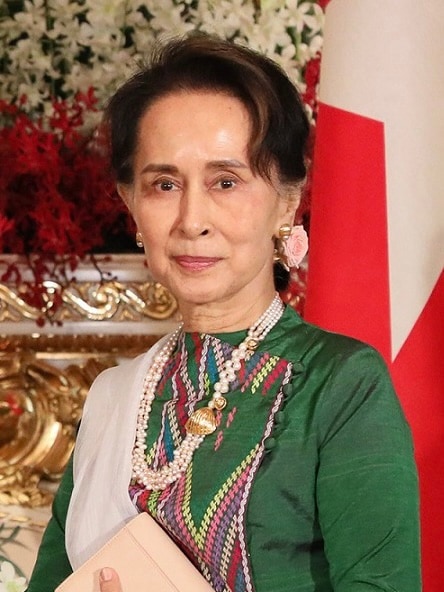
Aung San Suu Kyi is a prominent Burmese politician, diplomat, and author, widely recognized as the de facto leader of Myanmar from 2016 to 2021. She is the general secretary of the National League for Democracy (NLD) and played a crucial role in Myanmar's transition towards partial democracy. Awarded the 1991 Nobel Peace Prize for her non-violent struggle for democracy and human rights, she has also endured significant periods of house arrest.
Key Facts
- ›Born on June 19, 1945, in Rangoon, British Burma.
- ›Youngest daughter of Aung San, the Father of the Nation of modern-day Myanmar.
- ›General Secretary of the National League for Democracy (NLD) since 1988.
- ›Awarded the Nobel Peace Prize in 1991 for her non-violent struggle for democracy and human rights.
- ›Served as State Counsellor of Myanmar and Minister of Foreign Affairs from 2016 to 2021.
- ›Endured approximately 15 years of house arrest between 1989 and 2010.
Important Relationships
- Aung San (father)
- Khin Kyi (mother)
- Michael Aris (husband)
- National League for Democracy (NLD)
- State Peace and Development Council (SPDC)
- United Nations
Rangoon, University Avenue, Rangoon, British Burma
Mahatma Gandhi
Burmese, English
Politician, Diplomat, Author, Leader
Political Prisoner, Nobel Laureate
About Aung San Suu Kyi
Aung San Suu Kyi is a seminal figure in modern Burmese history, renowned as a politician, diplomat, and author. Born on June 19, 1945, in Rangoon, British Burma, she is the daughter of Aung San, the Father of the Nation of modern-day Myanmar. Her life has been deeply intertwined with the struggle for democracy and human rights in her homeland.
Education and Early Life
Suu Kyi received a distinguished education, graduating from the University of Delhi in 1964 and St Hugh's College, Oxford, in 1968. She later worked at the United Nations for three years. She married Michael Aris, a scholar of Tibetan culture, in 1972, and they had two sons. Her early life was marked by her mother's political prominence and her own intellectual development, including her proficiency in four languages: Burmese, English, French, and Japanese.
Political Career and Activism
Aung San Suu Kyi rose to prominence during the 8888 Uprising in 1988, a series of pro-democracy demonstrations. She co-founded the National League for Democracy (NLD) and became its general secretary. Her commitment to non-violent struggle, influenced by Mahatma Gandhi and Buddhist principles, led to her becoming a global symbol of resistance against authoritarian rule. Despite the NLD's overwhelming victory in the 1990 general election, the military junta nullified the results, and Suu Kyi was placed under house arrest for nearly 15 of the following 21 years.
Recognition and Controversy
In recognition of her efforts, Aung San Suu Kyi was awarded the 1991 Nobel Peace Prize. She also received the Sakharov Prize for Freedom of Thought in 1990. However, her tenure as State Counsellor and Minister of Foreign Affairs from 2016 to 2021 was met with significant international criticism, particularly concerning Myanmar's handling of the Rohingya crisis and the prosecution of journalists. In 2019, she defended the Myanmar military at the International Court of Justice.
Recent Developments
Aung San Suu Kyi was arrested on February 1, 2021, following a military coup. She has since faced multiple charges and has been sentenced to a cumulative prison term. Her arrest and subsequent trials have been widely condemned by the international community as politically motivated.
Source: Wikipedia ↗
Frequently Asked Questions
Who is Aung San Suu Kyi?
Aung San Suu Kyi is a Burmese politician, diplomat, and author, best known for her leadership in Myanmar's pro-democracy movement. She served as the de facto leader of Myanmar from 2016 to 2021 and has been a prominent figure in international human rights advocacy.
What is Aung San Suu Kyi known for?
She is renowned for her lifelong struggle for democracy and human rights in Myanmar, often through non-violent means. This dedication earned her the Nobel Peace Prize in 1991, and she became a symbol of resistance against military rule.
What was Aung San Suu Kyi's role in Myanmar's politics?
Aung San Suu Kyi was instrumental in the formation of the National League for Democracy (NLD) and its subsequent efforts to bring democracy to Myanmar. She served as State Counsellor, effectively leading the country's government for a period.
Why was Aung San Suu Kyi placed under house arrest?
She was repeatedly placed under house arrest by the military junta for her political activism and efforts to promote democracy. This confinement lasted for approximately 15 of the 21 years between 1989 and 2010.
What significant international recognition has Aung San Suu Kyi received?
Aung San Suu Kyi was awarded the Nobel Peace Prize in 1991 for her unwavering commitment to democracy and human rights through non-violent means. She also received the Sakharov Prize for Freedom of Thought in 1990.
What is the significance of the 8888 Uprising in Aung San Suu Kyi's life?
The 8888 Uprising in 1988 marked Aung San Suu Kyi's entry into national politics. She rose to prominence during this period of mass demonstrations for democracy and co-founded the National League for Democracy.
Related Buddhists
Cyril de Zoysa
Sir Cyril de Zoysa was a prominent Sri Lankan industrialist, senator, and philanthropist who played a significant role in the 20th-century Buddhist revival movement in Ceylon (now Sri Lanka). He served as the President of the Senate of Ceylon from 1960 to 1965, demonstrating a commitment to both public service and the preservation of Buddhist heritage.

D. S. Senanayake
Don Stephen Senanayake was a Ceylonese statesman and the first Prime Minister of Ceylon. He is widely regarded as the "Father of the Nation" for his leadership in the Sri Lankan independence movement and the establishment of self-rule. Senanayake played a pivotal role in shaping the early institutions of independent Ceylon, focusing on national development and foreign policy.

Chandrashekhar Azad Ravan
Chandrashekhar Azad Ravan is an Indian politician, social activist, Ambedkarite, and lawyer. He is the chief and co-founder of the Bhim Army and the National President of the Aazad Samaj Party (Kanshi Ram). In 2024, he was elected as a Member of Parliament to the 18th Lok Sabha from Nagina, and in 2021, Time magazine recognized him as one of the 100 Emerging Leaders shaping the future.