
D. S. Senanayake
Sri Lanka·United National Party (UNP)·Male·20th century
Don Stephen Senanayake was a Ceylonese statesman and the first Prime Minister of Ceylon. He is widely regarded as the "Father of the Nation" for his leadership in the Sri Lankan independence movement and the establishment of self-rule. Senanayake played a pivotal role in shaping the early institutions of independent Ceylon, focusing on national development and foreign policy.
Key Facts
- ›First Prime Minister of Ceylon (1947-1952).
- ›Considered the "Father of the Nation" in Sri Lanka.
- ›Led the Sri Lankan independence movement.
- ›Initiated significant national development projects, including the Gal Oya scheme.
- ›Established Ceylon's independent armed forces.
- ›Formed the United National Party (UNP).

Important Relationships
- Dudley Shelton Senanayake
- Sir Henry Moore
- Arthur Creech Jones
- George Hall
- Oliver Stanley
- Sir Baron Jayatilaka
- Dr. Ivor Jennings
- S. W. R. D. Bandaranaike
- G.G. Ponnambalam
Land Development Ordinance, Flora and Fauna Protection Ordinance, Ceylon Citizenship Act, Army Act, Navy Act, Air Force Act
Botale, Mirigama, Negombo, Kandy, Colombo, Galle Face Green, Temple Trees, Independence Square
First Prime Minister, Father of the Nation
About D. S. Senanayake
Don Stephen Senanayake
Don Stephen Senanayake (1884–1952) was a pivotal Ceylonese statesman and the first Prime Minister of Ceylon, widely recognized as the "Father of the Nation." His leadership was instrumental in steering the Sri Lankan independence movement, leading to the establishment of self-rule and the formation of a new nation.
Early Life and Political Beginnings
Born into a devout Buddhist family in Botale, Senanayake received his education at the prestigious S. Thomas' College, Mutwal. After a brief stint as a clerk, he joined his brothers in managing the family's extensive business holdings, which included plantations and graphite mining. He became involved in the temperance movement in 1912, which later evolved into a broader independence movement, especially after the 1915 Sinhalese-Muslim riots, during which he and his brothers were imprisoned without charge.
Path to Independence and Prime Ministership
Senanayake's political career advanced as he was elected unopposed to the Legislative Council in 1924 and later to the State Council in 1931. He served as the Minister of Agriculture and Lands for fifteen years, initiating significant policies to combat agricultural problems, establish the Land Development Ordinance, and promote agricultural modernization. During World War II, he played a key role in civil defense and food supply. He later became Leader of the House and Vice Chairman of the Board of Ministers, leading negotiations for independence. In 1946, he formed the United National Party (UNP) and, following parliamentary elections in 1947, was invited to form Ceylon's first cabinet as Prime Minister.
Premiership and Legacy
As Prime Minister, Senanayake focused on building the institutions of an independent state and promoting national development. He initiated bold plans such as the Gal Oya scheme for population relocation and agricultural expansion, aiming for self-sufficiency in food production. His government also established the Ceylon Citizenship Act, though it led to controversy by disenfranchising many Indian Tamils. Senanayake developed Ceylon's foreign policy, establishing relations with various nations and founding the Ceylon Overseas Service. He also established the island's armed forces. Despite facing political challenges, including a significant rift with S. W. R. D. Bandaranaike, Senanayake's premiership laid the groundwork for modern Sri Lanka. He passed away in 1952, leaving behind a legacy of national development and independence, with many institutions and landmarks named in his honor.
Source: Wikipedia ↗
Frequently Asked Questions
When was D. S. Senanayake born and when did he die?
D. S. Senanayake was born on October 20, 1884, and passed away on March 22, 1952. His life spanned a significant period of political change in Ceylon.
What was D. S. Senanayake's role in the independence movement?
Senanayake was a prominent leader of the Sri Lankan independence movement. He was instrumental in negotiations with the British government that led to self-rule and the establishment of Ceylon as an independent nation.
What were some of D. S. Senanayake's major contributions as Prime Minister?
As Prime Minister, Senanayake focused on national development, including agricultural expansion and the relocation of populations through projects like the Gal Oya scheme. He also established Ceylon's armed forces and developed its foreign policy.
What is D. S. Senanayake's legacy?
D. S. Senanayake is remembered as the "Father of the Nation" for his role in achieving independence and building the foundations of modern Sri Lanka. While respected for his development initiatives, his citizenship laws were controversial.
What political party did D. S. Senanayake found?
D. S. Senanayake formed the United National Party (UNP) in 1946. He amalgamated three right-leaning pro-Dominion parties to create this political force.
Related Buddhists
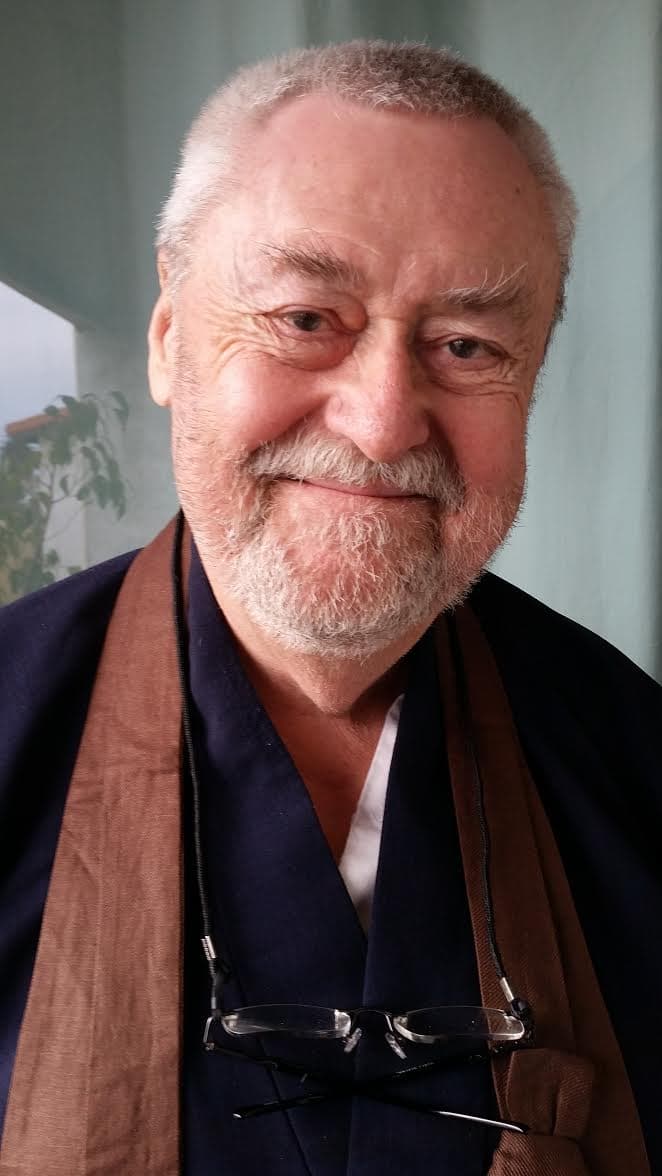
James Ishmael Ford
James Ishmael Ford is an American Zen Buddhist priest and retired Unitarian Universalist minister, recognized as a Zen master. He is known for co-founding Boundless Way Zen and establishing the Empty Moon Zen Network, contributing significantly to the establishment of Zen in North America. His work bridges Zen Buddhism and Unitarian Universalism, making him a notable figure in contemporary American Buddhism.

S. W. R. D. Bandaranaike
Solomon West Ridgeway Dias Bandaranaike was a prominent Sri Lankan statesman who served as the fourth Prime Minister of Ceylon from 1956 until his assassination in 1959. He founded the Sri Lanka Freedom Party and led a powerful coalition to victory on platforms of Sinhalese nationalism and democratic socialism. His tenure saw significant reforms including nationalization of services and the controversial "Sinhala Only Act," alongside foreign policy shifts towards non-alignment.
Cyril de Zoysa
Sir Cyril de Zoysa was a prominent Sri Lankan industrialist, senator, and philanthropist who played a significant role in the 20th-century Buddhist revival movement in Ceylon (now Sri Lanka). He served as the President of the Senate of Ceylon from 1960 to 1965, demonstrating a commitment to both public service and the preservation of Buddhist heritage.