
Tenzing Norgay
Nepal·Sherpa·Male·20th century
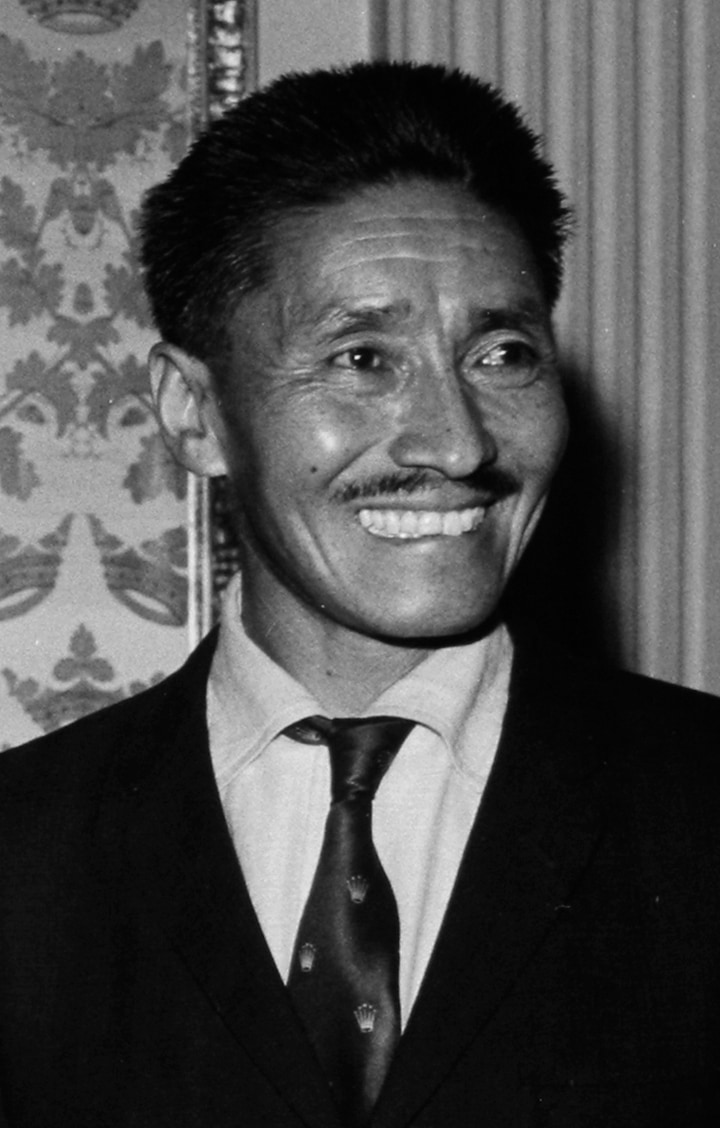
Tenzing Norgay, born Namgyal Wangdi, was a Nepalese-Indian Sherpa mountaineer renowned for being one of the first two individuals confirmed to have reached the summit of Mount Everest on May 29, 1953, alongside Edmund Hillary. His ascent marked a monumental achievement in mountaineering history and cemented his status as a significant figure in 20th-century exploration.
Key Facts
- ›He was one of the first two people, along with Edmund Hillary, confirmed to have reached the summit of Mount Everest.
- ›His birth name was Namgyal Wangdi, later changed on the advice of a lama.
- ›Tenzing Norgay was a Buddhist, as is traditional for Sherpas and Tibetans.
- ›He participated in multiple expeditions to Mount Everest before his successful 1953 ascent.
- ›Following his Everest achievement, he became the first Director of Field Training at the Himalayan Mountaineering Institute in Darjeeling.
- ›He founded Tenzing Norgay Adventures, a company specializing in Himalayan trekking adventures.
Important Relationships
- Edmund Hillary
- John Hunt
- 1953 British Mount Everest expedition
Man of Everest
Darjeeling, Mount Everest, Nepal, Tibet, India
English
Mountaineer, Guide, Teacher
About Tenzing Norgay
Tenzing Norgay: Everest Pioneer
Tenzing Norgay, born Namgyal Wangdi, was a distinguished Nepalese-Indian Sherpa mountaineer who achieved global recognition as one of the first two individuals confirmed to have reached the summit of Mount Everest. On May 29, 1953, alongside Edmund Hillary, he completed this monumental feat as part of the 1953 British Mount Everest expedition.
Early Life and Mountaineering Beginnings
There are varied accounts of Tenzing Norgay's early life, with him stating he was born and raised in Tengboche, Nepal, while other sources suggest he was born in Tibet. He was of Sherpa heritage, and Buddhism was his traditional religion. His birth year is believed to be 1914, a fact he later used to celebrate his birthday on the anniversary of his Everest summit. Originally named Namgyal Wangdi, his name was changed to Tenzing Norgay, meaning "wealthy-fortunate-follower-of-religion." He developed a passion for mountaineering from a young age, participating in his first Everest expedition reconnaissance in 1935. He was a high-altitude porter on several British attempts to climb Everest from the Tibetan side in the 1930s and took part in other climbs across the Indian subcontinent. Prior to his 1953 success, he had been on six previous Everest expeditions, including two Swiss expeditions in 1952 where he and Raymond Lambert set a new altitude record.
The Conquest of Everest and Subsequent Career
In 1953, Tenzing Norgay joined John Hunt's expedition, where his skill and quick thinking saved Edmund Hillary from falling into a crevasse, solidifying their partnership. On May 29, 1953, after a challenging ascent, Tenzing Norgay and Edmund Hillary reached the summit of Mount Everest. Although journalists and the public debated who stepped first, Hunt, the expedition leader, emphasized their success as a team. Tenzing Norgay later revealed that Hillary stepped onto the summit first, followed by himself. Following this historic achievement, Tenzing Norgay was honored with the George Medal, among other distinctions, though he was not eligible for a knighthood as he was not a British subject. He became the first Director of Field Training at the Himalayan Mountaineering Institute in Darjeeling in 1954. In 1978, he founded Tenzing Norgay Adventures, a company that continues to offer trekking experiences in the Himalayas, now run by his son Jamling Tenzing Norgay.
Legacy
Tenzing Norgay's legacy extends beyond his mountaineering achievements. He is remembered for his contributions to mountaineering education and for inspiring future generations of adventurers. In his honor, the Indian government renamed its highest adventure sports award the Tenzing Norgay National Adventure Award in 2003. Places such as Tenzing Montes on Pluto and Lukla Airport (renamed Tenzing–Hillary Airport) are named after him, attesting to his enduring global impact.
Source: Wikipedia ↗
Frequently Asked Questions
When was Tenzing Norgay born?
Tenzing Norgay's exact date of birth is unknown. However, based on the Tibetan calendar's Year of the Rabbit and his age in 1953, it is likely he was born in 1914. He chose to celebrate his birthday on May 29th, the anniversary of his Everest summit.
Where was Tenzing Norgay born?
There are conflicting accounts of Tenzing Norgay's birthplace. He stated in his autobiography that he was born and raised in Tengboche, Nepal. Other accounts suggest he was born in Tibet and grew up in Nepal, or that his parents were from Tibet but he was born in Nepal.
What is Tenzing Norgay most famous for?
Tenzing Norgay is most famous for being one of the first two individuals, along with Edmund Hillary, to reach the summit of Mount Everest on May 29, 1953. This achievement made him a globally recognized figure in mountaineering.
What was Tenzing Norgay's role in the 1953 Everest expedition?
Tenzing Norgay was a key member of the 1953 British Mount Everest expedition, led by John Hunt. He was chosen by Edmund Hillary as his climbing partner for the final ascent to the summit.
What happened to Tenzing Norgay after climbing Everest?
After his historic ascent, Tenzing Norgay received widespread acclaim and was awarded the George Medal. He later became the first Director of Field Training at the Himalayan Mountaineering Institute in Darjeeling and founded Tenzing Norgay Adventures.
Related Buddhists

Thubten Zopa Rinpoche
Thubten Zopa Rinpoche was a Tibetan Buddhist lama of the Gelug school, born in Nepal in 1945. He is widely recognized for co-founding the Foundation for the Preservation of the Mahayana Tradition (FPMT) and Maitripa College. Following the death of his teacher Lama Yeshe, Rinpoche served as the spiritual director of the FPMT, guiding its extensive charitable and Dharma activities until his passing in 2023.
Buddhaghosa Mahasthavir
Buddhaghosa Mahasthavir was a Nepalese Buddhist monk instrumental in reviving Theravada Buddhism in Nepal during the 1940s amidst governmental suppression. He founded the Pariyatti Shiksha (Buddhist education) system and was later recognized as the fifth Sangha Nayaka (Chief Prelate) in 2006. His extensive work included authoring and translating Buddhist scriptures, significantly contributing to the spread of Buddhist teachings in Nepal.
Aniruddha Mahathera
Aniruddha Mahathera was a prominent Nepalese Buddhist monk and the Sangha Nayak (Patriarch) of Nepal from 1998 until his death in 2003. He was instrumental in the revival of Theravada Buddhism in Nepal and the development of Lumbini, the Buddha's birthplace, into a significant international pilgrimage site. His extensive work included developing Lumbini, translating Buddhist texts, and authoring numerous books.