
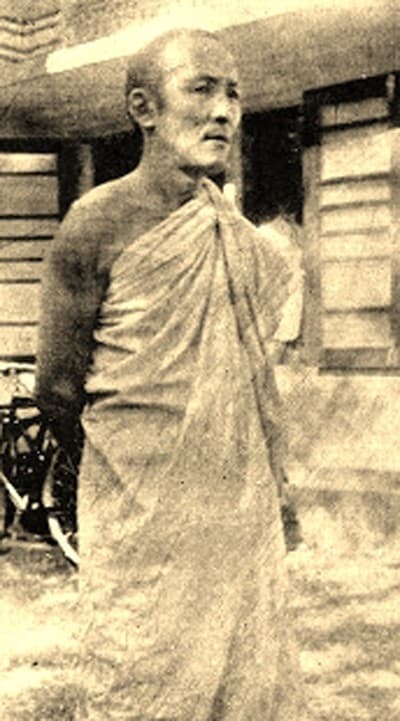
Sri Piyaratana Tissa Mahanayake Thero
Sri Piyaratana Tissa Mahanayake Thero was a prominent Buddhist monk and educator in Sri Lanka, serving as the Mahanayaka Thera of the Amarapura Nikaya. He is widely recognized as the founding father of Buddhist education in Sri Lanka, establishing the country's first Buddhist school. His efforts significantly contributed to the revival and safeguarding of Buddhist education during a challenging colonial period.
Key Facts
- ›Served as the Mahanayaka Thera of the Amarapura Nikaya and Sanganayake of the Southern Province.
- ›Popularized the 'Poruwa' ceremony at Buddhist weddings.
- ›Established Sri Lanka's first Buddhist school, Jinalabdhi Vishodaka, in 1869.
- ›Was a close friend and correspondent of Colonel Henry Steel Olcott.
- ›Ordained the Tibetan Monk S. Mahinda.
- ›His efforts led to his honorary membership in the Theosophical Society.
Important Relationships
- Henry Steel Olcott
- Helena Blavatsky
- S. Mahinda
- David Weerasooriya
- Arnolis Weerasooriya
- Don Margiris de Silva Weerasooriya
- Siridhamma Thera
- Ven. Dodanduwe Dammissara Thera
Jinalabdhi Vishodaka, Lokaratha Sadhana Sangamaya
Dodanduwa, Hikkaduwa, Borella, Beruwela, Panadura, Weligama, Kathaluwa, Ahangama
Sinhala
Bhikkhu
About Sri Piyaratana Tissa Mahanayake Thero
Sri Piyaratana Tissa Mahanayake Thero (1826–1907), also known as Dodanduwa Piyaratne Thera, was a pivotal figure in the Buddhist revival in Sri Lanka, particularly recognized for his foundational role in Buddhist education.
Life and Contributions
Born into the Weerasooriya family of Dodanduwa and Hikkaduwa, Piyaratana Tissa Mahanayake Thero rose to prominence as the Mahanayaka Thera of the Amarapura Nikaya and the Sanganayake of the Southern Province. He is widely credited as the founding father of Buddhist education in Sri Lanka. In 1869, he established the nation's first Buddhist school, Jinalabdhi Vishodaka, located within the Saila Bimbaramaya Temple in Dodanduwa. This initiative was undertaken despite considerable challenges posed by colonial administrators at the time. He also founded the Buddhist Society, Lokaratha Sadhana Sangamaya, which actively worked to protect and promote Buddhist education.
Association with Henry Steel Olcott
Piyaratana Tissa Mahanayake Thero engaged in extensive correspondence with Colonel Henry Steel Olcott, a key American proponent of Buddhism. When Olcott and Helena Blavatsky arrived in Sri Lanka in 1880, they visited Piyaratana Thero at his temple in Dodanduwa to understand the plight of Buddhists and their educational needs. Piyaratana Thero was instrumental in administering 'Pansil' to Olcott and is noted for his erudition, energy, and high character in Olcott's private writings. Their collaborative efforts led to the official registration of the first Buddhist school in 1874. Piyaratana Tissa Mahanayake Thero also established other Buddhist schools in various locations across Sri Lanka, including Panadura, Weligama, Kathaluwa, and Ahangama.
Legacy
Beyond his educational endeavors, Sri Piyaratana Tissa Mahanayake Thero also popularized the 'Poruwa' ceremony, a significant ritual in Sri Lankan Buddhist weddings. He was recognized for his contributions with an honorary membership in the Theosophical Society of New York. His dedication to Buddhist education and his role in fostering a revival of Buddhist practice left a lasting impact on Sri Lankan society. He passed away on May 20, 1907, and was commemorated by the Sri Lankan Postal Ministry with a postal stamp in 1984.
Source: Wikipedia ↗
Frequently Asked Questions
Who was Sri Piyaratana Tissa Mahanayake Thero?
Sri Piyaratana Tissa Mahanayake Thero was a highly influential Buddhist monk from Sri Lanka, holding positions such as Mahanayaka Thera of the Amarapura Nikaya and Sanganayake of the Southern Province. He is primarily known for his pioneering work in Buddhist education.
What is Sri Piyaratana Tissa Mahanayake Thero known for in education?
He is celebrated as the founding father of Buddhist education in Sri Lanka. In 1869, he established the nation's very first Buddhist school, Jinalabdhi Vishodaka, despite facing obstacles from colonial authorities.
What was the significance of the 'Poruwa' ceremony?
Sri Piyaratana Tissa Mahanayake Thero is credited with popularizing the 'Poruwa' ceremony, a traditional ritual associated with Buddhist weddings in Sri Lanka.
What was his relationship with Henry Steel Olcott?
He had a close friendship and extensive correspondence with Colonel Henry Steel Olcott, a key figure in the Buddhist revival in Sri Lanka. Piyaratana Thero administered 'Pansil' to Olcott and collaborated with him on educational initiatives.
What other Buddhist schools did he establish?
Beyond the first Buddhist school, Jinalabdhi Vishodaka, Piyaratana Tissa Mahanayake Thero also founded several other Buddhist schools. These included Upadya Kanishta Vidyalaya at Panadura, the Weligama Buddhist School, and similar institutions in Kathaluwa and Ahangama.
When did Sri Piyaratana Tissa Mahanayake Thero live?
He was born on December 12, 1826, and passed away on May 20, 1907, at the age of 80.
Related Buddhists

Somdet Phramahasamanachao Kromphraya Vajirananavarorasa
Somdet Phramahasamanachao Kromphraya Vajirananavarorasa was the tenth Supreme Patriarch of Thailand, serving from 1910 to 1921. He was instrumental in institutionalizing Thai Buddhism, reforming religious education, and modernizing the Sangha's administration. His intellectual contributions and leadership significantly shaped the landscape of Buddhism in Siam during a period of considerable change.
S. Mahinda
S. Mahinda Thera was a Buddhist monk and poet from Sikkim who became a significant figure in the Sri Lankan independence movement. After arriving in Ceylon at a young age, he mastered the Sinhala language and authored over 40 books, primarily poems that inspired patriotism and urged Sinhalese people to fight for their freedom. He is now recognized as a national hero of Sri Lanka and one of its most celebrated poets.
Kotugoda Dhammawasa Mahanayaka Thero
Agga Maha Pandita Kotugoda Dhammawasa Mahanayaka Thero was an eminent Sri Lankan Buddhist monk and the supreme Mahanayaka of the Sri Lanka Amarapura Nikaya. He was known for his extensive writings on Buddhism and his missionary work in Asia and the West. His leadership within the Amarapura Nikaya spanned several decades, culminating in his appointment as its supreme head.