
Seongcheol
Seongcheol was a prominent Korean Seon master and a pivotal figure in modern Korean Buddhism, instrumental in its reformation from the 1950s to the 1990s. Revered as a living Buddha for his asceticism, rigorous meditation, and impactful teachings, he championed a return to strict monastic discipline and the traditional practice of sudden enlightenment and sudden cultivation.
Key Facts
- ›Born Yi Yeongju in 1912, he adopted the dharma name Seongcheol upon becoming a monk in 1937.
- ›He is credited with attaining enlightenment in 1940 after only three years of monastic practice.
- ›Seongcheol was renowned for his extreme ascetic practices, including 'Jangjwa Bulwa' (long sitting, no lying) for eight years.
- ›He was a leading force in the reformation of Korean Buddhism post-WWII, advocating for strict adherence to the Vinaya.
- ›He served as the Supreme Patriarch of the Jogye order, transforming Haeinsa into a major meditation training center.
- ›Seongcheol authored numerous influential books and lectures, including the 'Hundred-Day Talk', which blended Buddhist philosophy with modern scientific concepts.
Important Relationships
- Song of Enlightenment - Attributed To Yongjia Xuanjue, Influential Text For Seongcheol
- Hundred-Day Talk
- Lectures On Huineng's Sutra
- Shin Sim Myung
- Jeung Do Ga
- Illumination of Sudden Enlightenment
- Seon Lim Go Gyung Chong Suh - Collection of Chinese and Korean Zen Classics
Daewonsa Temple, Haeinsa Temple, Geum Dang Seon Center, Songgwangsa Temple, Mangwolsa, Mahayunsa, Mount Kumgang, Bong Am Sa Temple, Heui Yang Mountain, Seongjeonam Hermitage, Palgong Mountains, Pagyesa, Daegu, Gimyongsa Temple, Toesoeldang
Yongjia Xuanjue, Huineng, Taego Bou, Linji Yixuan, Ma Tzu
Korean, Chinese
Monk
About Seongcheol
Seongcheol (1912–1993) was a profoundly influential Korean Seon master, widely recognized as a "living Buddha" for his exceptionally ascetic lifestyle, rigorous meditation practices, and significant role in reforming Korean Buddhism from the mid-20th century until his death. Born Yi Yeongju, he adopted the dharma name Seongcheol upon becoming a monk in 1937 and is credited with attaining enlightenment in 1940.
Life and Historical Context
Born into a Confucian scholar's family, Seongcheol displayed an early aptitude for learning, reading complex texts by age ten and developing a deep philosophical curiosity. His encounter with the Song of Enlightenment by Yongjia Xuanjue led him to seek the ultimate truth through meditation, compelling him to leave his worldly responsibilities and dedicate himself to practice. After refusing ordination initially, he became a monk in 1937, taking the name Seongcheol.
Seongcheol's spiritual journey was marked by intense practice, including a renowned eight-year period of 'Jangjwa Bulwa' (long sitting, no lying) and a ten-year hermitage at Seongjeonam, during which he immersed himself in Buddhist canons and various scientific disciplines, even learning English.
Major Contributions and Teachings
Seongcheol was instrumental in the post-World War II reformation of Korean Buddhism, advocating for a return to the strict Vinaya code, monastic celibacy, and the traditional Seon emphasis on intense meditation. He championed the doctrine of 'sudden enlightenment, sudden cultivation,' challenging prevailing theories. His teachings, particularly his "Hundred-Day Talk," were revolutionary, blending Buddhist philosophy with modern scientific concepts and current affairs to engage a contemporary audience. He also served as the Supreme Patriarch of the Jogye order, transforming Haeinsa into a prominent center for meditation and sutra studies.
Legacy
Seongcheol's asceticism and dedication to practice set a high standard for monks, and his influence reshaped the landscape of modern Korean Buddhism. He authored numerous books, disseminating his teachings widely. His death in 1993 was met with one of the largest funerals in Korean history for a monk, underscoring his immense impact and revered status.
Source: Wikipedia ↗
Frequently Asked Questions
Who was Seongcheol?
Seongcheol was a highly influential Korean Seon master who played a crucial role in reforming Korean Buddhism in the latter half of the 20th century. He was widely regarded as a living Buddha due to his ascetic lifestyle and profound spiritual insights.
When did Seongcheol become a monk and attain enlightenment?
Yi Yeongju received his dharma name Seongcheol and became a monk in March 1937. He attained enlightenment in the summer of 1940, after just three years of monastic life.
What was Seongcheol's approach to Buddhist practice?
Seongcheol strongly advocated for the traditional Seon teaching of 'sudden enlightenment, sudden cultivation,' contrasting with the 'sudden enlightenment, gradual cultivation' theory prevalent at the time. He emphasized rigorous meditation and strict adherence to monastic discipline.
What was Seongcheol known for in terms of asceticism?
He was famous for his practice of 'Jangjwa Bulwa,' which means 'long sitting, no lying,' a technique he reportedly maintained for eight years after his enlightenment, refusing to lie down even while sleeping. He also famously refused to see his mother when she visited, prioritizing his ascetic practice.
How did Seongcheol contribute to the reformation of Korean Buddhism?
Seongcheol was a key figure in the movement to restore traditional Korean Buddhism after the Japanese occupation. He led efforts to re-establish strict Vinaya adherence, celibacy, and intensive meditation practices, profoundly influencing the Jogye order.
What was the significance of Seongcheol's 'Hundred-Day Talk'?
His 'Hundred-Day Talk,' delivered after ten years of seclusion, was groundbreaking for integrating Buddhist teachings with modern subjects like quantum mechanics and relativity. This innovative approach aimed to make Buddhist philosophy accessible and relevant to contemporary audiences.
Related Buddhists
Gihwa
Gihwa was a prominent Korean Buddhist monk and leading figure during the transition from the Goryeo to the Joseon dynasties. Initially a respected Confucian scholar, he converted to Buddhism in his early twenties and became a disciple of National Teacher Muhak. Gihwa is known for synthesizing Seon (Zen) and Gyo (scriptural) traditions, authoring influential commentaries on key Buddhist sutras, and vigorously defending Buddhism against Neo-Confucian criticisms.
Rangjung Rigpe Dorje, 16th Karmapa
Rangjung Rigpe Dorje was the 16th Gyalwa Karmapa and the spiritual leader of the Karma Kagyu lineage of Tibetan Buddhism. Known as the "King of the Yogis," he was a prominent "living Buddha" instrumental in transmitting Tibetan Vajrayana Buddhism to the West. His life was marked by the recognition process, extensive education across various Buddhist schools, and efforts to preserve Tibetan culture amidst political upheaval.
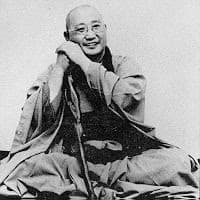
Seungsahn
Seungsahn Haengwon was a Korean Seon master and the seventy-eighth Patriarch in his lineage, born Duk-In Lee. He is widely recognized as the founder of the international Kwan Um School of Zen and was one of the first Korean Zen masters to establish a significant presence in the United States. Known for his charismatic teaching style, direct approach, and use of phrases like "only don't know," Seungsahn adapted Zen Buddhism for Western audiences, opening many temples and practice groups globally.