
Sanghapala
Sanghapala (466–524 CE) was a prominent Khmer monk from Funan, known for his significant contributions to the translation of Buddhist scriptures into Chinese. He is recognized as one of the few Cambodian monks whose translated works are included in the Chinese Tripitaka, particularly his canonical rendering of the Vimuttimagga, or Path to Freedom.
Key Facts
- ›Born in Funan, modern-day Cambodia, in 460 AD.
- ›Became a monk in his teens and traveled to Jiankang (modern Nanjing), China.
- ›Fluent in Pali, Sanskrit, and classical Chinese.
- ›Served as an official translator for the Southern Qi dynasty for 16 years.
- ›Translated important Buddhist texts, including the Vimuttimagga and the Scripture of King Aśoka.
- ›His translations are primarily associated with Mahayana Buddhism.
Important Relationships
- Fayun
- Baochang
Vimuttimagga, Ayuwang Jing, Maha Asoka Sutra, Vimoksa-Marga-Sastra, SaptaśAtikā PrajñāPāRamitā, Dasadharmaka, SarvabuddhavishayāVatāRa, Ashtabuddhaka, Mahamayuri Vidyaragni, Anantamukha-NirhāRa-DhāRaṇī, MañJuśRī Pariprikkha, BodhisattvapiṭAka SūTra
Funan, Jiankang, Nanjing
GuṇAvṛDdhī
Chinese, Sanskrit, Pali
Monk
About Sanghapala
Sanghapala (466–524 CE) was a significant Khmer monk from the ancient kingdom of Funan, renowned for his pivotal role in translating Buddhist scriptures into Chinese. His life and work represent a crucial bridge between early Southeast Asian Buddhism and the flourishing tradition in China during the Southern Dynasties period.
Life and Historical Context
Born in Funan, in what is now modern-day Cambodia, Sanghapala became a monk in his youth. He later journeyed to China, establishing himself in Jiankang (present-day Nanjing), the capital of the Southern Qi dynasty. There, he studied under Guṇavṛddhī, an Indian monk who had traveled to China with the aim of propagating Buddhism. Sanghapala developed proficiency in multiple languages, including Pali, Sanskrit, and classical Chinese, which enabled his extensive translation activities.
Sanghapala was known for his quiet demeanor and dedication to his work, living a simple life. He became an official translator for the Jiankang court, undertaking the translation of new Buddhist texts into Chinese. This role spanned sixteen years, during which he established translation offices and contributed significantly to the dissemination of Buddhist teachings.
Major Contributions and Legacy
Sanghapala is credited with translating numerous Buddhist texts, many of which are now lost in their original languages but survive through his Chinese versions. His most notable contribution is his canonical translation of the Vimuttimagga, also known as the Path to Freedom, into Chinese. He also translated the Scripture of King Aśoka (Ayuwang jing) from the Sanskrit text Ashokavadana. His translations are primarily associated with Mahayana Buddhism, which was practiced in Cambodia during his time.
Despite some noted instances of misinterpretations or confusions of similar-sounding words in his translations, Sanghapala's work remains a vital resource for understanding the transmission of Buddhist thought and practice across Asia. He is recognized as one of the only two Cambodian monks whose translations are included in the Chinese Tripitaka, highlighting his enduring legacy.
Source: Wikipedia ↗
Frequently Asked Questions
Who was Sanghapala?
Sanghapala was a famous Khmer monk who lived from 466 to 524 CE. He was born in Funan, which is in modern-day Cambodia, and became a monk before traveling to China.
What is Sanghapala known for?
Sanghapala is best known for his work translating Buddhist scriptures into Chinese. He is one of only two Cambodian monks whose translations are part of the Chinese Tripitaka, most notably his rendition of the Vimuttimagga.
Where did Sanghapala live and work?
After being born in Funan, Sanghapala traveled to China and lived in Jiankang, the capital of the Southern Qi dynasty. He worked as an official translator there for 16 years.
What languages did Sanghapala know?
Sanghapala was knowledgeable in several languages, including Pali, Sanskrit, and classical Chinese. This linguistic proficiency was crucial for his translation work.
What notable Buddhist texts did Sanghapala translate?
Among the significant texts Sanghapala translated are the Vimuttimagga (Path to Freedom) and the Ayuwang jing (Scripture of King Aśoka). His translation of the Vimuttimagga is considered a canonical reference.
Related Buddhists
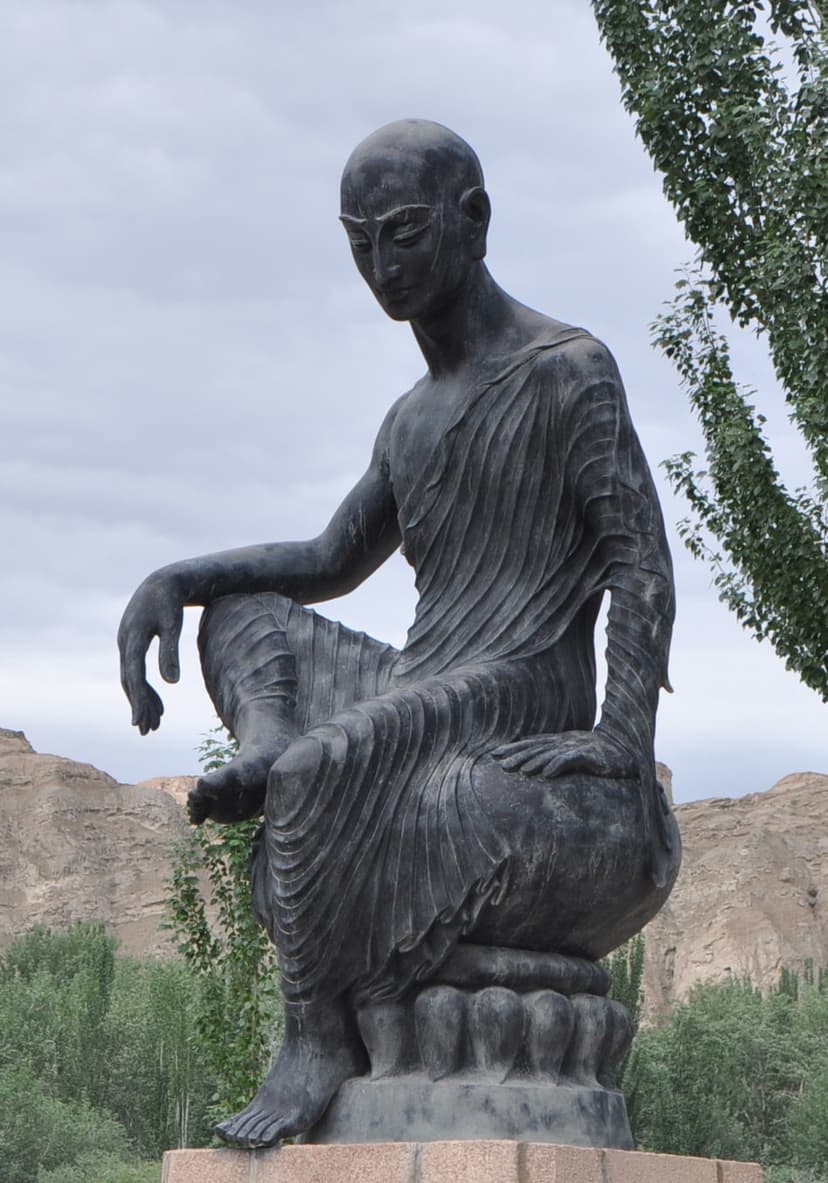
Kumārajīva
Kumārajīva was a pivotal 4th and 5th-century Buddhist monk, scholar, missionary, and translator from Kucha, known for his highly influential translations of Sanskrit Buddhist texts into Chinese. He is credited with introducing the Madhyamaka philosophy to China and his clear, meaning-focused translation style revolutionized Chinese Buddhism, with his renderings remaining in widespread use today.
Jñānagupta
Jñānagupta was a Buddhist monk from Gandhara who traveled to China during the Sui dynasty. He is credited with translating 39 scriptures into Chinese, totaling 192 fascicles, and is recognized for his contributions to the dissemination of Buddhist texts in East Asia.

Chandragomin
Chandragomin was an influential Indian Buddhist lay scholar and poet known for his philosophical writings and the play Lokānanda. Active during the 5th century, he was a teacher at Nalanda Monastic University and is recognized for his contributions to grammar and his devotional works to the goddess Tara. The Tibetan tradition holds him in high regard, believing he once challenged Chandrakirti.