
Rongzom Mahapandita
Rongzom Mahapandita, also known as Rongzom Chökyi Zangpo, was a preeminent scholar of the Nyingma school of Tibetan Buddhism. Celebrated for his extensive exoteric and esoteric commentaries, he is often counted among the Nyingma's three "omniscient" writers, alongside Longchenpa and Ju Mipham. His contemporary, Atiśa, regarded him as an incarnation of the Indian ācārya Kṛṣṇapāda.
Key Facts
- ›Considered one of the three "omniscient" writers of the Nyingma school.
- ›Regarded by Atiśa as an incarnation of Kṛṣṇapāda.
- ›Authored over 100 volumes of collected works, though most are no longer extant.
- ›Defended and explained the Dzogchen tradition within the Mahayana framework.
- ›Held that Mahayana sutra views were inferior to tantric views.
- ›Received the Semde teachings of the Dorje Dudjom transmission line.
Important Relationships
- Atiśa
- Kṛṣṇapāda
- Ju Mipham
- Longchenpa
- Padmasambhava
- Vimalamitra
- Vairotsana
- Entering the Way of the Great Vehicle
- A Commentary On Padmasambhava's Key Instructions: A Rosary of Views
- A Commentary On the Manjusrinama-Samgiti
- A Commentary On the Guhyagarbha Tantra
- Establishing the Divinity of Appearances
- the Great Stage of Buddhahood
Tibetan
About Rongzom Mahapandita
Rongzom Mahapandita, whose full name was Rongzom Chökyi Zangpo, was a preeminent scholar and one of the most significant figures of the Nyingma school of Tibetan Buddhism. He is widely regarded as one of the "omniscient" writers of the Nyingma tradition, a distinction he shares with Longchenpa and Ju Mipham. His intellectual prowess and profound understanding of Buddhist philosophy were recognized even by his contemporaries.
Life and Historical Context
Rongzom Mahapandita lived in the 11th century, a period of significant intellectual activity in Tibetan Buddhism. His elder contemporary, the renowned Indian master Atiśa (980–1054), held Rongzompa in high esteem, considering him an incarnation of the Indian ācārya Kṛṣṇapāda the Great. The historian Gö Lotsawa (1392–1481) further attested to his scholarly brilliance, stating that no scholar in Tibet was his equal. David Germano notes that in the 11th century, Rongzom Chokyi Zangpo was "without doubt the greatest Nyingma author, with extensive exoteric and esoteric commentaries."
Teachings and Philosophy
Rongzom Mahapandita is credited with being the first to receive the complete Dzogchen teachings of both Vimalamitra and Vairotsana after their time. He received the Semde teachings within the Dorje Dudjom transmission line. A key aspect of his philosophical stance was his view that the perspectives of the Sutrayana, particularly Madhyamaka, were subordinate to those of tantra. He emphasized the inherent purity of all phenomena and offered critiques of certain Madhyamaka interpretations of relative truth.
Writings and Legacy
According to available records, Rongzom Mahapandita's collected works comprised over 100 volumes, though the majority are no longer extant. In the 19th century, Ju Mipham, who was deeply influenced by Rongzompa's writings, made efforts to compile the surviving texts. Among his important surviving works are "Entering the Way of the Great Vehicle (Mahayana)," which defends and elucidates the Dzogchen tradition within the Mahayana framework; commentaries on Padmasambhava's "Key Instructions: A Rosary of Views" and the "Guhyagarbha Tantra"; and "Establishing the Divinity of Appearances," a concise text presenting the logical basis for the pure view of Buddhist tantra. His work on "The Great Stage of Buddhahood" also offers profound insights into conceptions of buddhahood.
Source: Wikipedia ↗
Frequently Asked Questions
Who was Rongzom Mahapandita?
Rongzom Mahapandita, whose full name was Rongzom Chökyi Zangpo, was a highly influential scholar within the Nyingma school of Tibetan Buddhism. He is recognized for his comprehensive commentaries and is considered one of the Nyingma's most important intellectual figures.
What is Rongzom Mahapandita known for?
He is known for his extensive exoteric and esoteric commentaries, particularly those on Dzogchen teachings. Rongzom Mahapandita also held the view that tantric teachings were superior to those of the Mahayana sutras.
What are some of Rongzom Mahapandita's notable works?
Key surviving works include "Entering the Way of the Great Vehicle," which explains Dzogchen within the Mahayana context, and commentaries on Padmasambhava's "Key Instructions: A Rosary of Views" and the "Guhyagarbha Tantra."
How is Rongzom Mahapandita regarded by other Buddhist figures?
His contemporary, the Indian scholar Atiśa, considered Rongzom Mahapandita to be an incarnation of the Indian ācārya Kṛṣṇapāda. The Tibetan historian Gö Lotsawa stated that no scholar in Tibet was his equal.
What was Rongzom Mahapandita's view on Sutrayana versus Tantra?
Rongzom Mahapandita believed that the views presented in the Mahayana sutras, such as Madhyamaka philosophy, were inferior to those of mantra, or tantra. He emphasized the purity of all phenomena and critiqued certain Madhyamaka interpretations.
Related Buddhists
Buddhaghosa
Buddhaghosa was a 5th-century Indian Theravādin Buddhist commentator, translator, and philosopher, renowned for his comprehensive synthesis of older Sinhala commentaries. His seminal work, the Visuddhimagga, has been the principal text on meditation and has shaped the orthodox understanding of Theravādin scriptures for centuries. He is widely recognized as the most significant philosopher and commentator of the Theravāda school.
Gihwa
Gihwa was a prominent Korean Buddhist monk and leading figure during the transition from the Goryeo to the Joseon dynasties. Initially a respected Confucian scholar, he converted to Buddhism in his early twenties and became a disciple of National Teacher Muhak. Gihwa is known for synthesizing Seon (Zen) and Gyo (scriptural) traditions, authoring influential commentaries on key Buddhist sutras, and vigorously defending Buddhism against Neo-Confucian criticisms.
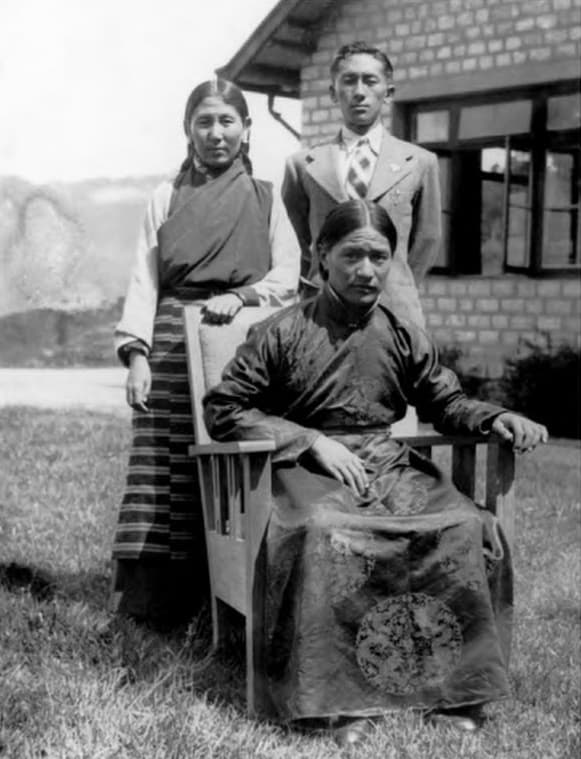
Dudjom Jigdral Yeshe Dorje
Kyabje Dudjom Rinpoche Jigdral Yeshe Dorje, known as Dudjom Rinpoche, was a highly revered master in the Nyingma school of Tibetan Buddhism. He was recognized as a reincarnation of previous tertons and Padmasambhava, and served as the first head of the Nyingma school in exile. Dudjom Rinpoche was a prolific author, scholar, yogi, and Vajrayana and Dzogchen master, instrumental in preserving and transmitting Tibetan Buddhist teachings to the West.