
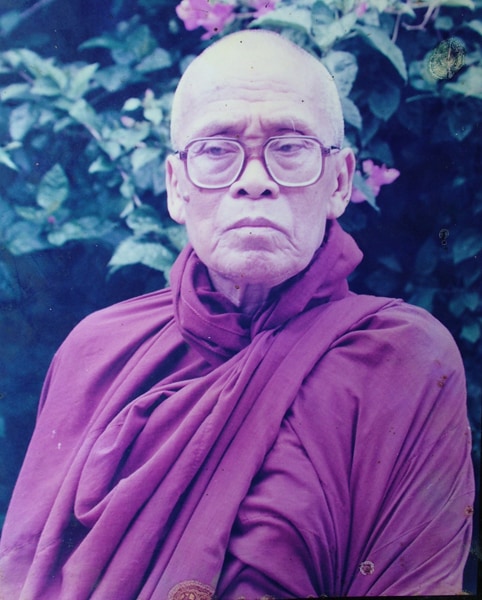
Rajguru Aggavamsa Mahathera
Rajguru Aggavamsa Mahathera was a prominent Buddhist scholar and spiritual leader from the Chittagong Hill Tracts, recognized for his extensive study of Tipitaka literature and his efforts in reviving Theravada Buddhism in his homeland. He participated in the Sixth Buddhist Council in 1956 and received numerous honors for his contributions to Buddhist scholarship and social reform, including being appointed Chakma Rajguru.
Key Facts
- ›Born in the Chittagong Hill Tracts, Bangladesh, on November 23, 1913.
- ›Studied Tipitaka literature for 12 years and earned an M.A. in Buddhist philosophy in Myanmar.
- ›Participated as a delegate from Bangladesh in the Sixth Buddhist Council in Yangon, Myanmar (1956).
- ›Appointed Chakma Rajguru in 1958, a significant spiritual and traditional leadership role.
- ›Authored over a dozen books on Buddhism and Buddhist culture.
- ›Died on January 5, 2008, at the age of 94 in Rangamati, Bangladesh.
Important Relationships
- Venerable Tissa Mahathera
- Venerable Ananda Mitra
- Venerable Dharma Nanda Mahathera
- Chakma Raja Tridev Roy
- Jyotipal Mahathera
- Tilaka Nanda Mahathera
- Prabarananda Mahathera
- Sumana Nanda Mahathera
- Subhachar Thera
- Sadhanananda Mahathera (VANA BHANTE)
- Ven. Dharama Pala Mahathera
- Sri Gopal Bhusan Chakma
- Ven. Vimal Tissa Mahathera
- Chakma Raja Devasish Roy
- Prajananda Mahathera
Manab Dharma Pancasil, Stop Genocide In Chittagong Hill Tract, Sramanera Kartabya, Buddha Pasana, Samavaya Buddha Passana, Buddha Ponjika, Parinam, Mangla Sutra In Chakma Lyric, Buddha Samantika, Abhidhammattha Sanghaha, Buddha O Rabindranath, Dharma O Sawmaj, Dharshan O Vidharshan, Maha Manab Gautama Buddha, Buddhawr Awbawdan
Chittagong Hill Tracts, Rangamati, Yangon, Kolkata
Bengali, English
Bhikkhu
Mahathera, Rajguru
About Rajguru Aggavamsa Mahathera
Rajguru Aggavamsa Mahathera was a highly respected Buddhist scholar and spiritual leader, born in 1913 in the Chittagong Hill Tracts of what is now Bangladesh. He dedicated his life to the study and propagation of Theravada Buddhism, becoming a prolific author and a significant figure in the revival of Buddhist culture and education in his region.
Life and Historical Context
Born Phulanath Tanchangya, he renounced worldly life and took monastic ordination in 1939, eventually receiving the name Venerable Agga Vaṃsa Bhikkhu. His scholarly pursuits led him to Myanmar in 1947, where he spent a decade deepening his knowledge of Buddhist literature, earning an M.A. in Buddhist philosophy, and receiving advanced training in Vipassana meditation. He was honored with titles such as 'Vinaya Visaradha' and 'Vipassana Acharya' during his time in Myanmar. Rajguru Aggavamsa Mahathera also played a crucial role as a delegate from Bangladesh at the Sixth Buddhist Council held in Yangon in 1956.
Upon his return to Bangladesh in 1958, he was appointed Chakma Rajguru, a prestigious spiritual and traditional leadership position in the Chittagong Hill Tracts. He worked tirelessly to rekindle Theravada Buddhism, re-establishing ancient ceremonies and promoting Buddhist teachings through extensive preaching and writing. He authored over a dozen books on Buddhist philosophy, ethics, and social issues, some of which remain unpublished.
Contributions and Legacy
Rajguru Aggavamsa Mahathera's contributions extended beyond religious scholarship. He was an advocate for human rights, speaking out against the torture of tribal people in the Chittagong Hill Tracts at international forums, including the United Nations. He traveled widely, promoting peace and understanding, and established numerous Buddhist organizations and educational institutions. He was honored with the title Aggamahasadhammajatikadajja by the Myanmar Government in 2004. He passed away in 2008 at the age of 94, leaving behind a legacy as a learned scholar, a dedicated spiritual guide, and a compassionate advocate for his people.
Source: Wikipedia ↗
Frequently Asked Questions
When and where was Rajguru Aggavamsa Mahathera born?
Rajguru Aggavamsa Mahathera was born on November 23, 1913, in Kutubdia village in the Chittagong Hill Tracts, which is now part of Bangladesh. His lay parents were Rudrasingh Mahajan and Icchavati Tanchangya.
What was his early life and education like before ordination?
As a lay boy, his given name was Phulanath Tanchangya. He attended several schools, including Rainkhong Kutubdia Christian School, Rangunia High School, and Koya Para High School, indicating a foundational education before his monastic life.
When did he take his monastic vows and under whom?
He renounced his home and family to take ordination as a novice in 1939 under the Lord Abbot of Bawgaltali Buddhist temple, Venerable Tissa Mahathera. He received his higher ordination in 1942 from the same preceptor, at which time he was given the monastic name Venerable Agga Vaṃsa Bhikkhu.
What was his significant academic and meditation training in Myanmar?
In 1947, he traveled to Rangoon (Yangon), Myanmar, for advanced studies. He obtained an M.A. in Buddhist philosophy and was honored as 'Vinaya Visaradha' by local universities. He also trained extensively in Vipassana meditation at the Mahasi Vipassana center, earning the title Vipassana Acharya.
What role did he play after returning to Bangladesh?
Upon returning in 1958, he was honored as the Chakma Patriarch and became the Lord Abbot of Raj Vihara in Rangamati. He was appointed CHAKMA RAJGURU, a title unprecedented in the Chittagong Hill Tracts, signifying his significant spiritual and traditional authority.
What were some of his notable written works?
He authored numerous books on Buddhism, including 'Manab Dharma Pancasil,' 'Stop Genocide in Chittagong Hill Tract,' 'Sramanera Kartabya,' and several volumes of 'Buddha Pasana.' Many of his works were published in Bengali and English.
What international recognition did he receive?
He participated in international conferences on human rights and Buddhism, speaking on the plight of the people in the Chittagong Hill Tracts at the United Nations. He also visited numerous countries to preach humanity and international brotherhood, establishing relationships with global Buddhist organizations.
Related Buddhists
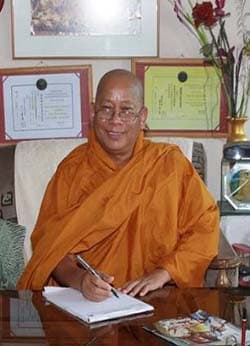
Prajnananda Mahathera
Prajnananda Mahathera is a prominent socially engaged Buddhist monk from the Chittagong Hill Tracts (CHT) of Bangladesh. He is widely recognized for his extensive work in establishing and managing educational institutions, orphanages, and healthcare facilities, particularly for the indigenous communities of the CHT. His efforts have significantly contributed to promoting education, religious teachings, and social welfare in the region.
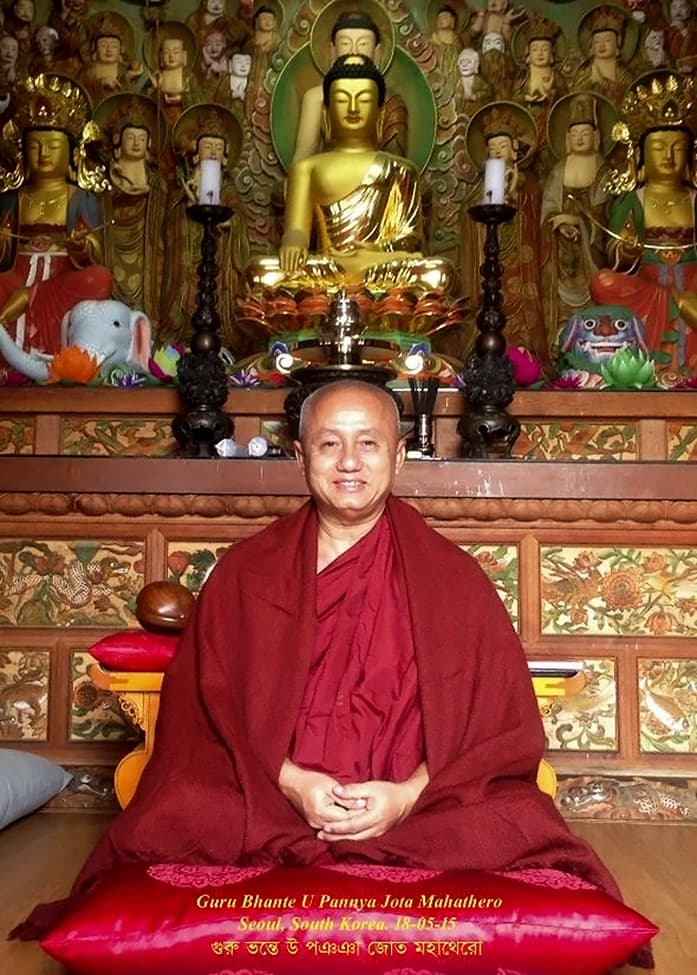
Pannya Jota Mahathera
Ven. U Pannya Jota Mahathera was a Bangladeshi Theravada Buddhist monk and scholar, locally known as Guru Bhante. Before his ordination, he served as a judge and magistrate for the government of Bangladesh. He is recognized for his work as a social reformer, promoting a scientific understanding of Buddhism, and for establishing numerous temples both within and outside of Bangladesh.
Frank Lee Woodward
Frank Lee Woodward was an English educationist, Pali scholar, author, and theosophist known for his extensive research and translation work on Theravada Buddhism. He is highly regarded for compiling a significant concordance of the Pali canon by translating numerous Pali texts into English. Woodward also served as the principal of Mahinda College in Ceylon for 16 years, significantly contributing to its development and the promotion of Buddhist education.