
Preah Maha Ghosananda
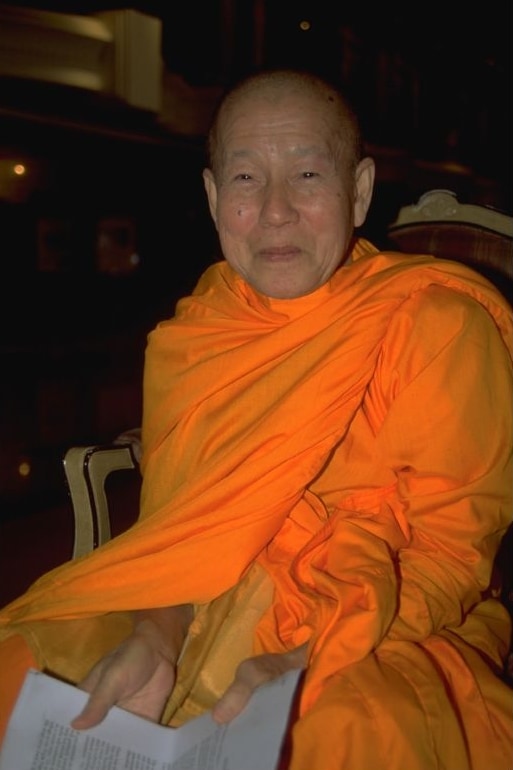
Preah Maha Ghosananda was a highly revered Cambodian Buddhist monk in the Theravada tradition, recognized as the Patriarch of Cambodian Buddhism during tumultuous periods. He is best known for his annual peace marches, known as Dhammayietra, aimed at restoring hope and spirit to the Cambodian people. His work extended to refugee camps and post-conflict restoration, earning him international recognition and nominations for the Nobel Peace Prize.
Key Facts
- ›Served as the Patriarch (Sangharaja) of Cambodian Buddhism during the Khmer Rouge and post-communist periods.
- ›Initiated and led annual peace marches (Dhammayietra) across Cambodia, often through dangerous, mine-laden territories.
- ›Established Buddhist temples and relief efforts in refugee camps along the Thai-Cambodian border.
- ›Nominated multiple times for the Nobel Peace Prize for his peace advocacy and efforts to revive Cambodian Buddhism.
- ›Translated the Metta Sutta (discourse on lovingkindness) into leaflets distributed among refugees.
- ›Received the Rafto Prize and the Niwano Peace Prize for his contributions to peace.
Important Relationships
- Chuon Nath
- Reverend Peter L. Pond
- King Sihanouk
- Venerable Tep Vong
- Claiborne Pell
- The Interfaith Pilgrimage for Peace and Life
Step By Step
TakéO Province, Cambodia, Nalanda University, India, Wat Chai Na, Thailand, Phnom Penh, Cambodia, Leverett, Massachusetts, Usa, Northampton, Massachusetts, Usa, Philadelphia, Pennsylvania, Usa
Nichidatsu Fujii, Ajahn Dhammadaro, Mahatma Gandhi
Pali, Khmer
Novice Ordination
About Preah Maha Ghosananda
Preah Maha Ghosananda, born Va Yav in Takéo Province, Cambodia, was a highly revered Cambodian Buddhist monk in the Theravada tradition. He is recognized as the Patriarch (Sangharaja) of Cambodian Buddhism, a role he held during the devastating Khmer Rouge period and the subsequent transition. His Pali monastic name, 'Mahāghosānanda', translates to 'great joyful proclaimer'.
Early Life and Education
Born around 1913 to a farming family, Va Yav displayed an early interest in religion, becoming a temple boy at eight and receiving novice ordination at fourteen. He pursued his studies in Pali scriptures, later completing higher education at monastic universities in Phnom Penh and Battambang. Sponsored by Chuon Nath, he traveled to India to earn a doctorate in Pali at Nalanda University. During his time in India, he studied under Nichidatsu Fujii, founder of the Nipponzan Myohoji sect and an associate of Mahatma Gandhi. In 1965, he dedicated eleven years to studying meditation under the renowned master Ajahn Dhammadaro at his forest hermitage in southern Thailand.
Khmer Rouge Era and Refugee Work
Returning to Cambodia during the Khmer Rouge regime, which sought to eradicate Buddhism, Ghosananda found himself amidst immense destruction and loss. Following the Vietnamese invasion in 1978, he began ministering to Cambodian refugees pouring into Thai border camps. He established modest temples, organized gatherings, and shared verses of peace and lovingkindness, such as from the Dhammapada. Ghosananda also raised funds to print and distribute 40,000 leaflets of the Metta Sutta. By 1979, when the Khmer Rouge fell, he was one of the few thousand surviving monks. He continued establishing temples for refugees in camps and abroad, notably in Canada and the United States.
Restoration and Peace Efforts
Preah Maha Ghosananda played a pivotal role in post-communist Cambodia, working to restore the nation and revive its Buddhist heritage. He served as a representative of the Cambodian nation-in-exile at the United Nations and co-founded the Inter-Religious Mission for Peace in Cambodia. In 1988, he was elected as sanghreach (sangharaja) by exiled monks, accepting the position provisionally. In 1989, he returned to Cambodia and later resided in Leverett, Massachusetts, USA.
The Dhammayietra Peace Marches
In 1992, Preah Maha Ghosananda initiated the Dhammayietra, a nationwide peace march or pilgrimage across Cambodia. These walks, often traversing minefields, aimed to foster reconciliation and hope. The initial walk in 1992, consisting of hundreds of monks, nuns, and lay Buddhists, grew significantly and garnered international media attention. The Dhammayietra became an annual event, with Ghosananda leading marches that sometimes stretched from the Thai border to Vietnam. For his dedication to non-violence and peace, he received numerous accolades, including the Rafto Prize and the Niwano Peace Prize, and was nominated multiple times for the Nobel Peace Prize. His book, "Step by Step," was published in 1992.
Legacy
Preah Maha Ghosananda, often called the "Gandhi of Cambodia," passed away on March 12, 2007, in Northampton, Massachusetts. His legacy endures through the continued peace walks in Cambodia and his influence as a leading figure in engaged Buddhism. He resided part-time at the Palelai Buddhist Temple and Monastery in Philadelphia, Pennsylvania, and advised the Buddhist Peace Fellowship.
Source: Wikipedia ↗
Frequently Asked Questions
What was Preah Maha Ghosananda's role during the Khmer Rouge regime?
During the Khmer Rouge era, Preah Maha Ghosananda was in retreat but returned to Cambodia after learning of the mass killings. He began ministering to refugees at the Thai-Cambodian border, establishing makeshift temples and offering solace through teachings on lovingkindness.
What is the Dhammayietra?
The Dhammayietra is a peace march or pilgrimage that Preah Maha Ghosananda initiated and led annually across Cambodia. These walks aimed to restore hope and spirit among the Cambodian people, often traversing areas still affected by landmines.
What was Preah Maha Ghosananda's significance in post-communist Cambodia?
Following the collapse of the Khmer Rouge regime, Preah Maha Ghosananda was instrumental in helping to restore the Cambodian nation and revive Cambodian Buddhism. He served as a representative of the Cambodian nation-in-exile to the United Nations and worked to re-establish monastic leadership.
What recognition did Preah Maha Ghosananda receive for his peace efforts?
Preah Maha Ghosananda was nominated for the Nobel Peace Prize multiple times. He also received significant awards such as the Rafto Prize and the Niwano Peace Prize, and was honored with the Peace Abbey Courage of Conscience Award.
Where did Preah Maha Ghosananda study and practice meditation?
He pursued higher education at monastic universities in Phnom Penh and Battambang, and later pursued a doctorate in Pali at Nalanda University in India. He also studied meditation for eleven years under Ajahn Dhammadaro in Thailand.
Related Buddhists
Bour Kry
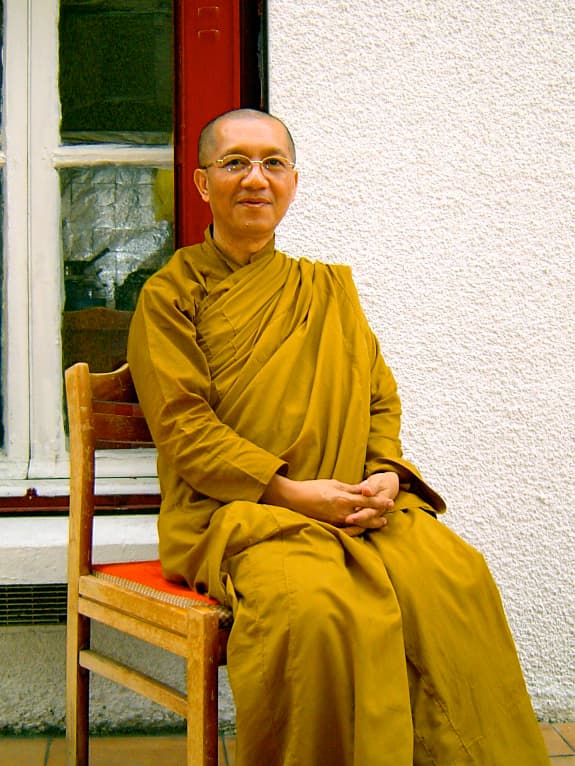
Samdech Preah Sangkhareach Bour Kry is the current Supreme Patriarch of the Thammayut order in Cambodia, born in 1945. He was ordained as a monk in 1963 and dedicated his early years to studying the Pali Canon. Following the Khmer Rouge regime, he fled to France, where he founded the Association Bouddhique Khmer and later established Vatt Khémararam in Créteil, Paris.
Sanghapala
Sanghapala (466–524 CE) was a prominent Khmer monk from Funan, known for his significant contributions to the translation of Buddhist scriptures into Chinese. He is recognized as one of the few Cambodian monks whose translated works are included in the Chinese Tripitaka, particularly his canonical rendering of the Vimuttimagga, or Path to Freedom.
Jayavarman VII
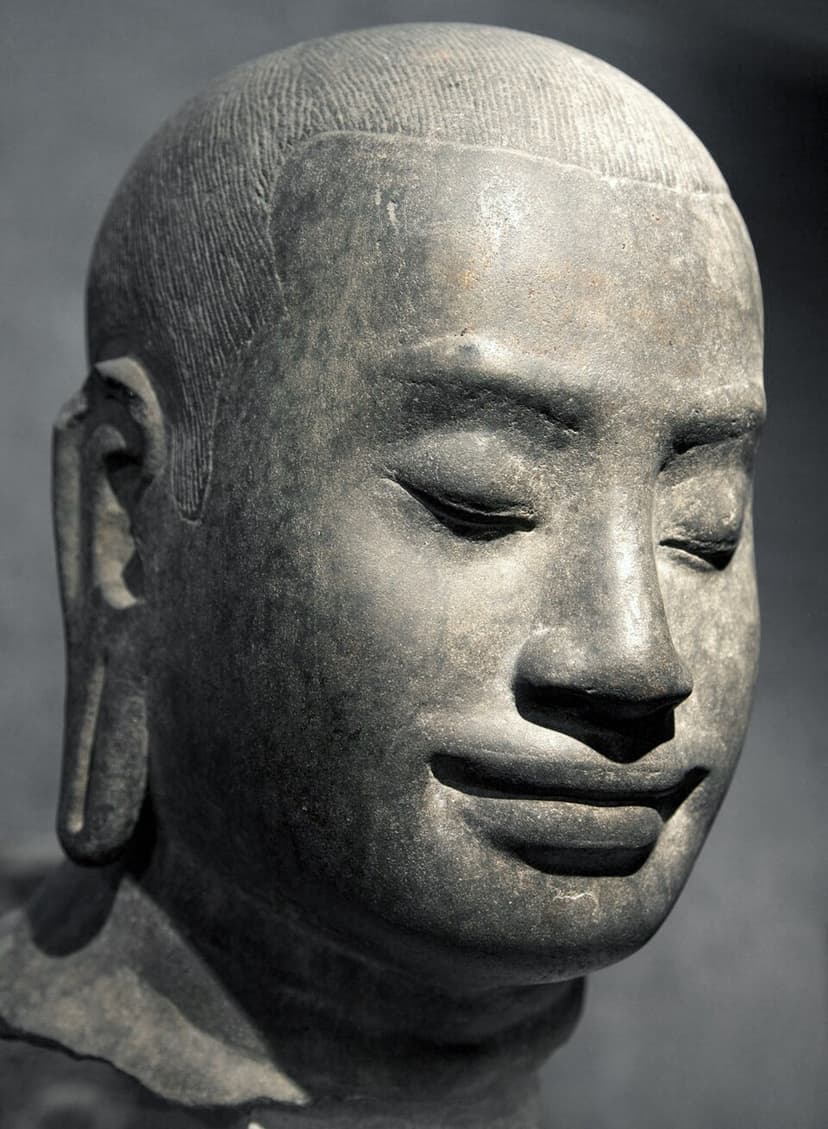
Jayavarman VII was the most powerful monarch of the Khmer Empire, reigning from 1181 to around 1218. As the first Khmer king devoted to Mahayana Buddhism, he initiated a welfare state and commissioned extensive public works, including hospitals and temples, aimed at alleviating human suffering. His reign is marked by monumental construction projects, most notably the Bayon temple and the city of Angkor Thom, and significant military achievements, including the conquest of Champa.