
Nakamura Hajime
Japan·Academic Indologist and Orientalist·Male·20th century
Hajime Nakamura was a prominent Japanese Orientalist, Indologist, and philosopher renowned for his extensive academic work on Vedic, Hindu, and Buddhist scriptures. He is most celebrated in Japan for his complete translation of the Pali Tripitaka into Japanese, which remains a definitive work. Nakamura significantly influenced the study of Indic philosophy in Japan and across Asia through his meticulous scholarship and numerous publications.
Key Facts
- ›Born in Matsue, Shimane Prefecture, Japan.
- ›Translated the entire Pali Tripitaka into Japanese, a work considered definitive.
- ›Professor at Tokyo Imperial University from 1954 to 1973.
- ›Established Toho Gakuin (the Eastern Institute, Inc.) after retiring from academia.
- ›Published over 170 monographs and more than a thousand articles.
- ›Received the Order of Culture from Japan in 1977.
Important Relationships
- Prof. Hakuju Ui
- the Ways of Thinking of Eastern Peoples
- Ways of Thinking of Eastern Peoples: India, China, Tibet, Japan
- A History of Early Vedanta Philosophy. Part One
- A History of Early Vedanta Philosophy. Part Two
- Indian Buddhism: A Survey With Bibliographical Notes
- A Comparative History of Ideas
- Gotama Buddha: A Biography Based On the Most Reliable Texts
Matsue, Shimane Prefecture, Japan, Tokyo Imperial University
Indian Philosophy of Buddhism, Chinese Thought, Japanese Thought, Western Thought
Japanese, English, French, German
Academic, Philosopher, Translator, Orientalist, Indologist
About Nakamura Hajime
Hajime Nakamura
Hajime Nakamura (1912–1999) was a distinguished Japanese Orientalist, Indologist, and philosopher whose scholarly contributions significantly advanced the understanding of Vedic, Hindu, and Buddhist scriptures. He is particularly revered in Japan for undertaking and completing the monumental task of translating the entire Pali Tripitaka into Japanese, a rendition that continues to be considered the benchmark for subsequent translations.
Biography and Academic Career
Born in Matsue, Shimane Prefecture, Nakamura's academic journey led him to Tokyo Imperial University, where he studied under Professor Hakuju Ui. After graduating, he took on a professorial role at the same institution, serving from 1954 to 1973. Following his retirement, Nakamura established Toho Gakuin (The Eastern Institute, Inc.), where he continued to share his profound knowledge of philosophy with the general public.
Scholarly Contributions
A masterful scholar of Sanskrit and Pali, Nakamura authored numerous commentaries on Buddhist scriptures. His translation of the Pali Tripitaka into Japanese was a landmark achievement, noted for its meticulous footnotes referencing various translations in German, English, and ancient Chinese versions of Sanskrit scriptures. This rigorous approach cemented his influence on the study of Indic philosophy in Japan and, by extension, across Eastern and Southern Asia, particularly in Taiwan and Korea, regions where major Buddhist scriptural languages are actively studied by academics.
Influences and Recognition
Nakamura's intellectual landscape was shaped by a confluence of Indian Buddhist philosophy, along with Chinese, Japanese, and Western thought. His work also touched upon contemporary issues, including bioethics. His prolific output, exceeding 170 monographs and over a thousand articles, earned him significant recognition. Among his awards are an Imperial Award from the Japan Academy, the Order of Culture from Japan in 1977, and an honorary degree of Vidya-Vacaspati from the President of India.
Source: Wikipedia ↗
Frequently Asked Questions
What is Hajime Nakamura best known for in Japan?
Hajime Nakamura is best known in Japan as the first person to translate the entire Pali Tripitaka into Japanese. This translation is still regarded as the definitive version, against which other translations are measured.
What was Hajime Nakamura's academic background?
Nakamura was an expert in Sanskrit and Pali. He graduated from Tokyo Imperial University with a study on "The History of Early Vedanta Philosophy" and later became a professor there, specializing in Orientalist and Indologist studies.
What was the impact of Nakamura's academic work?
Nakamura's meticulous approach to translation and his extensive publications had a dominating and lasting influence on the study of Indic philosophy in Japan. He also indirectly impacted the secular scholastic study of Buddhism in Eastern and Southern Asia, including Taiwan and Korea.
What notable awards did Hajime Nakamura receive?
Among his accolades, Hajime Nakamura received an Imperial Award from the Japan Academy for his work on Early Vedanta Philosophy, the Order of Culture in 1977, and an honorary degree of Vidya-Vacaspati from the President of India.
What philosophical traditions influenced Hajime Nakamura?
Nakamura was influenced by Indian philosophy of Buddhism, as well as Chinese, Japanese, and Western thought. He also made remarks on the subject of bioethics.
Related Buddhists
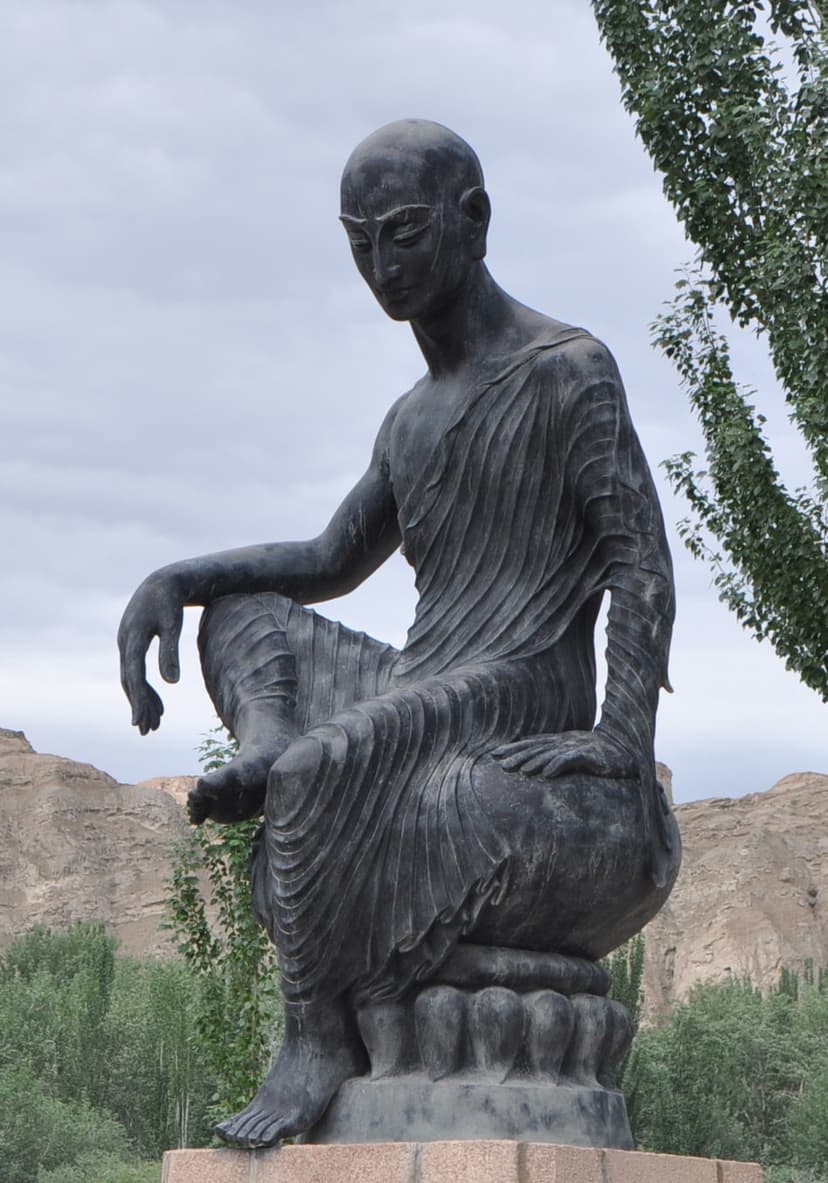
Kumārajīva
Kumārajīva was a pivotal 4th and 5th-century Buddhist monk, scholar, missionary, and translator from Kucha, known for his highly influential translations of Sanskrit Buddhist texts into Chinese. He is credited with introducing the Madhyamaka philosophy to China and his clear, meaning-focused translation style revolutionized Chinese Buddhism, with his renderings remaining in widespread use today.
Joanna Rogers Macy
Joanna Macy was an American environmental activist, author, and scholar renowned for her work integrating Buddhist philosophy, general systems theory, and deep ecology. She developed "The Work that Reconnects," a framework and workshop methodology for personal and social change, addressing psychological and spiritual issues in the face of ecological crises. Her influential book, "Coming Back to Life," guides individuals and communities toward sustainable transformation.
Lance Selwyn Cousins
Lance Selwyn Cousins was a British scholar renowned for his contributions to Buddhist Studies, particularly in the field of Abhidhamma. He played a significant role in making the Pali Canon accessible online and was a prolific translator and editor of Buddhist texts. Beyond academia, Cousins was also a dedicated teacher of Buddhist meditation in the Thai samatha tradition, founding meditation centers and classes across the UK and internationally.