
Myokyo-ni
Austria·Rinzai Zen·Female·20th century
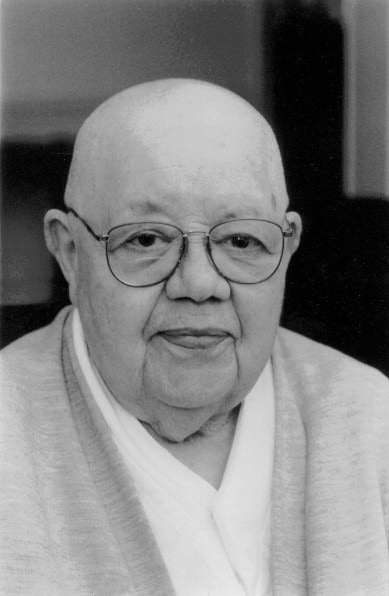
Ven. Myokyo-ni (born Irmgard Schlögl) was a Rinzai Zen Buddhist nun who became the head of the Zen Centre in London. She played a pivotal role in establishing and guiding the Zen Centre and its training temples, Shobo-an and Fairlight, and was known for her writings and translations on Zen Buddhism.
Key Facts
- ›Born Irmgard Schlögl in Styria, Austria, she later became Ven. Myokyo-ni after her ordination.
- ›Trained for twelve years at Daitoku-ji monastery in Japan under Oda Sesso Rōshi and Sojun Kannon Rōshi.
- ›Founded the Zen Centre in London in 1979 and established two training temples, Shobo-an and Fairlight.
- ›Ordained as a nun and teacher in 1984 by Sōkō Morinaga Rōshi.
- ›Authored several books on Zen and Buddhism, and translated important Zen texts.
- ›Posthumously known as Daiyu Myokyo Zenji.
Important Relationships
- Christmas Humphreys
- Ajahn Sumedho
- Wisdom of the Zen Masters
- the Zen Way
- Introducing Buddhism
- Gentling the Bull: the Ten Bull Pictures, A Spiritual Journey
- Living Buddhism
- the Daily Devotional Chants of the Zen Centre
- the Record of Rinzai
- the Ceasing of Notions
- the Discourse On the Inexhaustible Lamp of the Zen School
London, Daitoku-Ji Monastery, Shobo-An, Fairlight, Chithurst Forest Monastery
Oda Sesso RōShi, Sojun Kannon RōShi, SōKō Morinaga RōShi
English
Nun
About Myokyo-ni
Ven. Myokyo-ni (1921-2007)
Ven. Myokyo-ni, born Irmgard Schlögl, was a prominent Rinzai Zen Buddhist nun and spiritual leader. She is widely recognized for her significant contributions to the establishment and growth of Zen Buddhism in Europe, particularly in the United Kingdom.
Life and Historical Context
Born in Austria, Schlögl pursued a Ph.D. in geology before finding her path in Buddhism. She began her Zen practice in London in 1950. Her dedication led her to Japan in 1960, where she underwent intensive training at the renowned Daitoku-ji monastery for twelve years. Upon her return to England, she initiated a Zazen group that eventually evolved into the formal establishment of the Zen Centre in London in 1979.
In 1984, she was ordained as a nun and teacher by Sōkō Morinaga Rōshi, receiving the name Myokyo-ni, meaning 'mirror of the subtle nun.' She was later given the posthumous name Daiyu Myokyo Zenji. Myokyo-ni was also instrumental in establishing two residential training temples: Shobo-an in London and Fairlight in Luton. She lived at Fairlight from 2002 until her death, continuing to guide students and offer teachings.
Major Contributions
Ven. Myokyo-ni was a prolific author and translator of Zen Buddhist texts. Her published works include "Wisdom of the Zen Masters," "The Zen Way," and "Gentling the Bull: The Ten Bull Pictures, a Spiritual Journey." She also played a crucial role in translating key texts such as "The Record of Rinzai" and "The Discourse on The Inexhaustible Lamp of the Zen School." These works have been instrumental in making Zen teachings accessible to a wider audience.
Legacy
Under her guidance, the Zen Centre and its associated temples became important centers for Buddhist practice and study in Europe. Her disciples continue to lead these centers, offering meditation classes and residential facilities, ensuring the continuation of her spiritual lineage. Ven. Myokyo-ni's dedication to practice, scholarship, and teaching has left a lasting impact on the development of Zen Buddhism in the West.
Source: Wikipedia ↗
Frequently Asked Questions
When was Ven. Myokyo-ni born and when did she die?
Ven. Myokyo-ni was born on January 29, 1921, and passed away on March 29, 2007.
What was Ven. Myokyo-ni's birth name and where was she from?
Her birth name was Irmgard Schlögl, and she was raised in Leitersdorf im Raabtal, Styria, Austria.
What is Ven. Myokyo-ni known for in the context of Buddhism?
She is known for being a Rinzai Zen Buddhist nun, the head of the Zen Centre in London, and an author of books on Zen and Buddhism.
Where did Ven. Myokyo-ni train as a Buddhist nun?
She trained at Daitoku-ji monastery in Japan for a total of twelve years under Oda Sesso Rōshi and his successor Sojun Kannon Rōshi.
What significant Buddhist institutions did Ven. Myokyo-ni establish or lead?
She was instrumental in the establishment of the Zen Centre in London in 1979 and founded the training temples Shobo-an and Fairlight.
What are some notable works attributed to Ven. Myokyo-ni?
Her notable works include 'Wisdom of the Zen Masters', 'The Zen Way', and translations such as 'The Record of Rinzai'.
Related Buddhists

Shundo Aoyama
Shundo Aoyama Rōshi is a pioneering Japanese Buddhist nun and abbess within the Soto Zen school. She broke significant barriers by becoming the first nun appointed to the rank of Daikyoshi (Great Teacher) and is recognized for her extensive contributions to the advancement of women in Buddhism and Japanese society. Aoyama Rōshi is known internationally through her students and her advocacy for integrating Buddhist practice with daily life, emphasizing beauty and compassion.
Chân Không
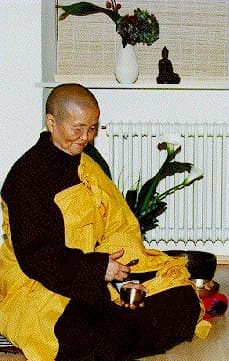
Chân Không, born Cao Ngọc Phương in 1938, is a Vietnamese Bhikkhunī and peace activist. She is recognized as one of the first members of the Order of Interbeing and co-founded the Plum Village Tradition with Thích Nhất Hạnh. Her work has focused on spiritual retreats, peace activism, and social service, particularly in Vietnam and internationally.
Pema Chödrön
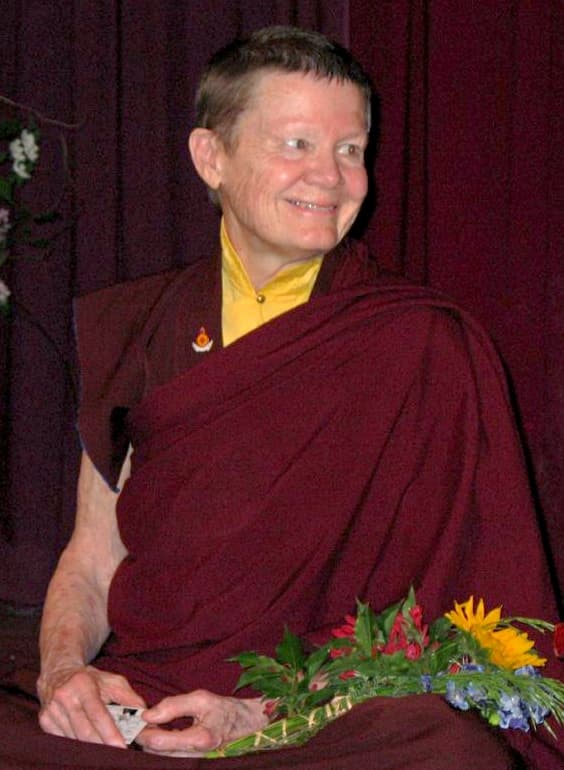
Pema Chödrön, born Deirdre Blomfield-Brown, is an American-born Tibetan Buddhist nun and author. She is renowned for her numerous books and audiobooks on Buddhist philosophy and practice, particularly her interpretations of concepts like "shenpa" (attachment). Chödrön served as a principal teacher at Gampo Abbey in Nova Scotia and was a former acharya of Shambhala Buddhism before retiring from her acharya role in 2020.