
Chân Không
Vietnam·Plum Village Tradition·Female·20th century
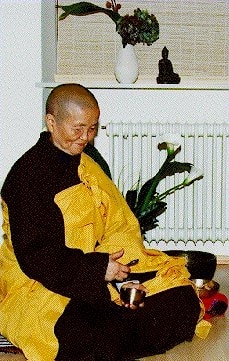
Chân Không, born Cao Ngọc Phương in 1938, is a Vietnamese Bhikkhunī and peace activist. She is recognized as one of the first members of the Order of Interbeing and co-founded the Plum Village Tradition with Thích Nhất Hạnh. Her work has focused on spiritual retreats, peace activism, and social service, particularly in Vietnam and internationally.
Key Facts
- ›Born Cao NgọC Phương in 1938 in Bến Tre, French Indochina.
- ›Co-founder of the Plum Village Tradition and Order of Interbeing with Thích Nhất Hạnh.
- ›Ordained as a Bhikkhunī in 1988 on Vulture Peak, India.
- ›Author of the autobiography "Learning True Love: how I Learned & Practiced Social Change in Vietnam" (1993).
- ›Active in peace activism, including the Buddhist Peace Delegation in Paris.
- ›Central to the School of Youth and Social Service (SYSS) which provided aid in rural Vietnam.
Important Relationships
- Thích Nhất Hạnh
- Order of Interbeing
- Plum Village Tradition
- Nhat Chi Mai
- Learning True Love: How I Learned & Practiced Social Change In Vietnam
- Beginning Anew: Four Steps To Renewing Communication
- Drops of Emptiness
- the Present Moment: A Retreat On the Practice of Mindfulness
- Touching the Earth: the Five Prostrations and Deep Relaxation
Plum Village Monastery, Paris, Vietnam, Mekong Delta, Saigon, Vulture Peak, India
ThíCh NhấT HạNh
Vietnamese, English
Bhikkhunī Vows, Bodhisattva Vows
About Chân Không
Chân Không, born Cao Ngọc Phương in 1938, is a prominent Vietnamese Bhikkhunī (nun) and peace activist. She is widely recognized for her instrumental role in co-founding the Plum Village Tradition and her close collaboration with the revered Buddhist monk Thích Nhất Hạnh. Her work has been central to organizing spiritual retreats and promoting peace activism internationally.
Life and Work
Born in Bến Tre, French Indochina, Chân Không was the eighth of nine children in a middle-class family. Her father instilled in her and her siblings the values of work and humility. She pursued higher education, enrolling in the University of Saigon in 1958 to study biology, where she also became a student leader involved in social action, assisting the poor and sick.
Chân Không first met Thích Nhất Hạnh in 1959 and considered him her spiritual teacher. After completing her biology degree in Paris in 1964, she returned to Vietnam and joined Thích Nhất Hạnh in the founding of Van Hanh University. She played a pivotal role in establishing and operating the School of Youth and Social Service (SYSS), an organization that provided medical, educational, and agricultural support to rural Vietnam during the war, eventually involving over 10,000 young peace workers.
In 1966, Chân Không was ordained as one of the first six members of the Order of Interbeing, taking the name Sister Chân Không, meaning True Emptiness. This name reflects the Buddhist concept of interconnectedness and the absence of a separate self. From 1969 to 1972, she worked with Thích Nhất Hạnh in Paris, organizing the Buddhist Peace Delegation. She was instrumental in establishing the first Sweet Potato community near Paris, followed by the Plum Village Monastery in 1982. She has also organized significant relief efforts for those in need in Vietnam and has been actively involved in teaching and conducting mindfulness practices during retreats and visits to Vietnam.
Writings and Recognition
Chân Không authored her autobiography, "Learning True Love: How I Learned & Practiced Social Change in Vietnam," published in 1993. She has also co-authored several books with Thích Nhất Hạnh, including "Drops of Emptiness" and "The Present Moment."
In 2014, Chân Không represented Thích Nhất Hạnh at a historic meeting where religious leaders from various faiths signed a declaration against modern-day slavery. She continues to be an active participant in promoting peace and mindfulness through her teachings and writings.
Source: Wikipedia ↗
Frequently Asked Questions
Who is Chân Không?
Chân Không, born Cao Ngọc Phương in 1938, is a Vietnamese Bhikkhunī (nun) and peace activist. She is known for her close collaboration with Thích Nhất Hạnh in establishing the Plum Village Tradition and her international work in spiritual retreats and social service.
What is the significance of the Order of Interbeing?
Chân Không was one of the first six members ordained into the Order of Interbeing on February 5, 1966, receiving the name Sister Chân Không, meaning True Emptiness. This order was founded by Thích Nhất Hạnh to bring together monks, nuns, laymen, and laywomen dedicated to peace and engaged Buddhism.
What role did Chân Không play in the School of Youth and Social Service?
Chân Không was instrumental in the founding and operation of the School of Youth and Social Service (SYSS) in Vietnam. This organization established medical, educational, and agricultural facilities in war-torn rural areas, involving over 10,000 young peace workers and rebuilding numerous villages.
What are some of Chân Không's notable works?
Chân Không is the author of her autobiography, "Learning True Love: How I Learned & Practiced Social Change in Vietnam" (1993). She has also co-authored or contributed to several books with Thích Nhất Hạnh, including "Drops of Emptiness" and "Beginning Anew: Four Steps to Renewing Communication."
When and where was Chân Không ordained as a nun?
Sister Chân Không was ordained as a nun by Thích Nhất Hạnh in 1988. The ordination took place on Vulture Peak in India, a significant pilgrimage site in Buddhism.
Related Buddhists
Ajahn Candasiri
Ajahn Candasiri is a senior Theravāda Buddhist monastic and co-founder of Chithurst Buddhist Monastery in England, part of the Ajahn Chah lineage. Ordained as a sīladharā, she holds the highest monastic rank available to women in the Thai Forest Tradition and is recognized as a significant figure in Western Theravāda Buddhism.

Gotamī
Venerable Gotamī, born Martina Catania, is an Italian Theravāda Buddhist nun, author, and meditation teacher. Ordained in 2022, she is known for teaching the Dhamma in multiple languages and for her writings on Buddhist principles and the role of women in Buddhism. She currently resides in Sri Lanka, where she is actively involved in religious outreach and has published an autobiography.

Ayya Sudhamma Bhikkhuni
Ayya Sudhamma Bhikkhuni is an American-born Buddhist nun and the abbess of Charlotte Buddhist Vihara. She is recognized as the first American woman to receive bhikkhuni ordination in Sri Lanka's Theravada tradition. Her significant contributions include co-founding the North American Bhikkhuni Association and being honored as an "Outstanding Woman in Buddhism" at the United Nations.