
Mingun Jetawun Sayādaw
U Nārada, also known as Mingun Jetawun Sayādaw, was a significant Burmese monk in the Theravada tradition who played a crucial role in the revival of Vipassana meditation. His teachings and methods, particularly the "New Burmese Method" later popularized by his students like Mahasi Sayadaw, offered a direct approach to spiritual realization through the practice of Satipaṭṭhāna.
Key Facts
- ›Born January 16, 1869, in Kangyi Kone village, Sagaing, Myanmar.
- ›Ordained as a novice monk at age 14 and as a monk at age 20.
- ›Studied scriptures and literature extensively at various monasteries.
- ›Developed the "New Burmese Method" of Vipassana meditation based on Satipaṭṭhāna.
- ›Authored and compiled 23 books on Buddhist teachings.
- ›Died on March 8, 1955, at the age of 86.
Important Relationships
- Mahasi Sayadaw (student)
- Petakopa Veda Atthakathapatha
- Petakopa Veda Nistha First, Second, Third Volumes
- Sajjeta Vidhi Vissajjana
- Asha Vidhi Vissajjana
- Visuddhi Magga Atthakatha Nistha New
- Forty Forests Opened
- Milinda Panya Atthakathapatha
- Nibbana Katha
- Nibbana Guide Discourse
- Nibbana Treatise
- Satipatthana Treatise
- Satipaisa Yekhao Vinicsayasamuha
- Kathina Vinicsayasa
- Kathina Nistha
- Phala Sama Pata
- Maha Salayatana Sutta Nistha
- Mula Pariyaya Sutta Nistha
- Padapadaraha Vinicya
- Patinyata Karana Vinicya
- Theinchant
- the Great Book of Vipassana Insight
- On the Essence of the Mind
- On the Way of the Atirit
Kangyi Kone, Sagaing, Mandalay, Thaton, Mingun
the Buddha's Teachings
Burmese
Novice Monk, Monk
About Mingun Jetawun Sayādaw
U Nārada (Mingun Jetawun Sayādaw)
U Nārada, also known by the honorific Mingun Jetawun Sayādaw or Mingun Jetavana Sayādaw, was a highly influential Burmese monk within the Theravada Buddhist tradition. He is widely credited as a pivotal figure in the resurgence and popularization of Vipassana meditation in the 20th century. His teachings and the meditation method he developed, later known as the "New Burmese Method" or the "Mahasi method," provided a systematic and direct path to spiritual realization, profoundly impacting contemporary Buddhist practice.
Life and Historical Context
Born in 1869 in Kangyi Kone village, near Sagaing, Myanmar, U Nārada began his religious education at a young age. He was ordained as a novice monk at 14 and later as a full monk at 20. His monastic life was characterized by extensive study of Buddhist scriptures and literature, undertaken at various esteemed monasteries in Mandalay and elsewhere. After years of dedicated study and religious service, he embarked on an intensive period of meditation practice, which led him to develop his unique approach to Vipassana.
Major Contributions
U Nārada's most significant contribution was the formulation of the "New Burmese Method" of Vipassana meditation. Driven by a desire for a direct experience of Buddhist teachings, he meticulously studied and practiced the Satipaṭṭhāna Sutta (The Discourse on the Four Foundations of Mindfulness). From his own profound insights and practice, he derived principles and detailed instructions that formed the basis of a clear and effective method for training the mind, aiming towards liberation. This method emphasized diligent observation of physical and mental phenomena as a direct path to insight.
Legacy
While U Nārada himself was a master practitioner and teacher, his legacy is significantly amplified through his disciples, most notably Mahasi Sayadaw. Mahasi Sayadaw played a crucial role in disseminating U Nārada's meditation techniques both within Myanmar and internationally, making the "New Burmese Method" accessible to a global audience. U Nārada also authored and compiled 23 books, contributing significantly to Buddhist literature. He passed away in 1955, leaving behind a rich tradition of meditation practice that continues to flourish.
Source: Wikipedia ↗
Frequently Asked Questions
Who was U Nārada?
U Nārada, also known as Mingun Jetawun Sayādaw, was a prominent Burmese monk in the Theravada Buddhist tradition. He is recognized as a key figure in the revival of Vipassana meditation and the development of a direct method for spiritual realization.
What is the "New Burmese Method"?
The "New Burmese Method," also known as the "Mahasi method," is a system of Vipassana meditation that U Nārada developed. It emphasizes a direct application of the Satipaṭṭhāna teachings for mental training and achieving spiritual insight.
Who were U Nārada's notable students?
One of U Nārada's most prominent students was Mahasi Sayadaw, who played a significant role in popularizing the "New Burmese Method" of Vipassana meditation internationally.
What was U Nārada's approach to meditation?
U Nārada sought a meditation system offering direct access to the Highest Goal without unnecessary complexities. He found this through a deep study and practice of Satipaṭṭhāna, developing a clear and effective method from his own experience.
What are some of U Nārada's works?
U Nārada compiled and authored 23 books on Buddhist teachings. Notable titles include works on Petakopa Veda, Satipatthana, and Nibbana, as well as "The Great Book of Vipassana Insight."
Related Buddhists
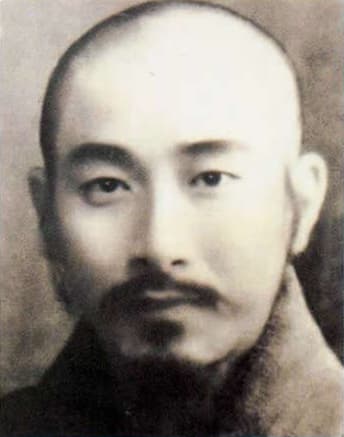
Nan Huai-Chin
Nan Huai-Chin was a prominent Chinese Buddhist monk, religious scholar, and writer who became a major force in the revival of Chinese Buddhism in the contemporary era. He was a highly respected spiritual teacher, particularly influential in Chan and Vajrayana Buddhism, though his fame was largely confined to the Chinese cultural sphere. Nan authored numerous books that achieved significant popularity, selling millions of copies and becoming standard university references.
Sunlun Sayadaw
Sunlun Sayadaw was a prominent Burmese monk and meditation master who, despite not having extensive scriptural studies, developed profound insight through dedicated meditation practice. He is celebrated for his teachings on Samatha, Vipassana, and Paṭṭhāna meditation, offering spiritual guidance to monks, nuns, and laypeople alike. His physical body's preservation after death has become a significant point of veneration.

Mahasi Sayadaw
Mahasi Sayadaw was a prominent Burmese Theravada Buddhist monk and meditation master renowned for popularizing Vipassana (insight) meditation globally. He developed a widely adopted teaching method based on the "New Burmese Method," emphasizing ethical conduct as a foundation for meditation practice. His influence extended across Asia and into the West, training hundreds of thousands of meditators and contributing significantly to Buddhist scholarship.