
Mindon Min
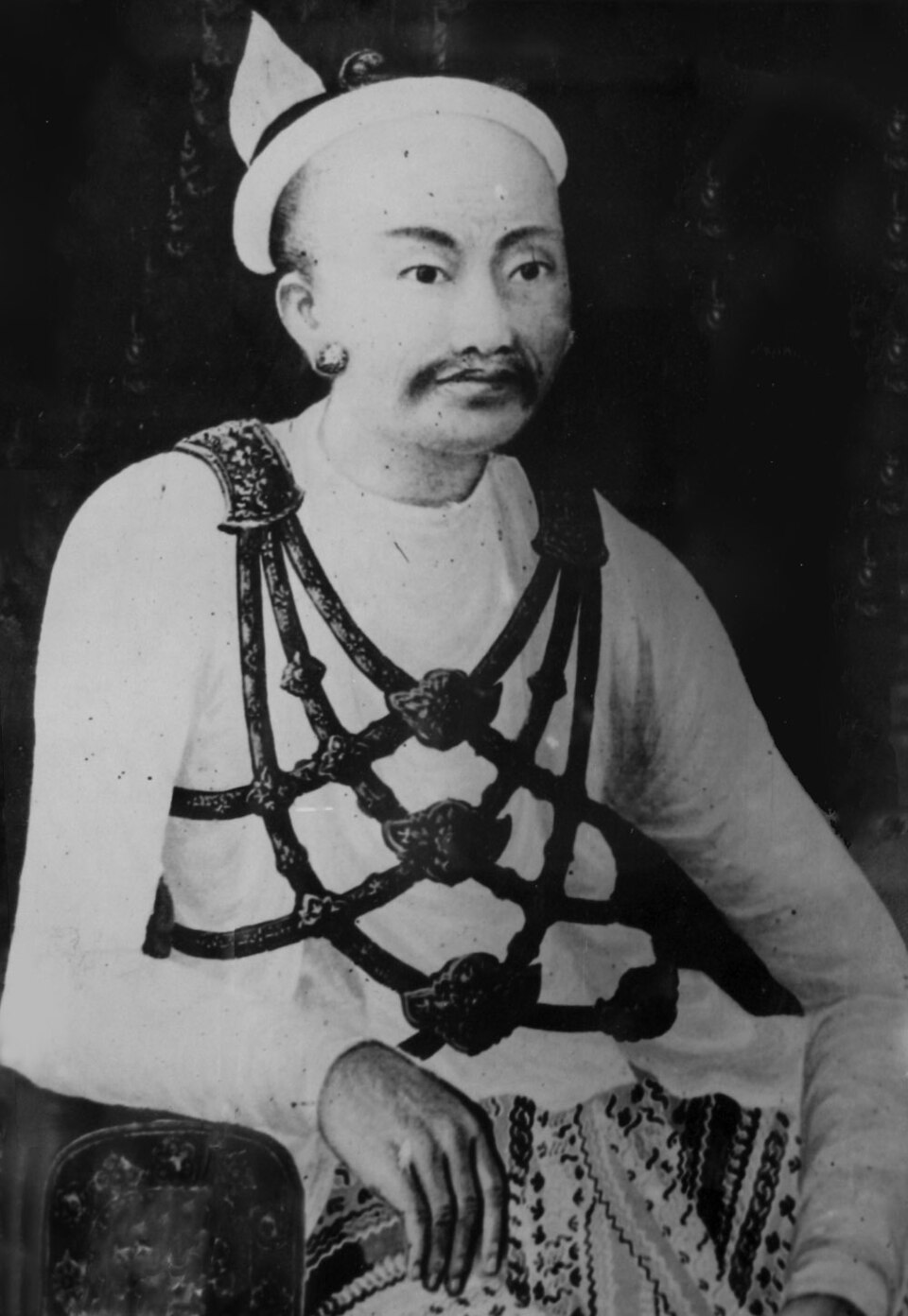
Mindon Min was the penultimate king of Burma, reigning from 1853 to 1878. He is remembered for his efforts to modernize the kingdom, defend against British encroachment, and for convening the Fifth Buddhist Council. His reign saw significant administrative reforms and the founding of the royal capital of Mandalay.
Key Facts
- ›Reigned as the penultimate king of Burma from 1853 to 1878.
- ›Founded the last royal capital of Burma, Mandalay, in 1857.
- ›Convened the Fifth Buddhist Council in Mandalay in 1871.
- ›Introduced the first machine-struck coins to Burma.
- ›Enacted the Seventeen Articles in 1873, an early press freedom law in Southeast Asia.
- ›His reign was marked by efforts to modernize the kingdom's administration, army, and economy.
Important Relationships
- Kanaung Mintha (younger brother)
- King Pagan (half-brother)
- Hsinbyumashin (queen)
- Supayalat (daughter)
- Thibaw Min (son)
Tipitaka
Amarapura, Mandalay, Shwebo, Ava, Yangon
Pali
About Mindon Min
Mindon Min (1808–1878)
Mindon Min, born Maung Lwin, was the penultimate king of Burma (Myanmar), reigning from 1853 to 1878. Revered for his piety and efforts at modernization, his reign was largely dedicated to preserving the sovereignty of upper Burma amidst increasing British colonial pressure following the Second Anglo-Burmese War. He is celebrated for founding the last royal capital, Mandalay, in 1857, and for his commitment to Buddhist scholarship.
Early Life and Accession
Born in 1808, Mindon received his early education at the Maha Zawtika monastic college. He ascended to the throne after a succession struggle with his half-brother, Pagan Min. Mindon, alongside his brother Kanaung Mintha, led a successful overthrow of Pagan Min, who had presided over the disastrous Second Anglo-Burmese War. Mindon's coronation on February 18, 1853, marked the beginning of a reign focused on internal reform and external defense.
Reign and Reforms
Mindon Min's reign was characterized by a strong emphasis on modernization and administrative reform, often in collaboration with his brother Kanaung. Scholars were sent abroad to study advancements in Europe and America, leading to significant changes in Burma's infrastructure, economy, and military. Key reforms included the centralization of administration, the introduction of a salary system for bureaucrats, the establishment of fixed judicial fees and comprehensive penal laws, and the reorganization of the financial system. Trade barriers were removed, and tax systems were reformed to increase direct taxation. Mindon also introduced the first machine-struck coins to Burma.
Religious and Cultural Contributions
Mindon Min was a devout Buddhist and actively promoted religious scholarship. He convened the Fifth Buddhist Council in Mandalay in 1871, an event aimed at purifying and preserving Buddhist teachings. A monumental achievement of his reign was the creation of the world's largest book, the Tipitaka, comprising 729 marble slabs inscribed with Buddhist scriptures, housed in stupas at the Kuthodaw Pagoda. He also donated a jeweled umbrella, or hti, to the Shwedagon Pagoda in Yangon.
Challenges and Legacy
Despite his reform efforts, Mindon Min faced internal challenges, including a palace coup attempt in 1866 by two of his sons, which resulted in the death of Crown Prince Kanaung. His final years were overshadowed by a succession crisis, orchestrated by his queen Hsinbyumashin, which led to the brutal execution of royal heirs to pave the way for her daughter and son-in-law, Thibaw Min, to inherit the throne. Mindon Min's reign, though ending with the eventual annexation of Burma by the British under his successor, is remembered as a period of significant reform, cultural flourishing, and a determined effort to modernize and preserve the Burmese kingdom.
Source: Wikipedia ↗
Frequently Asked Questions
When did Mindon Min reign as king of Burma?
Mindon Min reigned as the penultimate king of Burma from 1853 to 1878.
What significant city did Mindon Min found?
King Mindon founded Mandalay, which became the last royal capital of Burma, in 1857.
What role did Mindon Min play in Buddhism?
Mindon Min was known for his Buddhist devotion and convened the Fifth Buddhist Council in 1871. He also supported scholar-monks and helped build monasteries and missionary schools.
What major reforms did Mindon Min implement?
Mindon Min undertook reforms including centralizing administration, introducing a salary system for the bureaucracy, fixing judicial fees, enacting comprehensive penal laws, reorganizing the financial system, removing trade barriers, reforming taxes, and modernizing the army and police.
What was the outcome of the succession crisis after Mindon Min's reign?
Following Mindon Min's death, his son Thibaw Min succeeded him. King Thibaw was later defeated by the British in the Third Anglo-Burmese War, leading to the total annexation of Burma.
Related Buddhists

Mongkut
Mongkut, posthumously known as King Mongkut the Great, was the King of Siam from 1851 to 1868. He is recognized for initiating significant modernization efforts, embracing Western science and technology, and fostering diplomatic relations, which helped Siam navigate the challenges of Western expansionism. His accurate prediction of a solar eclipse earned him the title "the Father of Science and Technology" in Siam.

Bimbisāra
Bimbisara was a significant king of the Haryanka dynasty in Magadha, reigning from the mid-6th to mid-5th centuries BCE. He is known for his territorial expansion, particularly the annexation of Anga, which laid groundwork for future empires, and for his patronage of Buddhism and Jainism. In Buddhist tradition, he was a devoted follower and friend of the Buddha, while Jain histories refer to him as Shrenika and associate him with Mahavira.
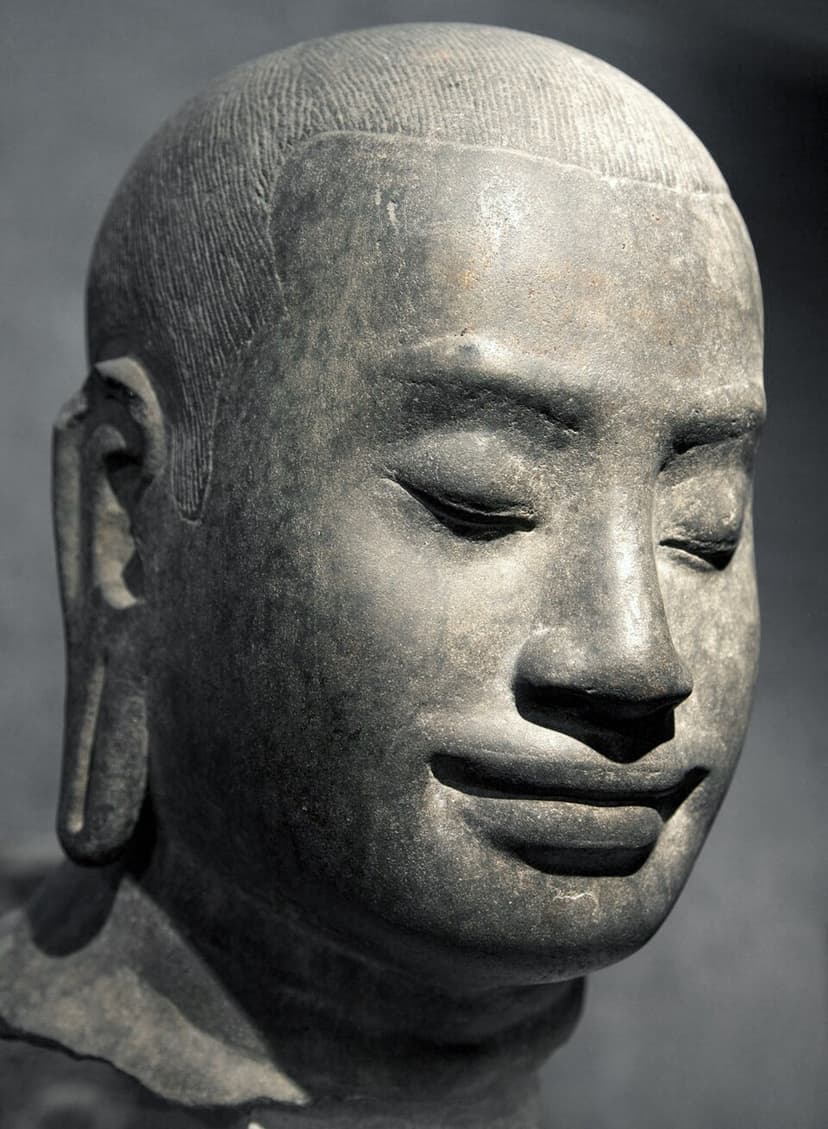
Jayavarman VII
Jayavarman VII was the most powerful monarch of the Khmer Empire, reigning from 1181 to around 1218. As the first Khmer king devoted to Mahayana Buddhism, he initiated a welfare state and commissioned extensive public works, including hospitals and temples, aimed at alleviating human suffering. His reign is marked by monumental construction projects, most notably the Bayon temple and the city of Angkor Thom, and significant military achievements, including the conquest of Champa.