
Migettuwatte Gunananda Thera
Migettuwatte Gunananda Thera was a prominent Sri Lankan Sinhala Buddhist orator renowned for his leadership in debates against Christian missionaries during the 19th century. His eloquent arguments and powerful presence, particularly at the famous Panadura debate, are credited with sparking a significant revival of Buddhism in Sri Lanka and raising international awareness of the faith. He dedicated his life to defending Buddhist principles and promoting Buddhist education and publications.
Key Facts
- ›Led the Buddhist side in significant public debates against Christian missionaries across Sri Lanka.
- ›The Panadura debate in 1873, which he spearheaded, is considered a pivotal event in the revival of Buddhism in Sri Lanka.
- ›His oratorical skills were highly praised, described as witty, eloquent, and possessing a powerful presence.
- ›He published numerous Buddhist periodicals to defend and propagate Buddhist teachings.
- ›Was instrumental in fostering a revival of Buddhist identity and pride among the Sinhala Buddhist community.
- ›Played a role in the design of the Buddhist flag in 1885.

Important Relationships
- Rev. D. J. Gogerly
- Rev. David de Silva
- Catechist S. F. Sirimanna
- John Edwards Hunupola
- Henry Steel Olcott
- Edward Perera
- J.M. Peebles
- Hikkaduwe Sri Sumangala Thera
- Bulatgama Dhammalankara
- Sri Sumanatissa
- Kahawe Nanananda
- Weligama Sri Sumangala
- Pothuwila Gunaratana
- Theosophical Society
Durlabdi Vinodini, Riviresa, Lakmini Kirana, Sathya Margaya
Baddegama, Udanwita, Waragoda, Liyanagemulla, Gampola, Panadura, Colombo, Kotahena, Deepaduttaaramaya, Galle, Balapitiya
Sinhala
Bhikkhu
About Migettuwatte Gunananda Thera
Ven. Migettuwatte Gunananda Thera (1823–1890) was a highly influential Sri Lankan Sinhala Buddhist orator and a pivotal figure in the revival of Buddhism during the 19th century. He gained widespread recognition for leading the Buddhist opposition in a series of public debates with Christian missionaries across various locations in Sri Lanka, including the renowned Panadura debate of 1873.
Life and Historical Context
Born into a prosperous Buddhist family near Balapitiya, his secular name was Wanigamuni Miguel Mendes Wimalarathna. After initial contact with Christian teachings, he ultimately chose the monastic path, being ordained in his twenties. He developed exceptional oratorical skills and a deep understanding of Buddhist philosophy and oriental languages. Upon learning of religious discrimination against Buddhists in Colombo, he relocated to the capital and began actively challenging the arguments presented by Christian missionaries through speeches and publications.
Major Contributions
Gunananda Thera's most significant contribution was his role in the public debates that challenged Christian proselytization. The Panadura debate, in particular, is considered a triumph for Buddhism, not only bolstering the confidence of the Sinhala Buddhist community but also drawing international attention. His eloquent and accessible style of speaking, in contrast to the more academic approach of some opponents, resonated deeply with the public. He also actively promoted Buddhist literature by publishing several periodicals, including 'Riviresa', 'Lakmini Kirana', and 'Sathya Margaya', and contributed to the design of the Buddhist flag in 1885.
Impact and Legacy
The debates led by Gunananda Thera are widely credited with revitalizing Buddhist identity and pride in Sri Lanka. His efforts helped to foster a more robust Buddhist intellectual tradition and inspired subsequent generations of Buddhist activists. The international impact of his debates, particularly the Panadura event, was substantial, contributing to a greater awareness and interest in Buddhism in the Western world, and attracting prominent figures like Colonel Henry Steel Olcott to Sri Lanka.
Source: Wikipedia ↗
Frequently Asked Questions
When and where was Migettuwatte Gunananda Thera born?
Migettuwatte Gunananda Thera was born on February 9, 1823, in a village called Migettuwatta or Mohottiwatta, near Balapitiya, Sri Lanka.
What is Migettuwatte Gunananda Thera most famous for?
He is most famous for leading the Buddhist side in crucial debates against Christian missionaries, most notably the Panadura debate in 1873. These debates are credited with reviving Buddhist confidence and pride in Sri Lanka.
What was the significance of the Panadura debate?
The Panadura debate was a landmark event that significantly revived the identity and pride of Sinhala Buddhists. Internationally, it helped raise awareness of Buddhism in the West, influencing figures like Henry Steel Olcott.
What was Migettuwatte Gunananda Thera's background before becoming a monk?
Born into a wealthy Sinhala Buddhist family, his secular name was Wanigamuni Miguel Mendes Wimalarathna. He initially had contact with a Christian priest but later chose to be ordained as a Buddhist monk.
What other contributions did Migettuwatte Gunananda Thera make to Buddhism?
Besides his debates, he published many Buddhist periodicals such as Riviresa, Lakmini Kirana, and Sathya Margaya. He also served on the committee that designed the Buddhist flag in 1885.
Related Buddhists
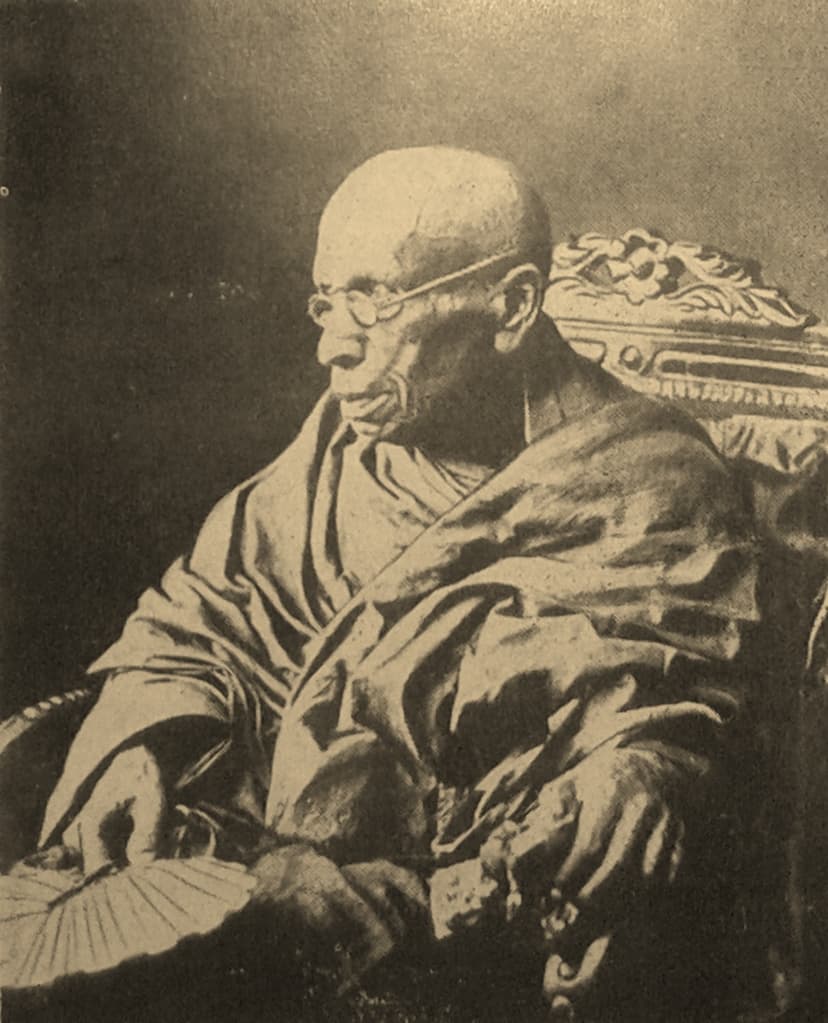
Hikkaduwe Sri Sumangala Thera
Hikkaduwe Sri Sumangala Thera was a pivotal figure in the 19th-century Sri Lankan Buddhist revival movement. He was a prolific author, eloquent orator, and the founder of Vidyodaya Pirivena, which later became a university. His significant role in the Panadurawadaya religious debate further cemented his influence on Buddhist education and reform in Sri Lanka.
Gihwa
Gihwa was a prominent Korean Buddhist monk and leading figure during the transition from the Goryeo to the Joseon dynasties. Initially a respected Confucian scholar, he converted to Buddhism in his early twenties and became a disciple of National Teacher Muhak. Gihwa is known for synthesizing Seon (Zen) and Gyo (scriptural) traditions, authoring influential commentaries on key Buddhist sutras, and vigorously defending Buddhism against Neo-Confucian criticisms.
Henry Steel Olcott
Colonel Henry Steel Olcott was an American military officer, journalist, lawyer, and Freemason who became a co-founder and the first president of the Theosophical Society. He is distinguished as the first well-known American of European descent to formally convert to Buddhism, playing a significant role in the revival of Buddhism in Sri Lanka and promoting Buddhist modernism through his writings and educational initiatives.