
Menander I
Indian Subcontinent·Greco-Buddhism·Male·2nd century BC
Menander I Soter, also known as Menander the Great, was a significant Indo-Greek king who reigned in the northwestern Indian subcontinent and Central Asia. He is renowned for his military conquests, which possibly surpassed those of Alexander the Great in India, and for becoming a prominent patron of Greco-Buddhism. His conversations with the Buddhist sage Nagasena are famously recorded in the "Milinda Panha," solidifying his legacy as a key figure in the syncretism of Greek and Buddhist cultures.
Key Facts
- ›Reigned as an Indo-Greek king from approximately 165/155 to 130 BC.
- ›Administered a vast territory stretching from the Kabul River to the Ravi River and from the Swat River valley to Arachosia.
- ›Considered the greatest and most famous of the Indo-Greek kings.
- ›Became a significant patron of Greco-Buddhism.
- ›His dialogues with the Buddhist sage Nagasena are documented in the influential "Milinda Panha."
- ›Left behind an extensive corpus of coins, indicating a long reign and flourishing commerce.

Important Relationships
- Nagasena
- Agathoclea
- Strato I
- Demetrius I
- Eucratides I
- Zoilos I
Milinda Panha
Sagala, Taxila, Kabul River Region, Ravi River Region, Swat River Valley, Arachosia, Pataliputra, Alexandria of the Caucasus, Mathura
Pali, Ancient Greek
Monarch, Historical Figure, Influential Ruler
About Menander I
Menander I Soter
Menander I Soter, often referred to as Menander the Great, was an Indo-Greek king who reigned from approximately 165/155 to 130 BC. He is widely regarded as the most significant and well-known ruler of the Indo-Greek kingdoms, administering a vast territory that spanned parts of the northwestern Indian subcontinent and Central Asia. Menander I is particularly celebrated for his extensive military campaigns, which ancient sources suggest were more far-reaching than those of Alexander the Great within India. His reign marked a period of flourishing commerce, evidenced by the large numbers of his coins that have been discovered.
Greco-Buddhism and the "Milinda Panha"
A pivotal aspect of Menander I's legacy is his role as a patron of Greco-Buddhism. His intellectual engagement with Buddhist philosophy is famously documented in the classical Pali text, the "Milinda Panha" (The Questions of King Milinda). This influential work records the profound discussions between Menander, referred to as King Milinda, and the Buddhist sage Nagasena. Through these dialogues, Menander I is depicted as a seeker of wisdom, exploring the tenets of Buddhism, and his embrace of the faith, whether historical or traditional, has deeply influenced Buddhist thought.
Reign and Legacy
Menander I's empire extended from the Kabul River in the west to the Ravi River in the east, and from the Swat River valley in the north to Arachosia in the south. Ancient Indian writers indicate expeditions southward into Rajputana and as far east as Pataliputra. His capital is believed to have been Sagala, a prosperous city in northern Punjab. Following his death in 130 BC, his kingdom fragmented. While Buddhist tradition states he abdicated in favor of his son, historical accounts suggest his wife Agathoclea ruled as regent. Menander I's enduring influence is seen not only in his military and political achievements but also in his significant contribution to the cultural and religious synthesis of the Hellenistic and Indian worlds.
Source: Wikipedia ↗
Frequently Asked Questions
Who was Menander I?
Menander I Soter, also known as Menander the Great, was an Indo-Greek king who ruled a large territory in the northwestern Indian subcontinent and Central Asia. He is remembered for his military achievements and his patronage of Buddhism.
What is Menander I known for regarding Buddhism?
Menander I is celebrated for his patronage of Greco-Buddhism. His philosophical discussions with the Buddhist sage Nagasena are recorded in the "Milinda Panha," a significant text that explores Buddhist teachings through the lens of a Greek king.
What was the extent of Menander I's empire?
Menander I's empire was extensive, encompassing regions from the Kabul River in the west to the Ravi River in the east, and from the Swat River valley in the north to Arachosia in the south. Ancient accounts suggest his conquests may have reached as far south as Rajputana and central India, and eastward to Pataliputra.
What is the "Milinda Panha"?
The "Milinda Panha," meaning "The Questions of King Milinda," is an influential Buddhist text that records the dialogues between King Milinda (Menander I) and the Buddhist sage Nagasena. It is written in Pali and explores complex Buddhist philosophical concepts.
How did Menander I die?
Historical accounts differ on the circumstances of Menander I's death. Buddhist tradition suggests he handed over his kingdom to his son and retired from the world. However, Plutarch states that he died in camp while on a military campaign, and his remains were divided among cities for burial.
What is the significance of Menander I's coins?
Menander I issued a vast number of silver and bronze coins, more than any other Indo-Greek king. These coins are a primary source for understanding his reign, indicating the prosperity of his realm, the duration of his rule, and the fusion of Indian and Greek numismatic standards.
Related Buddhists

Bimbisāra
Bimbisara was a significant king of the Haryanka dynasty in Magadha, reigning from the mid-6th to mid-5th centuries BCE. He is known for his territorial expansion, particularly the annexation of Anga, which laid groundwork for future empires, and for his patronage of Buddhism and Jainism. In Buddhist tradition, he was a devoted follower and friend of the Buddha, while Jain histories refer to him as Shrenika and associate him with Mahavira.
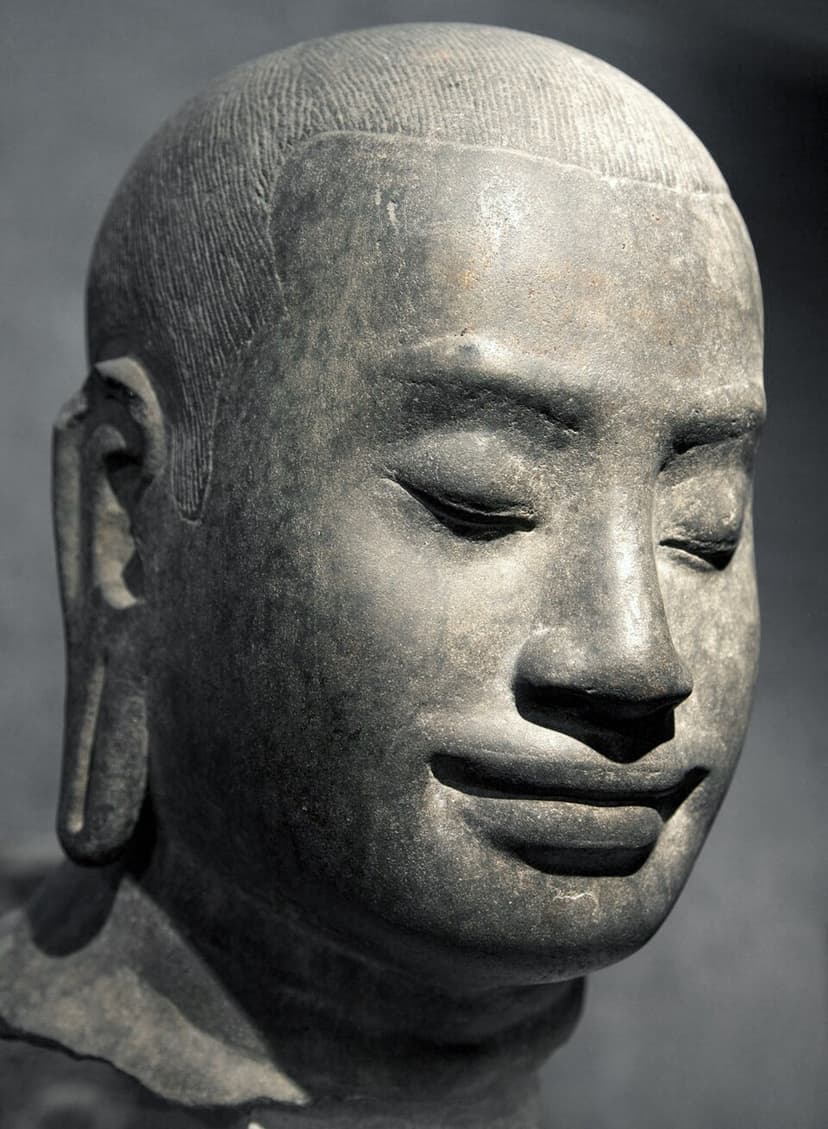
Jayavarman VII
Jayavarman VII was the most powerful monarch of the Khmer Empire, reigning from 1181 to around 1218. As the first Khmer king devoted to Mahayana Buddhism, he initiated a welfare state and commissioned extensive public works, including hospitals and temples, aimed at alleviating human suffering. His reign is marked by monumental construction projects, most notably the Bayon temple and the city of Angkor Thom, and significant military achievements, including the conquest of Champa.
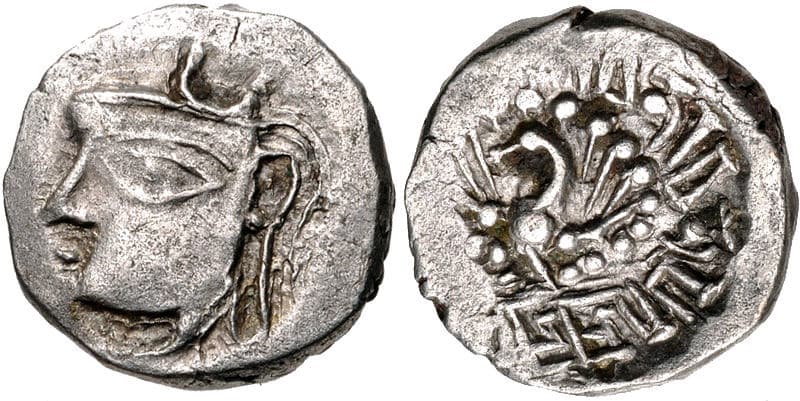
Harsha
Harshavardhana, also known as Harsha, was an emperor who ruled from Kannauj starting in 606 CE until his death in 647 CE. He is recognized as one of the most significant kings of northern India, expanding his empire to encompass much of the region. His court was a center of learning and culture, attracting scholars and religious figures from across Asia, and he is remembered for his justice and generosity.