
Mahākāśyapa
Mahākāśyapa was a principal disciple of Gautama Buddha, renowned for his foremost ascetic practices and recognized as an enlightened master. Following the Buddha's death, he assumed leadership of the monastic community, presiding over the First Buddhist Council. He is considered the first patriarch in several early Buddhist schools and played a crucial role in establishing a stable monastic tradition, symbolizing the continuity of Buddhist teachings.
Key Facts
- ›Foremost disciple of Gautama Buddha, recognized for ascetic practice.
- ›Presided over the First Buddhist Council after the Buddha's parinirvāṇa.
- ›Considered the first patriarch in several Early Buddhist schools.
- ›Exchanged robes with the Buddha, symbolizing the transmission of teachings.
- ›Known for his strict adherence to ascetic practices and compassion for the poor.
- ›Believed to have entered suspended animation in a cave awaiting Maitreya Buddha.

Important Relationships
- Gautama Buddha
- Ānanda
- Bhadra-Kapilānī
- Śāriputra
- Śroṇa-Koṭikarṇa
- Maitreya Buddha
- Discources Attributed To MahāKāśYapa In SaṃYutta NikāYa and SaṃYukta āGama
Magadha, KukkuṭApāDa Mountain
Pali, Sanskrit, Chinese
Ascetic Practices
Enlightened Disciple, Patriarch
About Mahākāśyapa
Mahākāśyapa, also known as Mahākassapa in Pali, was a principal disciple of Gautama Buddha and is revered as an enlightened master, particularly foremost in ascetic practices. He played a pivotal role in the early Buddhist community, assuming leadership after the Buddha's parinirvāṇa (death) and presiding over the First Buddhist Council. Mahākāśyapa is considered the first patriarch in several Early Buddhist schools and is instrumental in the lineage of the Chan/Zen tradition.
Life and Historical Context
Born Pippali into a wealthy Brahmana family in Magadha, Mahākāśyapa, along with his wife Bhadra-Kapilānī, aspired to a celibate life and renounced worldly professions. After meeting the Buddha, Pippali was ordained and became known as Kāśyapa, later distinguished as Mahākāśyapa due to his eminence. He famously exchanged his ragged robe with the Buddha, a symbolic act signifying the transmission of Buddhist teachings and his future leadership.
Mahākāśyapa embraced thirteen ascetic practices, including living in the wilderness and subsisting on alms, which led him to attain enlightenment within nine days. He was praised by the Buddha for his asceticism and his capacity to inspire faith in lay followers. Despite his stern and aloof reputation, he exhibited compassion for the poor and took an active interest in community matters and teaching, sometimes leading to disputes with other disciples, most notably Ānanda.
Contributions and Legacy
Mahākāśyapa's leadership and emphasis on monastic discipline were crucial in establishing a stable monastic tradition in the early Buddhist community. He is seen as a symbol of the continuity of the Buddha's dispensation. In later traditions, it is believed that Mahākāśyapa entered a state of suspended animation in a cave, awaiting the arrival of Maitreya Buddha, a narrative that has inspired various cults and practices.
His teachings, often characterized by strictness and a focus on ascetic values, were sometimes met with criticism, particularly from nuns, due to his selective teaching style. However, he also mentored his former wife, Bhadra, who became a bhikkhunī and attained arhatship. Mahākāśyapa's life and teachings continue to be studied by scholars, who analyze his role in early Buddhism and the historical development of monastic traditions. He is often depicted in Buddhist art as a symbol of reassurance and hope for the future of Buddhism.
Source: Wikipedia ↗
Frequently Asked Questions
Who was Mahākāśyapa?
Mahākāśyapa was one of Gautama Buddha's principal disciples, highly regarded for his asceticism and recognized as an enlightened master. He played a significant role in the early Buddhist community after the Buddha's passing.
What is Mahākāśyapa most known for?
He is most known for being foremost in ascetic practice and for assuming leadership of the monastic community after the Buddha's death. The exchange of robes with the Buddha, symbolizing the transmission of teachings, is also a key aspect of his recognition.
What was Mahākāśyapa's role after the Buddha's death?
After Gautama Buddha's parinirvāṇa (death), Mahākāśyapa assumed leadership of the monastic community and presided over the First Buddhist Council. He was instrumental in establishing a stable monastic tradition for the first twenty years.
What is the significance of the robe exchange between the Buddha and Mahākāśyapa?
The exchange of the Buddha's ragged robe with Mahākāśyapa was a gesture of great respect and a symbol of the transmittance of Buddhist teaching. It signified Mahākāśyapa's role in safeguarding the teachings and ensuring the continuity of the Buddha's dispensation.
What was Mahākāśyapa's relationship with Ānanda?
Mahākāśyapa and Ānanda were fellow disciples, with Ānanda being the Buddha's attendant. Early texts often depict Mahākāśyapa as critical of Ānanda, sometimes leading to disputes, possibly due to their differing dispositions and views on monastic discipline and community matters.
What is the legend surrounding Mahākāśyapa's death?
According to post-canonical texts, Mahākāśyapa chose to enter a state of suspended animation in a cave under Kukkuṭapāda mountain, with his body remaining intact. This is believed to ensure his presence until the arrival of Maitreya Buddha.
Related Buddhists
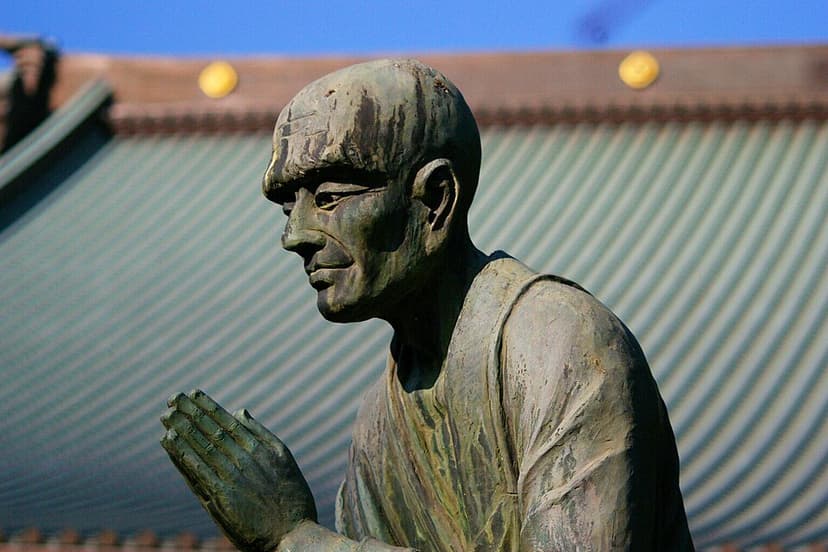
Ippen
Ippen Shōnin was a highly influential Japanese Buddhist itinerant preacher (hijiri) of the 13th century, known for founding the Ji-shū ("Time sect") movement. His teachings emphasized salvation through the single-minded invocation of Amida Buddha's Name, believing that each recitation instantly united the practitioner with the Buddha's timeless enlightenment. Ippen's radical vision and ecstatic practices, including the "dancing nembutsu," attracted a broad following across all social classes and significantly shaped medieval Japanese Pure Land Buddhism.
Citta
Upāsaka Citta was a prominent male lay disciple of the Buddha, alongside Hatthaka of Alavi, and is recognized as the foremost among lay followers in teaching the Dharma. A wealthy merchant from Savatthi, Citta achieved the status of an Anāgāmi (Non-Returner) and demonstrated a profound understanding of Buddhist teachings through his own practice and enlightened experience.
Aśvajit
Aśvajit was one of the first five arhants, or enlightened disciples, of Gautama Buddha. He is particularly known for his role in converting Śāriputra and Maudgalyāyana, who became the Buddha's chief male disciples. Aśvajit lived in northern India during the 6th century BCE.