
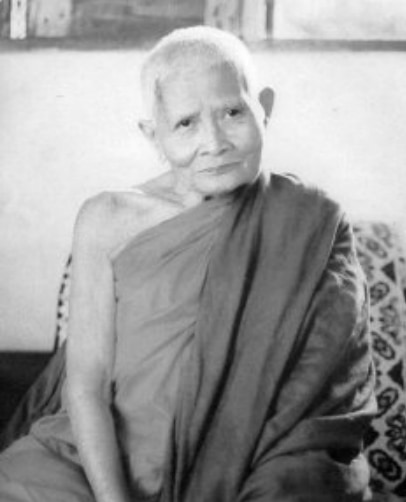
Luang Pu Waen Suciṇṇo
Luang Pu Waen Suciṇṇo was a prominent Thai Buddhist monk and a significant figure within the Thai Forest Tradition. Known for his ascetic practices, preference for seclusion, and his unique metaphorical teachings, he gained widespread popularity after an incident where he was reportedly seen meditating in the sky. Despite his aversion to fame, his spiritual presence attracted royal devotion and a large following.
Key Facts
- ›He was a monk in the Thai Forest Tradition.
- ›He practiced as a Thudong monk, living in seclusion and forests.
- ›He used the metaphor of 'Drunken Dhamma' to describe the past and future, advising focus on the present moment.
- ›His popularity surged after a report of him meditating in the sky.
- ›King Bhumipol became a devoted follower.
- ›He lived at Wat Doi Mae Pang until his death.
Important Relationships
- Ajahn Mun
- King Bhumipol
- Tan Chao Khun Upālī Guṇūpamājaan
- Phra Ajaan Noo Sucitto
Wat Doi Mae Pang, Wat Saang Taw
Ajahn Mun
Bhikkhu
Popular Figure
About Luang Pu Waen Suciṇṇo
Luang Pu Waen Suciṇṇo (1887–1985) was a highly respected Buddhist monk in Thailand, recognized as a significant figure within the Thai Forest Tradition. He dedicated his life to ascetic practices, preferring solitude and forest dwelling as a Thudong monk. Despite his aversion to worldly recognition, his spiritual depth and unique teachings led to widespread fame, notably after an incident where he was reportedly seen meditating in the sky, attracting royal patronage, including that of King Bhumipol.
Early Life and Ordination
Born in 1887, Luang Pu Waen took novice ordination at the age of nine. He received some early education in Buddhist scriptures before undertaking full Bhikkhu ordination. His early monastic life involved studying practices like the mūla-kachai, which later became less common.
Spiritual Path and Teachings
Luang Pu Waen sought out spiritual guidance and eventually met Ajahn Mun, who became an influential teacher. He later reordained within the Dhammayuttika Nikaya tradition. A core aspect of his teachings was the metaphor of 'Drunken Dhamma,' which he used to describe the mind's preoccupation with the past and future, contrasting it with the 'Straight Dhamma' of the present moment. He explicitly stated his disinterest in lay people, novices, and nuns, viewing such interests as solely for gain, praise, and fame.
Renown and Later Life
Luang Pu Waen lived much of his life as a hidden figure practicing in forests until an extraordinary event brought him national attention. A royal Thai air-force pilot reported seeing him meditating in the sky, an incident that propelled him to immense popularity. This led to him residing at Wat Doi Mae Pang, where he was cared for until his death in 1985 due to health complications. The abbot of Wat Doi Mae Pang later had to manage the influx of visitors seeking his blessings.
Legacy
Luang Pu Waen's legacy is marked by his austere lifestyle, profound spiritual attainment, and the widespread devotion he inspired. He left behind a significant number of disciples, including prominent monks who continued to spread his teachings and the traditions of the Thai Forest Tradition.
Source: Wikipedia ↗
Frequently Asked Questions
Who was Luang Pu Waen Suciṇṇo?
Luang Pu Waen Suciṇṇo was a revered Buddhist monk in Thailand, associated with the Thai Forest Tradition. He was known for his ascetic lifestyle and spiritual teachings.
What is Luang Pu Waen known for?
He is known for his life dedicated to solitary forest practice as a Thudong monk, his metaphorical teachings on 'Drunken Dhamma,' and his unexpected rise to popularity after an incident involving a royal air-force pilot.
What was Luang Pu Waen's teaching on 'Drunken Dhamma'?
Luang Pu Waen used 'Drunken Dhamma' as a metaphor for the past and future, suggesting that dwelling on them leads to intoxication or delusion. He advised followers to focus on the 'Straight Dhamma' of the current moment.
How did Luang Pu Waen become so popular?
Luang Pu Waen gained significant popularity after a royal Thai air-force pilot spotted him meditating in the sky. This event, despite his disinterest in fame, made him a widely recognized monk in Thailand.
Who were some of Luang Pu Waen's important disciples?
Some of his notable disciples included Somdet Phra Mahawirawong, Phra Ratcha Udommongkhon, and Phra Khru Chittawisothanachan (Phra Ajarn Nu Sujitto), among many others listed in historical records.
Related Buddhists

Ajahn Chah
Ajahn Chah was a highly respected Thai Buddhist monk and a pivotal figure in the modern Thai Forest Tradition. He is renowned for his profound teachings on the Dhamma and his instrumental role in establishing Theravada Buddhism in the West through the monasteries he founded. His legacy includes a vast collection of recorded dhamma talks and a global network of students and monastic communities.

Ajahn Maha Bua
Ajahn Maha Bua was a highly respected Thai Buddhist monk and a prominent figure in the Thai Forest Tradition. Many followers believed him to be an arahant, an enlightened being, and he was considered the head monk of the tradition for many years. He was known for his direct and dynamic Dhamma talks, which focused on Buddhist meditation and the ultimate aim of ending suffering.
Phra Chanda Thawaro
Phra Chanda Thawaro, also known as Ajahn Chanda or Luang Pu Chanda Thawaro, was a highly regarded Thai Buddhist monk of the late 20th and early 21st centuries. He was a disciple of the forest master Ajahn Mun Bhuridatta and was himself considered a master within the Thai Forest Tradition. Phra Chanda Thawaro was widely venerated as an Arahant, a living Buddhist saint.