
Luang Pu Sodh Candasaro
Thailand·Dhammakaya·Male·20th century
Luang Pu Sodh Candasaro, also known as Phramongkolthepmuni, was a prominent Thai Buddhist monk and abbot of Wat Paknam Bhasicharoen. He is credited with founding the Thai Dhammakaya school and is considered by his tradition to have rediscovered Vijja Dhammakaya, a meditation method believed to have been used by the Buddha. Luang Pu Sodh played a significant role in developing Thai Buddhism during the interbellum and WWII, ordaining the first Western Buddhist monks and influencing key female Buddhist leaders.
Key Facts
- ›Founded the Thai Dhammakaya school in the early 20th century.
- ›Served as abbot of Wat Paknam Bhasicharoen from 1916 until his death in 1959.
- ›Believed to have rediscovered the meditation method Vijja Dhammakaya.
- ›Ordained the first Western Buddhist monks in modern Thai history.
- ›Was a meditation master to Maechi Chandra Khonnokyoong and Voramai Kabilsingh.
- ›Played a role in introducing Theravada Buddhism to the West.

Important Relationships
- Maechi Chandra Khonnokyoong
- Voramai Kabilsingh
- William Purfurst (Kapilavaḍḍho)
Wat Paknam Bhasicharoen, Suphan Buri, Bangkok
Pali
Bhikkhu
Monk, Historically Significant Figure
About Luang Pu Sodh Candasaro
Luang Pu Sodh Candasaro (10 October 1884 – 3 February 1959), also widely known by his honorific title Phramongkolthepmuni, was a highly influential Thai Buddhist monk and abbot. He is most renowned for founding the Thai Dhammakaya school and for his role in reviving and propagating the meditation method known as Vijja Dhammakaya, which his tradition believes was rediscovered from ancient Buddhist teachings.
Life and Historical Context
Born Sodh Mikaewnoi into a merchant family in Suphan Buri, Luang Pu Sodh developed an early familiarity with Buddhism through his uncle. After a period managing his family's rice business following his father's death, he felt a strong calling to monastic life. He was ordained at Wat Songpinong, receiving the Pali name Candasaro. His early monastic years were marked by extensive study of Buddhist scriptures and meditation practices across prominent Bangkok temples, including Wat Pho, Wat Arun, and Wat Mahadhatu.
Luang Pu Sodh's spiritual journey led him to Wat Paknam Bhasicharoen in 1916, where he was appointed caretaker abbot and soon after, full abbot. He transformed the neglected temple into a vibrant center of Buddhist learning and practice, establishing a school for Buddhist studies and significantly improving the temple's infrastructure and community. He enforced strict monastic discipline and emphasized the development of practitioners, cultivating a large community of monks and mae chis (nuns).
Major Contributions
The cornerstone of Luang Pu Sodh's legacy is his rediscovery and teaching of Dhammakaya meditation. He described a profound meditative experience in 1916, where he perceived a luminous sphere of light at the center of his body, which he identified as the Dhammakaya—the spiritual essence of the Buddha and nirvana. He dedicated the remainder of his life to teaching this method, which he also termed Vijja Dhammakaya, or 'direct knowledge of the Dhammakaya.'
Luang Pu Sodh was also a pioneer in introducing Buddhism and its meditation practices to the Western world. He ordained the first Western monks in modern Thai history, notably William Purfurst (Kapilavaḍḍho), who played a crucial role in establishing the Theravada Sangha in Britain. He also mentored prominent female Buddhist leaders such as Maechi Chandra Khonnokyoong, founder of Wat Phra Dhammakaya, and Voramai Kabilsingh, a key figure in the Thai Bhikkhuni ordination movement.
Legacy
Beyond meditation, Luang Pu Sodh fostered Buddhist scholarship by establishing a Pāli Institute at Wat Paknam. He also contributed to national projects, including the construction of Phutthamonthon. His teachings and the Dhammakaya tradition he founded continue to influence Buddhist practice both in Thailand and internationally. His body was embalmed after his death, allowing devotees to continue paying respects at his coffin, a testament to his enduring spiritual significance.
Source: Wikipedia ↗
Frequently Asked Questions
Who was Luang Pu Sodh Candasaro?
Luang Pu Sodh Candasaro (1884–1959) was a Thai Buddhist monk, abbot of Wat Paknam Bhasicharoen, and founder of the Thai Dhammakaya school. He was a renowned meditation master who significantly influenced Thai Buddhism in the mid-20th century.
What is Vijja Dhammakaya?
Vijja Dhammakaya is a meditation method that Luang Pu Sodh Candasaro is believed to have rediscovered. The Dhammakaya tradition holds that this method was originally used by the Buddha himself to attain enlightenment.
What was Luang Pu Sodh's role at Wat Paknam Bhasicharoen?
Luang Pu Sodh became the abbot of Wat Paknam Bhasicharoen in 1916 and served until his death in 1959. Under his leadership, the neglected temple transformed into a significant center for meditation teaching and Buddhist studies, housing hundreds of monks and a community of mae chis (nuns).
How did Luang Pu Sodh contribute to the spread of Buddhism in the West?
Luang Pu Sodh was instrumental in introducing Theravada Buddhism and Dhammakaya meditation to the West. He ordained the first Western Buddhist monks, including William Purfurst (Kapilavaḍḍho), who later helped establish the first English Theravada Sangha.
Who were some of Luang Pu Sodh's notable students?
Two of Luang Pu Sodh's most prominent students were Maechi Chandra Khonnokyoong, who founded Wat Phra Dhammakaya, and Voramai Kabilsingh, a leader in the modern Thai Bhikkhuni ordination movement and founder of Songdhammakalyani Monastery.
Related Buddhists
Phra Ajaan Thate Desaransi
Phra Ajaan Thate Desaransi was a highly respected Thai Buddhist monk and meditation master, considered a first-generation student of the Thai Forest Tradition. He was a disciple of Ajahn Mun and, following his teacher's death, became the head of the lineage until his own passing. Ajaan Thate was renowned for his humility, his profound insights into meditation, and his efforts to establish Buddhist centers and support local communities.
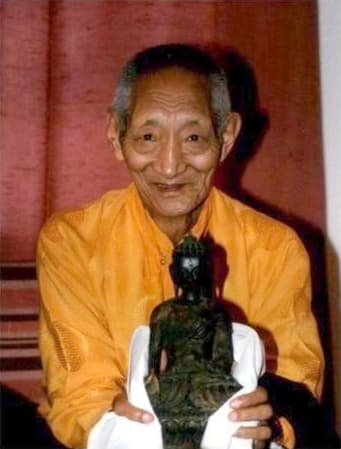
Kalu Rinpoche
Kalu Rinpoche was a highly respected Tibetan Buddhist lama, meditation master, scholar, and teacher, notable for being one of the first Tibetan masters to teach in the West. He played a significant role in transmitting the teachings of the Shangpa Kagyu lineage and established numerous centers for Buddhist practice globally.

Mahasi Sayadaw
Mahasi Sayadaw was a prominent Burmese Theravada Buddhist monk and meditation master renowned for popularizing Vipassana (insight) meditation globally. He developed a widely adopted teaching method based on the "New Burmese Method," emphasizing ethical conduct as a foundation for meditation practice. His influence extended across Asia and into the West, training hundreds of thousands of meditators and contributing significantly to Buddhist scholarship.