
Jyotipal Mahathero
Jyotipal Mahathero (1914–2002) was a distinguished Bangladeshi Buddhist monk and the 10th Sangharaja (supreme patriarch) of Buddhists in Bangladesh. He is recognized for his profound intellect in Buddhist teachings, establishing numerous educational centers, and fostering interfaith harmony. His written works and instructive model continue to influence Buddhist scholarship and research.
Key Facts
- ›Born on January 5, 1914, in Comilla District, Bangladesh.
- ›Initiated as a monk in 1933 and ordained in 1937.
- ›Founder of several charitable organizations and educational institutions.
- ›Served as the 10th Sangharaja (supreme patriarch) of Buddhists in Bangladesh.
- ›Received the title of World Citizen from the United Nations in 1995.
- ›Died on April 12, 2002, and was buried with full state honors.
Important Relationships
- United Nations
- Government of Myanmar
- Nalanda Vidya Bhavana
- Books For the Better Understanding of the Buddha's Teachings
Comilla District, Laksam Upazila, Kemtali, Pahartali Mahamuni Pali College, Calcutta, Nalanda Vidya Bhavana, Chittagong
Bengali, Pali, English
Shramanya Dharma, Monk
Sangharaja, World Citizen
About Jyotipal Mahathero
Jyotipal Mahathero (1914–2002) was a prominent Bangladeshi Buddhist monk and the 10th Sangharaja (supreme patriarch) of Buddhists in Bangladesh. His tenure as Sangharaja was marked by significant contributions to the practice and understanding of Buddhist teachings within the country. Mahathero was known for his profound intellect and his commitment to fostering interfaith harmony, advocating that he never discriminated among Buddhists, Muslims, Christians, and Hindus.
Early Life and Ordination
Born on January 5, 1914, in Kemtali, Laksam Upazila, Comilla District, Bangladesh, Jyotipal Mahathero's parents were Chandramoni Singh and Draupadi Bala Singh. He was initiated into Shramanya Dharma at the age of 15 in 1933 and became a fully ordained monk in 1937. His academic pursuits led him to acquire proficient knowledge of Pali language and literature at institutions such as Pahartali Mahamuni Pali College in Calcutta and Nalanda Vidya Bhavana. He was also fluent in Bengali, Hindi, Pali, English, and Sanskrit.
Career and Contributions
Mahathero's career was dedicated to the propagation of Buddhism and the establishment of educational and charitable initiatives. He founded numerous charitable organizations, including a Boys' High School in 1991, the Chittagong University Peace Pagoda in 1982, and a Girls' High School (now College), alongside an orphanage. His intellectual contributions are evident in the books he authored to enhance the understanding of Buddha's teachings, which are now widely utilized by modern Buddhist scholars in higher academic studies for Buddhist research.
Recognition and Legacy
Jyotipal Mahathero received significant recognition for his lifelong service. In 1995, he was granted the title of World Citizen by the United Nations and received the title of Epitome Master from Nalanda Vidya Bhavana. The Government of Myanmar awarded him the title of 'Aggamhadharmjoti Kadhwaj'. Following his death on April 12, 2002, at the age of 92, he was buried with full state honors for his contributions, including those made during the Bangladesh Liberation War. He was posthumously honored with the Ekushey Padak in 2010 and the Independence Day Award in 2011.
Source: Wikipedia ↗
Frequently Asked Questions
When and where was Jyotipal Mahathero born?
Jyotipal Mahathero was born on January 5, 1914, in Kemtali, Laksam Upazila, Comilla District, Bangladesh.
What was his role within the Buddhist community of Bangladesh?
He served as the 10th Sangharaja, which is the supreme patriarch of Buddhists in Bangladesh. His leadership and teachings significantly benefited the practice of Buddhist teachings in the country.
What contributions did Jyotipal Mahathero make to Buddhist education?
Mahathero established a number of Buddhist educational centers around the main original Buddhist centers in Comilla, Bangladesh. His instructive model has led to the development of many Buddhist institutions and scholars.
What languages was Jyotipal Mahathero proficient in?
He was proficient in Bengali, Hindi, Pali, English, and Sanskrit languages, which aided his studies and his ability to disseminate Buddhist teachings.
What notable awards or titles did Jyotipal Mahathero receive?
He was granted the title of World Citizen by the United Nations in 1995 and received the title of Epitome Master from Nalanda Vidya Bhavana. He was also awarded the title of 'Aggamhadharmjoti Kadhwaj' by the Government of Myanmar.
When did Jyotipal Mahathero pass away?
Jyotipal Mahathero died on April 12, 2002, at the age of 92. He was posthumously awarded the Ekushey Padak in 2010 and the Independence Day Award in 2011.
Related Buddhists
Weliwita Sri Saranankara Thero
Weliwita Sri Saranankara Thero was a pivotal Buddhist monk in Sri Lanka, recognized as the last Sangharaja (chief monk). He is celebrated for spearheading the revival of Buddhism in the 18th century, particularly by re-establishing the Upasampada (higher ordination) ceremony. His efforts restored the monastic discipline and scholarly tradition of Buddhism in the country.
Satya Priya Mahathero
Upa-Sangharaj Satya Priya Mahathero was a prominent Bangladeshi Buddhist monk, writer, religious leader, and social worker. He is primarily recognized for receiving the "Ekushey Padak," Bangladesh's highest national honor for his contributions to social service. He also served as the President of the Bangladesh Sangharaj Bhikkhu Mahasava and was the first to translate and write about 'The Chullyabarga,' a significant portion of the Buddhist scripture Tripitaka.
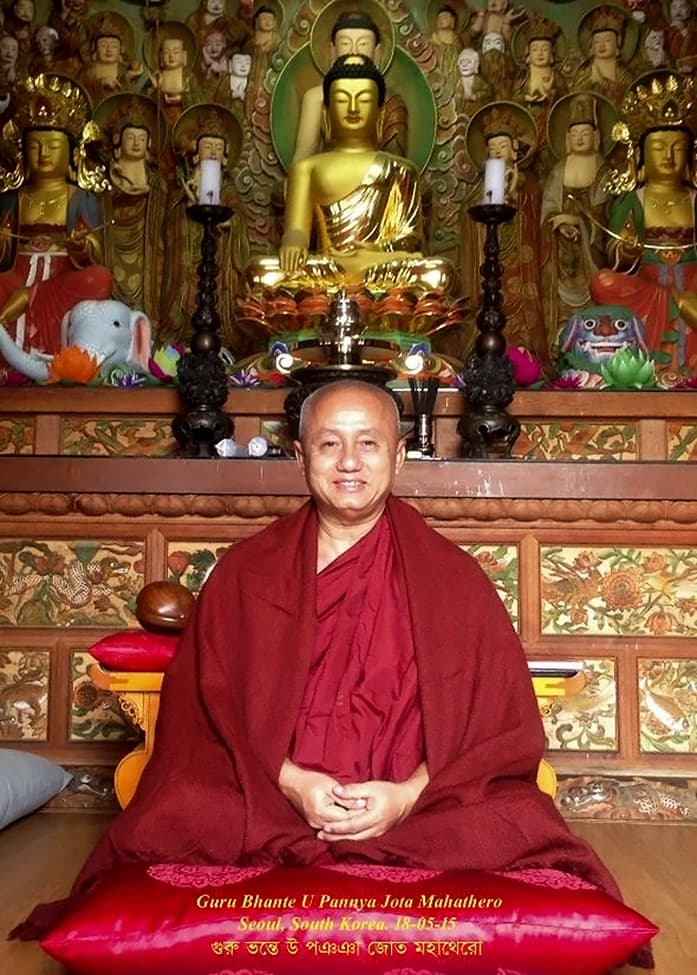
Pannya Jota Mahathera
Ven. U Pannya Jota Mahathera was a Bangladeshi Theravada Buddhist monk and scholar, locally known as Guru Bhante. Before his ordination, he served as a judge and magistrate for the government of Bangladesh. He is recognized for his work as a social reformer, promoting a scientific understanding of Buddhism, and for establishing numerous temples both within and outside of Bangladesh.