
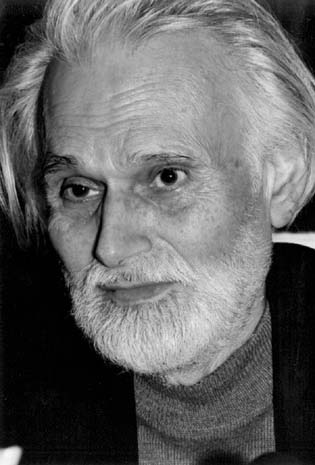
Edward Salim Michael
Edward Salim Michael was an English composer and author known for his symphonic music and writings on spirituality and meditation, particularly influenced by Buddhism. Despite a challenging early life and lack of formal education, he developed exceptional musical talent and later experienced profound spiritual awakenings, leading him to dedicate his life to teaching and writing about inner vigilance and enlightenment.
Key Facts
- ›Born in Manchester, England, he spent his childhood in Iraq, Syria, Egypt, and Palestine before returning to London.
- ›He enlisted in the Royal Air Force at age nineteen, learning to read and write during the war.
- ›Michael's early musical talent was recognized, leading to a career as a composer, violinist, and conductor.
- ›A profound spiritual experience at age thirty-three led him to dedicate himself to inner practice and meditation.
- ›He authored several books on spirituality, including 'the Way of Inner Vigilance,' and translated Buddhist texts.
- ›His musical compositions were tonal, featuring eastern influences and mystical inspiration.
Important Relationships
- Michele Michael (wife)
- the Way of Inner Vigilance
- the Supreme Quest
- Inner Awakening and Practice of Nada Yoga
- the Dhammapada
- Mass For Mixed Chorus, Two String Orchestras, Celesta, Harp, Glockenspiel and Percussion
- Nocturne For Flute and Orchestra
- the Dionysia
Manchester, Iraq, Syria, Egypt, Palestine, London, Paris, India, Nice
Christian Mystics, Hindu Mystics, Sufi Mystics, Buddhism
English, French
About Edward Salim Michael
Edward Salim Michael (1921 – 2006) was a composer of symphonic music and an author whose writings focused on spirituality and meditation. He felt a strong connection to Buddhism, though his teachings were rooted in his direct spiritual experiences and often incorporated insights from Christian, Hindu, and Sufi mystics.
Biography and Spiritual Journey
Born in Manchester, England, Michael spent his formative years in Iraq, Syria, Egypt, and Palestine before returning to London. He served in the Royal Air Force during World War II, where he learned to read and write. His musical talent was recognized early, leading him to pursue formal studies in London and Paris. After health issues forced him to abandon performing, he dedicated himself to composition. A pivotal moment occurred in 1949 when he encountered a statue of Buddha, which initiated his deep dive into meditation and spiritual practice. At the age of thirty-three, he experienced what he described as an awakening to his "Buddha Nature" and the "Infinite in oneself."
Musical Career and Compositions
Michael's musical output was significant, characterized by a tonal approach and rich orchestration. His works often featured "eastern ranges" within Western music, aiming for flexibility, color, and new expression, imbued with mystery, poetry, and dramatic depth. Notable compositions include symphonic poems, masses, and concertos, many of which received awards such as the Vercelli prize and the Lili Boulanger prize.
Spiritual Teachings and Writings
Following his spiritual awakening, Michael spent nearly seven years in India practicing intense concentration and meditation. Upon returning to France, he began teaching hatha yoga, which soon evolved into a spiritual teaching that resonated deeply with his students. This led him to write several books, including "The Way of Inner Vigilance," "The Supreme Quest," and "Inner Awakening and Practice of Nada Yoga." He also collaborated with his wife, Michele Michael, on a French translation of the "Dhammapada." His teachings were aimed at seekers striving for enlightenment and emancipation, guiding them toward their "True Identity" and a "Vast Consciousness."
Source: Wikipedia ↗
Frequently Asked Questions
What was Edward Salim Michael's background before his musical and spiritual pursuits?
Edward Salim Michael experienced poverty and insecurity during his childhood, moving between various countries. He joined the Royal Air Force at nineteen, where he learned to read and write, and discovered his musical aptitude.
How did Edward Salim Michael become interested in spirituality and Buddhism?
His interest in spirituality began after seeing a statue of Buddha in 1949, leading him to practice meditation. After years of intense spiritual practice, he experienced an awakening at age thirty-three, which he attributed to his Buddha Nature and the Infinite within.
What were Edward Salim Michael's major musical achievements?
He won a competition for his orchestral scherzo 'The Dionysia,' studied at the Guildhall School of Music, and won first prize in orchestral conducting. His compositions, such as 'Nocturne for flute and orchestra,' received prestigious awards like the Lili Boulanger prize.
What kind of spiritual teachings did Edward Salim Michael offer?
Michael's teachings were directed towards spiritual seekers aiming to find their 'True Identity' and a state of 'Vast Consciousness.' His work focused on enlightenment, emancipation, and the practice of inner vigilance, drawing from various mystical traditions.
What are some of Edward Salim Michael's notable books?
His notable books include 'The Way of Inner Vigilance,' 'The Supreme Quest,' and 'Inner Awakening and Practice of Nada Yoga.' He also co-translated the Buddhist text 'The Dhammapada' with his wife.
Related Buddhists
Gregory Paul Kramer
Gregory Paul Kramer is an American composer, researcher, inventor, and meditation teacher, recognized as the founding figure of data sonification. He co-founded pioneering electronic music ensembles and arts organizations, and developed influential MIDI technology. Since 1980, Kramer has dedicated himself to teaching Buddhist meditation, notably developing the Insight Dialogue practice.
Frank Lee Woodward
Frank Lee Woodward was an English educationist, Pali scholar, author, and theosophist known for his extensive research and translation work on Theravada Buddhism. He is highly regarded for compiling a significant concordance of the Pali canon by translating numerous Pali texts into English. Woodward also served as the principal of Mahinda College in Ceylon for 16 years, significantly contributing to its development and the promotion of Buddhist education.

John Crook
John Hurrell Crook was a British ethologist and primatologist known for his pioneering work in socio-ecology. He later became a significant figure in Western Chan Buddhism, teaching and establishing the Western Chan Fellowship. His academic career spanned studies of birds and primates, transitioning to socio-psychological anthropology and Buddhist practices.