
Dai Bai Zan Cho Bo Zen Ji
United States·Rinzai school·20th century
Dai Bai Zan Cho Bo Zen Ji is a Rinzai-style Zen temple in Seattle, Washington, founded by Zen Master Genki Takabayashi in 1983. The temple's name translates from Japanese as "Listening to the Dharma Zen Temple on Great Plum Mountain." Genjo Marinello Oshō succeeded Takabayashi as abbot in 1999 and is known for his commentary on Zen Koan Practice.
Key Facts
- ›Founded in 1983 by Zen Master Genki Takabayashi.
- ›It is a Rinzai-style Zen temple located in Seattle, Washington.
- ›The name translates to "Listening to the Dharma Zen Temple on Great Plum Mountain."
- ›Genjo Marinello Oshō became the second abbot in 1999.
- ›Genki Takabayashi trained for nearly twenty years at Daitoku-ji in Japan.
- ›Genjo Marinello is a licensed psychotherapist and has published Dharma Talks.

Important Relationships
- Genki Takabayashi
- Genjo Marinello Oshō
- Seattle Zen Center
- Daitoku-ji
- Ryutaku-ji
- Dai Bosatsu Monastery
- Sochu Rōshi
- Soen Nakagawa Rōshi
- Eido Shimano Rōshi
Commentary On Zen Koan Practice
Seattle, Washington, Daitoku-Ji, Kamakura, Ryutaku-Ji, Dai Bosatsu Monastery
Japanese
Monk
Temple
About Dai Bai Zan Cho Bo Zen Ji
Dai Bai Zan Cho Bo Zen Ji, which translates from Japanese as "Listening to the Dharma Zen Temple on Great Plum Mountain," is a Rinzai-style Zen Buddhist temple located on North Beacon Hill in Seattle, Washington.
History and Lineage
The temple was founded in 1983 by Zen Master Genki Takabayashi Rōshi. Takabayashi had trained for nearly twenty years at Daitoku-ji, one of the parent Rinzai school temples in Japan, and also directed a Rinzai temple in Kamakura. He had been invited to Seattle in 1978 by the Seattle Zen Center to serve as a resident teacher. In 1997, Takabayashi retired and moved to Montana, where he passed away in 2013 at the age of 81.
Genjo Marinello Oshō succeeded Genki Rōshi in 1999 as the second abbot of Chobo-ji. Marinello began his Zen training in 1975 and was ordained as a novice monk in 1980. He trained in Japan at Ryutaku-ji and later continued his training with Eido Shimano Rōshi, abbot of Dai Bosatsu Monastery. Marinello received dharma transmission from Eido Shimano Rōshi in 2008, with Takabayashi also present. Marinello is also a licensed psychotherapist and has served as adjunct faculty at Antioch University Seattle.
Practice and Activities
Dai Bai Zan Cho Bo Zen Ji offers various activities for practitioners, including daily Zazen (seated meditation), weekly introductions to Zen, bimonthly Sunday Dharma Talks, and quarterly week-long sesshins, as well as monthly half-day sesshins. The temple also engages in Prison Dharma Work.
Notable Figures and Works
Key figures associated with the temple include founders and abbots Genki Takabayashi and Genjo Marinello. Marinello's Dharma Talks have been published in various journals, and his commentary on Zen Koan Practice has been translated into multiple languages. The temple is part of the Rinzai school of Zen Buddhism.
Source: Wikipedia ↗
Frequently Asked Questions
Who founded Dai Bai Zan Cho Bo Zen Ji?
Dai Bai Zan Cho Bo Zen Ji was founded by Zen Master Genki Takabayashi in 1983. He had previously been invited to Seattle in 1978 to serve as a resident teacher.
What does the name Dai Bai Zan Cho Bo Zen Ji mean?
The name Dai Bai Zan Cho Bo Zen Ji translates from Japanese as "Listening to the Dharma Zen Temple on Great Plum Mountain." The temple is located on North Beacon Hill in Seattle.
Who succeeded Genki Takabayashi as abbot?
Genjo Marinello Oshō succeeded Genki Takabayashi as the second abbot of Chobo-ji in 1999. Marinello began his Zen training in 1975 and received dharma transmission in 2008.
What is Genjo Marinello Oshō known for?
Genjo Marinello Oshō is known for his commentary on Zen Koan Practice, which has been translated into several languages. He is also a licensed psychotherapist and has had Dharma Talks published in various journals.
What kind of activities take place at the temple?
The temple offers weekly introductions to Zen, daily Zazen, bimonthly Sunday Dharma Talks, and quarterly week-long sesshins. They also hold monthly half-day sesshins and engage in Prison Dharma Work.
Related Buddhists

Adyashanti
Adyashanti, born Stephen Gray, is an American spiritual teacher and author known for his teachings on awakening and embodying enlightenment. He founded Open Gate Sangha with his wife Mukti, a nonprofit organization that disseminates his talks, courses, and retreats. Adyashanti's work draws from Zen Buddhism and Christian mysticism, emphasizing a direct experience of truth beyond religious dogma.
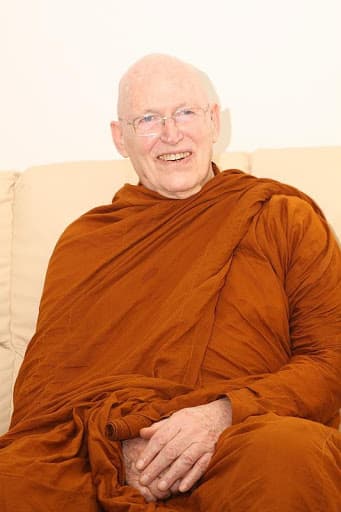
Ajahn Sumedho
Ajahn Sumedho is an American Buddhist monk, ordained in 1967 and a central figure in establishing monasteries in Thailand and England. As a senior Western representative of the Thai Forest Tradition, he is recognized for his pivotal role in transmitting Buddhist teachings to the West through his direct, practical, and awareness-focused teachings.
Alan Watts
Alan Watts was a British and American writer, speaker, and philosophical entertainer, renowned for interpreting and popularizing Eastern philosophies like Buddhism, Taoism, and Hinduism for Western audiences. He gained a significant following through his radio broadcasts and writings, most notably "The Way of Zen," which introduced the Beat Generation and counterculture to Buddhist thought. Watts's work explored human consciousness, the interconnectedness of nature, and sought to bridge the gap between Eastern and Western thought, leaving a lasting influence on philosophical and cultural discourse.